Plant Organ System (OCR GCSE Biology A (Gateway Science Suite)): Revision Notes
📚Revision Notes
2.4.2 Plant Organ System
Note
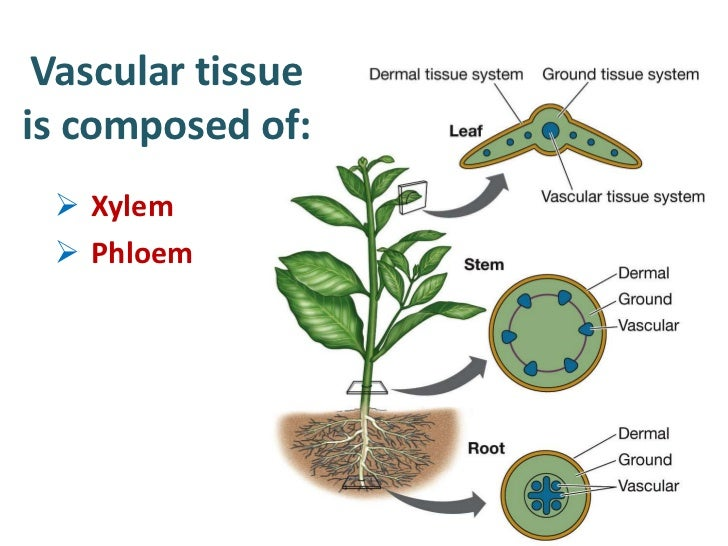
The roots, stem and leaves form a plant organ system for transport of substances around the plant. Root hair cells, xylem and phloem have important roles within this. Their adaptations are explained above and in topic 1 (Cell structure- cell specialisation).
Note
Translocation is the movement of food substances made in the leaves up or down the phloem, for use immediately or storage.
Note
Transpiration is the loss of water of water vapour from the leaves and stems of the plant. It is a consequence of gaseous exchange , as the stomata are open so that this can occur.
- Water also evaporates at the open stomata
- As water molecules are attracted to each other, when some molecules leave the plant the rest are pulled up through the xylem
- This results in more water being taken up from the soil resulting in a continuous transpiration stream through the plant The rate of transpiration is affected by the same factors that affect the rate of evaporation.
| Factor | Effect |
|---|---|
| Increase in temperature | The molecules move faster, resulting in evaporation happening at a faster rate and therefore the rate of transpiration increases. The rate of photosynthesis increases, meaning more stomata are open for gaseous exchange, so more water evaporates and the rate of transpiration increases. |
| Increase in relative humidity (the measure of the concentration of water vapour in the air in comparison to the total concentration of water that air can hold) | If the relative humidity is high, then there will be a reduced concentration gradient between the concentrations of water vapour inside and outside the leaf, resulting in a slower rate of diffusion. This will decrease the rate of transpiration. |
| Increased air movement (wind) | If more air is moving away from the leaf due to it being blown away, then the concentration of water vapour surrounding the leaf will be lower. This will mean there will be a steeper concentration gradient resulting in diffusion happening faster. This will increase the rate of transpiration. |
| Increase in light intensity | This leads to an increased rate of photosynthesis, so more stomata open to allow gaseous exchange to occur. This means more water can evaporate, leading to an increased rate of transpiration. |
Measuring the uptake of water by the plant gives an indication to the rate of transpiration, because water is only taken up if water leaves the plant. This is observed by using a potometer , which involves placing a plant in a tube of water, and measuring the distance travelled by a bubble.
Guard cells close and open stomata.
- They are kidney-shaped
- They have thin outer walls and thick inner walls
- When lots of water is available to the plant, the cells fill and change shape, opening stomata (they are also light sensitive)
- This allows gases to be exchanged and more water to leave the plant via evaporation
- More stomata are found on the bottom of the leaf, allowing gases to be exchanged whilst minimising water loss by evaporation as the lower surface is shaded and cooler.