Tropical Storms (OCR GCSE Geography A (Geographical Themes)): Revision Notes
📚Revision Notes
1.3.2 Tropical Storms
Note
Tropical Storms are intense low-pressure weather systems with heavy rain and strong winds that spiral around the centre. They can be called Hurricanes, Typhoons, or Cyclones depending on where they occur.
How do tropical storms form?
Note
Sequence:
- Air is heated above warm tropical oceans.
- Air rises under low pressure conditions.
- Strong winds form as rising air draws in more air and moisture causing torrential rain.
- Air spins due to the Coriolis effect (spin of the earth) around a calm eye of the storm.
- Cold air sinks in the eye, so it is clear and dry.
- Heat is given off as it cools powering the storm.
- On meeting land, it loses source of heat and moisture, so loses power.
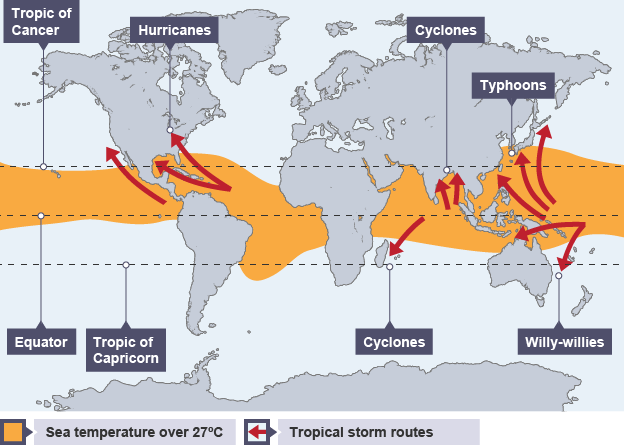
Names and typical locations of tropical storms around the world
- They only form in ocean temperatures over 27°C.
- A storm becomes a tropical storm once winds hit 74 mph.
- Storms are recorded on the Saffir-Simpson scale, 1-5.
- They are only found in latitudes of 5-20 degrees north and south of the equator.
- The strongest part of the storm is the eye wall, where winds are the fastest.
- The centre of the storm is called the eye and is calm.
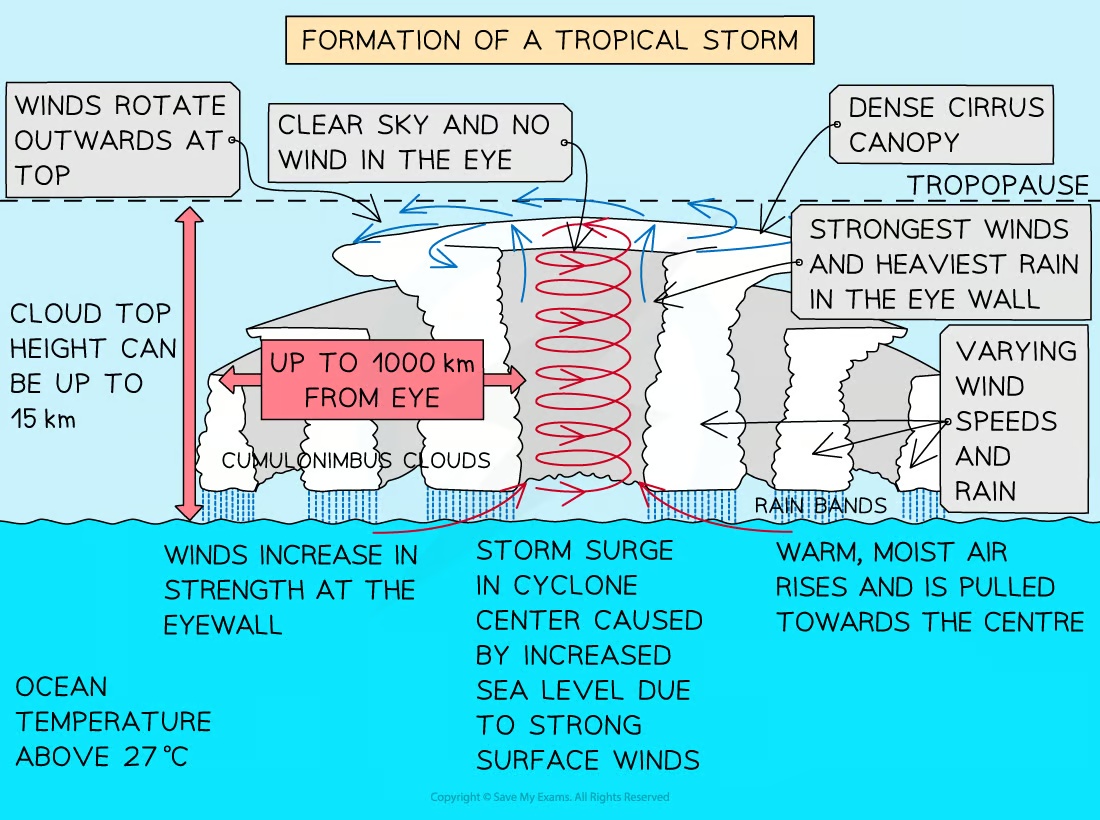
Cross-section of a hurricane
Climate Change & Tropical Storms
- Global Temperatures are expected to rise as a result of climate change, so more of the world's oceans will be above 27°C. This means more places will experience tropical storms.
- Oceans will stay above 27°C for longer, so tropical storm seasons will last longer.
- Higher sea temperatures also mean storms will be stronger.