Aid and Debt in Zambia (OCR GCSE Geography B (Geography for Enquiring Minds)): Revision Notes
📚Revision Notes
Aid and Debt in Zambia
Note
What you need to know
By the end of this topic, you should understand:
- What aid and debt relief are and why they matter
- The different types of aid available to developing countries
- The advantages and disadvantages of aid and debt relief for countries like Zambia
Understanding international aid
International aid is assistance provided by one country to another. Most aid flows from Advanced Countries (ACs) to Low Income Developing Countries (LIDCs). Aid aims to support development, reduce poverty, and improve living standards.
Aid comes in different forms, and understanding these distinctions is essential for evaluating its effectiveness.
Types of aid
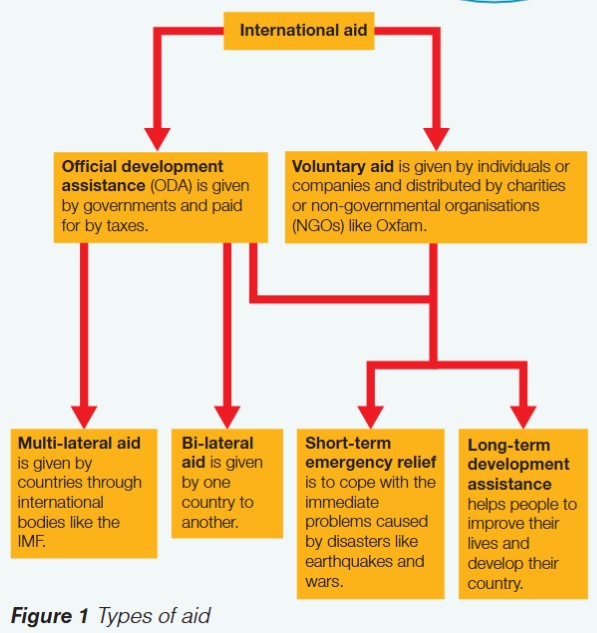
International aid can be classified in several ways:
Official Development Assistance (ODA)
- Provided by governments and paid for through taxes
- Often channelled through international organisations
Voluntary aid
- Given by individuals or companies
- Distributed by charities or non-governmental organisations (NGOs) like Oxfam
Multi-lateral aid
- Given by countries working together through international bodies like the International Monetary Fund (IMF)
- Involves multiple donor countries
Bi-lateral aid
- Given directly from one country to another
- Creates a direct relationship between donor and recipient
Short-term emergency relief
- Responds to immediate crises caused by disasters such as earthquakes or wars
- Provides food, shelter, and medical supplies
Long-term development assistance
- Helps people improve their quality of life over time
- Supports infrastructure, education, and healthcare development
Important
Understanding the distinction between these types of aid is crucial for evaluating which approaches are most effective in different situations. For example, short-term emergency relief addresses immediate needs, while long-term development assistance builds sustainable improvements.
Tied aid
A particular concern with international aid is the practice of tied aid. This occurs when aid comes with specific conditions attached. The recipient country may be required to spend the money on goods or services from the donor country, rather than having freedom to choose where to purchase what they need.
While this arrangement benefits the donor country's economy, it can limit the effectiveness of aid for the receiving nation.
Important
A Common Issue with Aid:
Tied aid can significantly reduce the value and effectiveness of assistance. When countries are forced to purchase from donor nations, they may:
- Pay higher prices than available elsewhere
- Receive goods or services that don't perfectly match their needs
- Miss opportunities to support their own local economies
Debt relief for developing countries
Many LIDCs face a serious problem with international debt. The amount they owe can exceed the aid they receive, creating a vicious cycle of poverty.
In 2006, a significant breakthrough occurred when 39 Highly Indebted Poor Countries (HIPCs) received debt relief. Zambia was among these countries benefiting from this initiative.
Note
The HIPC initiative represented a major shift in how the international community approached development. Rather than simply providing more aid, it recognized that existing debt was preventing countries from using resources effectively for their own development.
Impact of debt relief on Zambia
Example
Case Study: Zambia's Debt Relief in 2006
The cancellation of debt had immediate positive effects:
- The government could redirect funds previously used for debt repayment
- Increased spending on essential services like health and education
- Greater investment in long-term development projects
This demonstrates how addressing debt can be as important as providing new aid. Money that would have gone to foreign creditors could now be spent on schools, hospitals, and infrastructure within Zambia itself.
Advantages of aid
Aid can bring significant benefits to receiving countries:
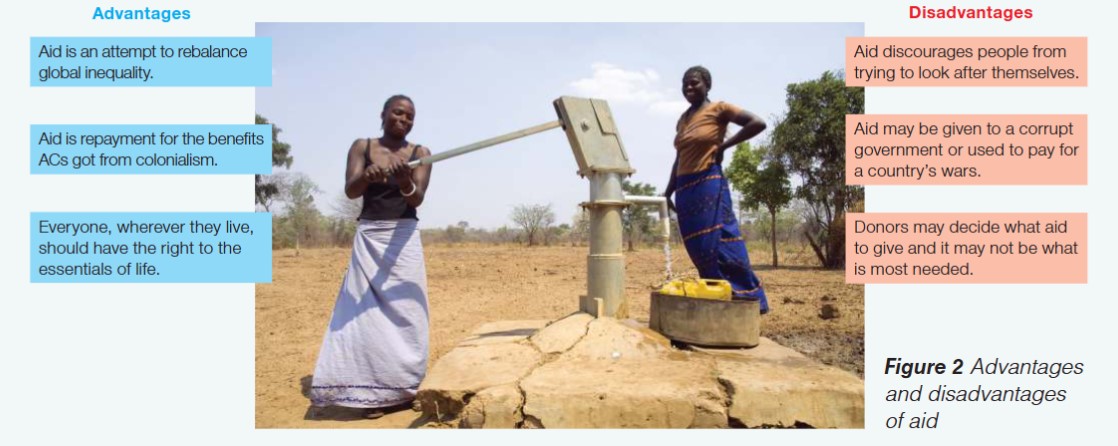
Rebalancing global inequality
- Aid attempts to reduce the gap between wealthy and poor nations
- Provides resources that LIDCs cannot generate independently
- Supports basic development needs
Repayment for historical colonialism
- Many ACs gained wealth through exploiting colonies
- Aid represents a form of compensation for past injustices
- Acknowledges historical responsibility
Fulfilling basic human rights
- Everyone deserves access to essentials like clean water, food, and shelter
- Aid helps provide these fundamental necessities
- Supports the principle that where you are born should not determine your life chances
Note
The moral case for aid is particularly strong when considering that many ACs built their wealth through colonial exploitation of the very countries that now require assistance. This historical context is important for understanding international development relationships.
Disadvantages of aid
Despite its potential benefits, aid faces several criticisms:
Reducing self-reliance
- Aid can discourage people from developing their own solutions
- May create dependency on external support
- Can undermine local initiative and entrepreneurship
Corruption and misuse
- Aid money may not reach those who need it most
- Corrupt governments might divert funds to pay for conflicts
- Lack of accountability in how funds are spent
Donor control over priorities
- Donors decide what type of aid to provide
- This may not match what the receiving country actually needs most
- Can reflect donor interests rather than recipient priorities
Important
Common Pitfalls of Aid Programs:
One of the most significant criticisms of international aid is that it can create dependency rather than promoting sustainable development. When communities rely on external assistance rather than building their own capacity, long-term development may actually be hindered. This is why many development experts now emphasize the importance of building local skills and institutions rather than simply providing resources.
Exam guidance
Important
How to Approach Different Question Types:
Describe questions: State the different types of aid clearly and provide brief explanations of each. For example, distinguish between bilateral and multilateral aid with specific characteristics.
Explain questions: Make clear links between cause and effect. For example, explain how debt relief leads to increased spending on education by showing the chain: debt cancelled → money saved → government can redirect funds → investment in schools.
Evaluate questions: Consider both advantages and disadvantages. Use phrases like "On one hand... However..." to show balanced judgment. Reach a conclusion based on evidence and always justify your final position.
Always try to use specific examples like Zambia or the HIPCs initiative to support your points and demonstrate real-world application of concepts.
Summary
Key Points to Remember
- International aid is assistance given from ACs to LIDCs, available in multiple forms including ODA and voluntary aid
- Tied aid comes with conditions that may limit its effectiveness for receiving countries
- Debt relief in 2006 benefited 39 HIPCs including Zambia, allowing increased spending on health and education
- Aid has both advantages (reduces inequality, addresses colonial legacy, provides basic rights) and disadvantages (reduces self-reliance, corruption risk, donor-controlled)
- Understanding the types of aid (multilateral/bilateral, short-term/long-term) helps evaluate which approaches work best