Enforcing law and order (OCR GCSE History B (Schools History Project)): Revision Notes
📚Revision Notes
Enforcing law and order
Note
By the 1500s, this form of civilian and parish policing became common all over England. After the Acts of the Union in the mid-16th century, the same system was introduced in Wales.
Changing features towards the system of policing

The first Justices of Peace were appointed in 1326 to assist with order in shires. Gradually, JPs took over much of the sheriff's duties including heading trials and hearings in courts (manorial and royal).

By the 13th century, parish or petty constables replaced the hundred men in assisting JPs. Parish constables were appointed every five years and usually did this responsibility for free.

Reporting directly to the parish constable, watchmen patrolled at night to protect people and properties from robberies, fire and other disturbances.
With the decline of the feudal system in the 16th century, Lord of the Manors also faced diminishing power. As a result, parishes took much control over local matters. The Tudor governments in particular vested parishes with religious and peacekeeping powers. In 1555, parishes were given responsibility to look after roads, whilst the additional task of taking care of their poor was given in 1601 through the Poor Relief Act.
Note
The Church was an enormously powerful institution in mediaeval England. Although the king was the political power in the land, the Church was extremely wealthy and influential and believed it had the right to decide its own affairs. In the eyes of the Church, this included the right to decide what its own system of law and order should be, without interference from the crown.
- The Church believed that members of the clergy should be tried in special church courts.
- The Church believed that places of worship should offer protection to those accused of a crime.
- The Church believed that God could decide on guilt or innocence.
JUSTICES OF THE PEACE
To assist sheriffs in maintaining order in shires, Justices of the Peace or JPs were appointed. JPs were local landowners who held trials and hearings in manorial courts. They were unpaid and usually held position due to prestige and power. Aside from maintaining order, they also oversaw bridge construction, supervised relief, and licensed alehouses.
Each shire had about 20 JPs. During trials, they were magistrates who handled sessions regarding minor crimes such as fighting or petty theft. In case of serious crimes such as witchcraft, assault and murder, they met at quarterly sessions (held four times each year).
Note
By 1554, the authority of JPs increased. By this time, they were allowed to arrest and interrogate a suspect for three days.
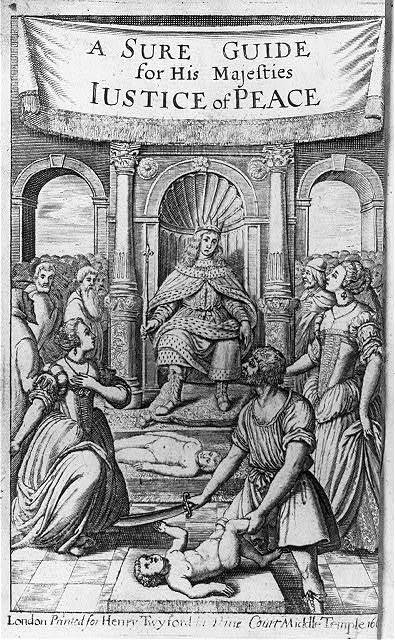
Justice of the Peace, 1669
PARISH CONSTABLES
Appointed by JPs, parish constables or petty constables assisted in local policing. Many were parish servants, local tradesmen and farmers and their service was usually unpaid and part-time. Their duties included:
- Keeping order in the parish, alehouses and inns
- Arresting offenders
- Prevention of crime such as poaching and trespassing
- Carrying out punishments like whipping
- Hunting of vagabonds Parish constables were appointed annually. They were unpaid and usually had to do policing alongside their usual job. During the mediaeval period, wealthy parish constables paid other people to do the job for them.
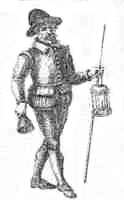
Parish constable during the Elizabethan period
Due to ineffective enforcement of law in the mid-17th century, King Charles II passed an Act which set up paid watchmen to patrol the streets. They became known as Charleys or Charlies. However, Charleys were paid low wages, making them a subject of ridicule.
With the passage of the Act of Union in 1536 and 1543, this system of policing in England was applied to Wales. As a result, pre-existing Welsh laws such as Hywel Dda were abandoned. Moreover, this Act introduced the English language to public offices like courts.
WATCHMEN
Since the reign of Edward I in the 13th century, watchmen served as night patrollers in larger towns. Like the JPs and parish constables, they were unpaid. Most served as watchmen on a voluntary basis, while others were paid by wealthy people to deter any crime. Also known as Bellmen, watchmen carried a bell, a lantern and a staff for protection.
Due to a growing population, the effectiveness of parish constables and watchmen was put to the test. 'Thief-takers', or people who captured criminals for rewards, emerged and became a problem in the system of policing. Amongst the famous thief-takers were Charles Hitchen and Jonathan Wild.
Note
Both arranged crimes and made a profit out of it. Named as the Thief Taker General of Great Britain and Ireland, Wild became known for ordering his men to commit theft in the area in exchange of rewards.
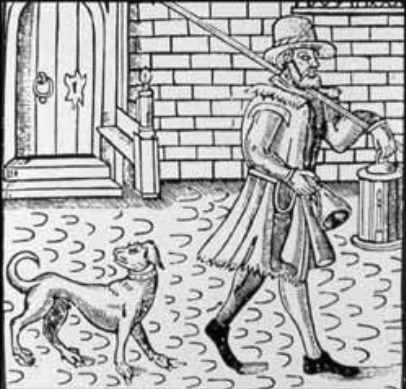
Illustration of a watchman in the mid-16th century
](https://simplestudy-assets-prod.s3.eu-west-1.amazonaws.com/assets/backend/uploads/manually-styled-note-images/bf6b7bba-a00c-44e5-8b9d-1e17b8a3866f.png)
An original gallows ticket for viewing the hanging of one of the most notorious thief-takers Jonathan Wild