The changing nature of crime including vagrancy, moral crime and witchcraft (OCR GCSE History B (Schools History Project)): Revision Notes
📚Revision Notes
The changing nature of crime including vagrancy, moral crime and witchcraft
Note
As many experienced poverty in the 16th century, most drifted away from their homes and became vagrants. Vagrancy spread in cities and towns. Many were resorted to begging for money and food, while others carried out petty stealing and fraud. They were called vagabonds or rogues.
The Changing Nature of Crime
VAGRANCY
Vagabonds or rogues used tricks or ways to gain money from people.
The Angler
Vagabonds who used a hooked stick to steal goods through windows.
Counterfeit crank
They dressed in worn clothes and pretended to be sick.
Abraham man
A vagabond who pretended to be suffering from mental illness for donations.
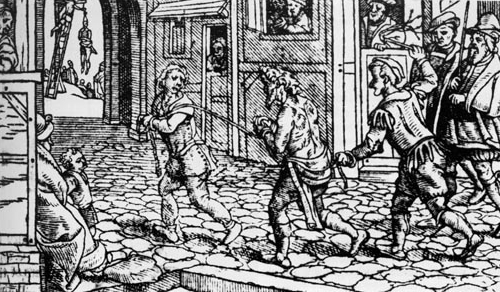
A 1536 woodcut showing a vagabond being whipped through the streets.
HERESY
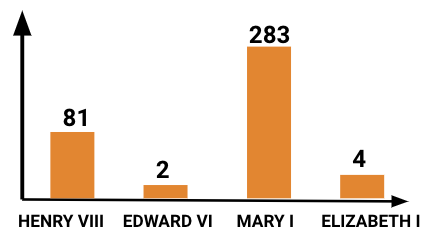
In mediaeval times, heresy, or not believing in the accepted religion, was a serious crime. This crime was punishable by death. However, compared to theft and assault, there were fewer heretics executed.
Since religion was a fundamental part of the lives of mediaeval people, heretics were usually executed by burning at the stake. They believed that heresy was a form of treason or betrayal to one's country or monarch. During the Tudor and Stuart periods, employment of spies or informers became common due to political dissatisfaction.
Recorded number of people executed for heresy in England and Wales
In 1649, after the execution of Charles I, Oliver Cromwell, a Puritan, became Lord Protector and dominated Parliament. Under Puritanism, the following were considered heresy:
- Celebration of Christmas Day, Easter or Whitsun was banned in 1652.
- Playing football and getting a haircut or beard trim on a Sunday were prohibited. In May 1660, rigid Puritan laws were abolished following the restoration of the monarchy under Charles II.
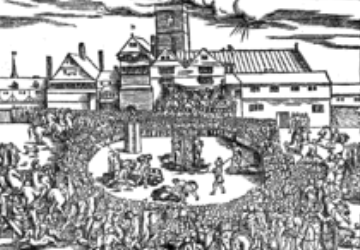
Burning of Anne Askew and John Lascelles, 1546
WITCHCRAFT
In addition to heresy, witchcraft was a serious criminal offence both during the Tudor and Stuart periods. As a matter of fact, King James I issued a book on witchcraft. It highlighted ways to identify and catch a witch.
In the 1640s, witch hunts became prominent. In Essex, such activity was led by witchfinder, Matthew Hopkins. Considered a threat to both Catholics and Protestants, about 1,000 people, mostly women, were executed for witchcraft.
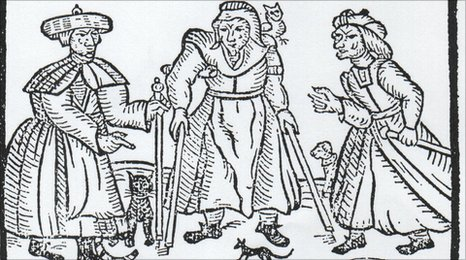
17th-century woodcut of supposed witches
In 1603, James VI of Scotland became King of England. He had a deep interest in the occult and, before his arrival in England, had written a book called Demonology. This book dealt with the topic of witchcraft and is one factor in the increasing amount of witchcraft accusations and trials in the 17th century.
James's predecessors had passed laws against witchcraft. The first of these was passed by Henry VIII in 1542. Henry's establishment of the Church of England meant a move away from Catholic beliefs. Magic and superstition were thought to be part of the Catholic faith and so began to be looked upon with more suspicion than they previously had been. This meant that people, particularly women, who were seen as 'wise women' who concocted medicines and herbal remedies, might well find themselves accused of witchcraft.
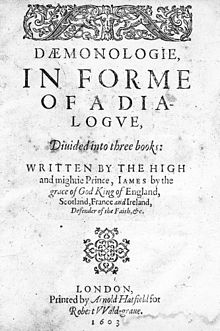
Front cover of the 1603 reprinting of James I's Demonology
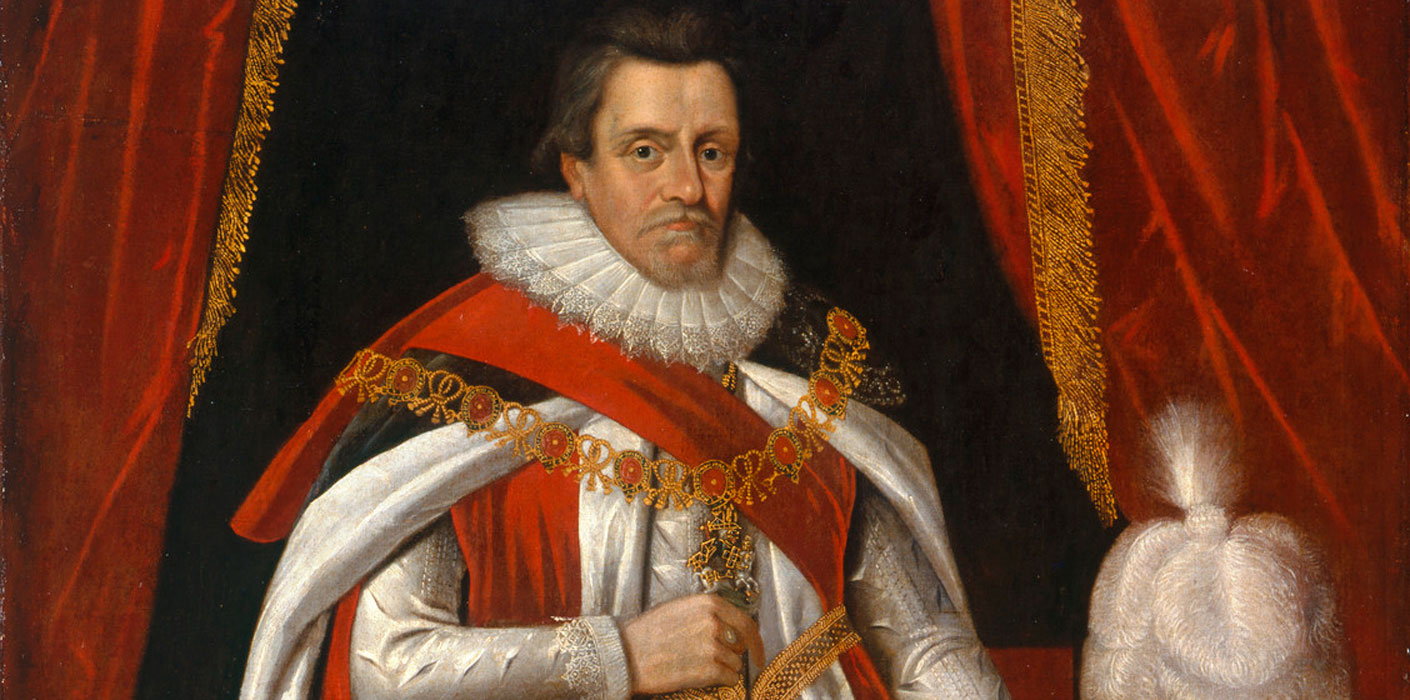
James I of England (1603-1625)
TREASON
During the Tudor times, heresy was often associated with treason. During this period, state religion was run by sovereigns which made refusal to obey a betrayal of the state. Rebellions and revolts were also categorised as treason. Attempts to destabilise and overthrow a government was punishable by death. In the 13th century and the rest of the mediaeval period, treason was identified into High and Petty Treason. High treason was an act of betrayal against the king or queen, while petty treason was betrayal against an immediate lord and murder of a wife, husband or bishop. By the early 19th century, petty treason was reidentified as murder.
Key treasonable incidents caused by religion
1536: Pilgrimage of Grace
1554: Wyatt's Rebellion
1605: Gunpowder Plot
1678: Popish Plot
1685: Monmouth Rebellion
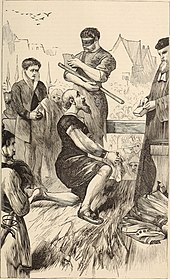
1870 illustration of Thomas More's beheading
Note
When Henry VIII split from the Roman Catholic Church and established his own Church of England, several people who disagreed, including Sir Thomas More, were executed.