Changes in punishment (OCR GCSE History B (Schools History Project)): Revision Notes
📚Revision Notes
Changes in punishment
The growth of prisons, transportation to Australia and prison reform
Note
A further change in the 18th and 19th centuries which affected punishments was the growth of the British Empire. This meant that Britain now owned lots of land on which people were needed to work. For much of the 18th and 19th centuries, it was believed that the ideal people to go and work the land in the colonies were convicts.
At first, convicts were sent to North America. Following the American War of Independence, they were instead sent to Australia. Sentences would typically be for seven years of hard labour. It was very difficult for prisoners to return home at the end of their sentence and so many stayed. It was believed that, as well as helping to increase British control over the colonies and make them more profitable, removing criminals from Britain would be good for the rest of society.
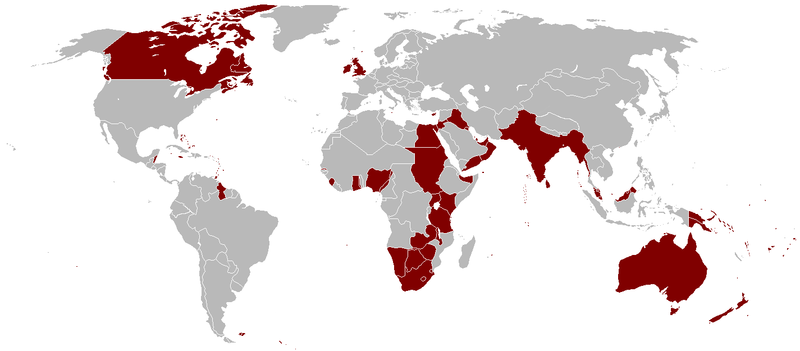
Map of the British Empire at its height
- It was also thought that criminals would be reformed by learning the benefit of hard work.
- Convicts faced a lengthy journey on ships known as 'hulks'. It took four months to sail from Britain to Australia. Some died on the journey.
- Upon arrival, convicts would be assigned to a settler who would oversee their work. A strong work ethic and good behaviour could lead to early release. A poor attitude, further criminal activity or attempting to escape could see a convict being given harsher working conditions or facing execution.
End of transportation
Note
Transportation was at its height in 1833, when nearly 7,000 prisoners were sent to Australia. It came to an end in 1857 and was replaced by other forms of punishment.
- The discovery of gold in Australia in 1851 meant that being sent there was seen as a reward by some people.
- The increasing number of prisons meant there was an alternative to transportation.
- Settlers in Australia increasingly put pressure on the government to stop sending convicts there because they felt that it gave the country a bad reputation, as well as increasing the likelihood of crime taking place there.
Botany Bay as a penal colony in New South Wales (Australia)
In 1787, King George III ordered the colonisation of Australia (New South Wales). After a year, the first cargo of convicts was transported to Botany Bay.
Two more fleets of convicts were transported to Port Jackson, Botany Bay between 1790 and 1791.
In 1793, free settlers arrived at Botany Bay. The New South Wales colony also became an official penal colony until 1823.
Between 1810 and 1821, under the leadership of Governor Macquarie, changed the environment of New South Wales from a place of punishment to a place of reformed felons.
Transportation of convicts in all of Australia ended in 1868.
Note
In 1597, banishment or transportation overseas as a form of punishment was introduced in England. Through the Act of Parliament, rogues, vagabonds and beggars were subjected to this method of punishment. In 1664, 1666 and 1718, transportation of criminals to colonies further strengthened. After the American Declaration of Independence in 1776, Britain surveyed other colonies for the transportation of felons. The west coast of Africa was surveyed and was found unsuitable as penal colonies. The British government then turned to Australia, a newly claimed colony found by Captain James Cook in 1770. Australia was initially named as New South Wales. Many Britons believed that dumping convicts overseas was a way of giving them a second chance in life.
Transportation was first used as an alternative punishment to the death penalty. It was a punishment to serious crimes such as highway robbery and arson. Repeated offenders of petty theft were also transported.
Terms of sentence and release
The most common sentence was 7 to 14 years in penal colonies. Few were sentenced from 3 years to life banishment. Those who behaved and worked hard were given a shorter sentence. They were released to either return in Britain or pursue a free life in New South Wales. Those who were released under a Conditional Pardon were freed but were not allowed to return to Britain. While those with an Absolute Pardon were allowed to return. Despite the license to return home, many were unable to afford their own passage.
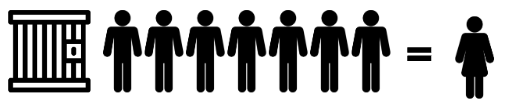
Based on records, one in seven transportees were female. Children were also transported, mostly due to their mothers' crime.
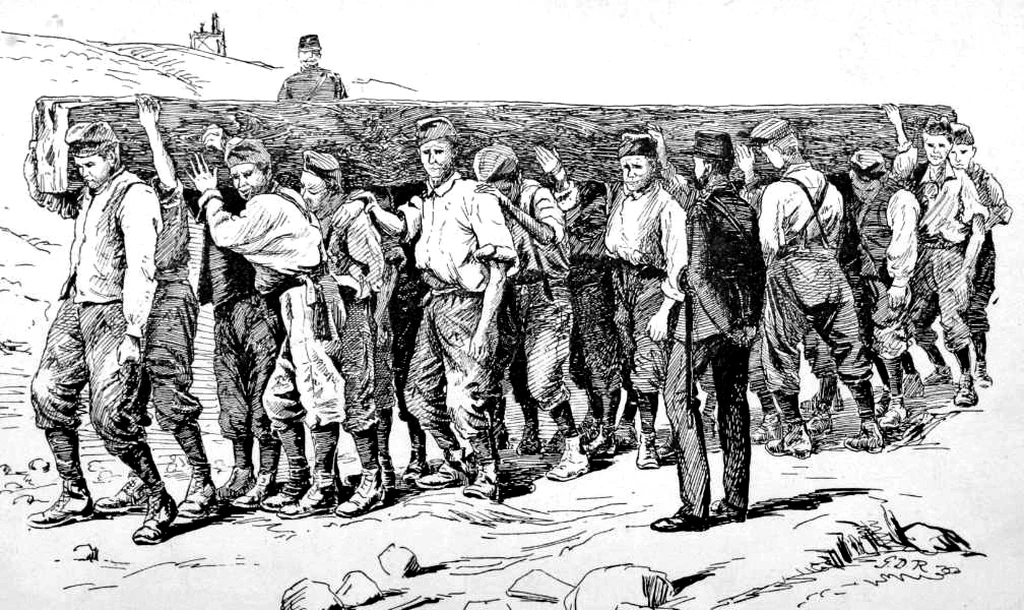
Illustration of British convicts
Note
By the 19th century, changing attitudes towards crime and punishment included instilling of discipline away from harsh corporal punishment.
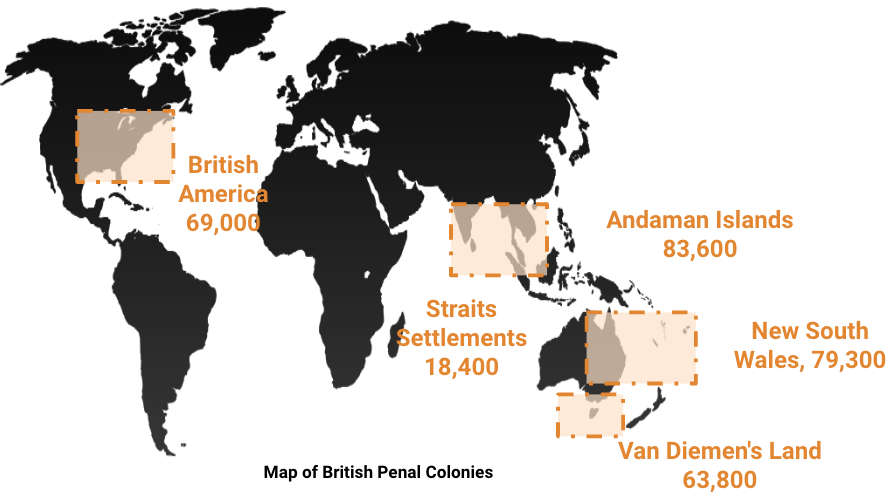
Other European empires such as Portugal, Spain and France also established penal colonies.
PRISON REFORMS
Note
As prisons became more common, people began to put pressure on the government to improve conditions within them.
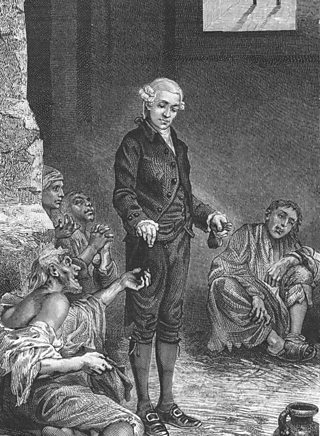
John Howard, Sheriff of Bedfordshire who campaigned for prison reform
John Howard visited prisons and was shocked by the conditions he encountered. At a time when there were relatively few people in prison (around 5,000 in 1777), the government did not take much interest in what the conditions were like.
Note
Howard recommended:
- Prisoners be separated, with male and female inmates in different parts of the prison, and hardened criminals and first offenders not placed together.
- An end to fees charged by prison guards. This led to prisoners being given more equal treatment.
- Medical care and an improved diet for prisoners.
- That inmates be encouraged to go to church services in the prison chapel.
George O. Paul, High Sheriff of Gloucestershire, wrote a report on the alarming progress of gaol fever in 1784. Influenced by Howard, Paul introduced a prison reform system. Designed by architect William Blackburn, Paul oversaw the construction of a new type of prison.
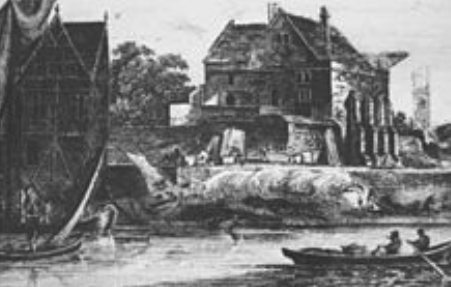
Gloucester Castle and Gaol in the 18th century.
Note
Key principles of Paul's prison reform
SECURITY. The prison design was polygon in shape surrounded by a five-metre-high wall.
HEALTH. An isolated section for the sick was included. Moreover, an exercise yard and good ventilation were added.
SEPARATION. Similar to Howard, Paul believed that male and female inmates should be separated. In addition, those awaiting trial and penitentiary should also have different areas.
REFORM. Prisoners should be reformed with education, work and religion.
Elizabeth Fry also became interested in the subject of prison reform. She was a Quaker (a type of Christian) and believed that it was possible to reform and rehabilitate prisoners. She visited Newgate Prison and was horrified by the conditions.
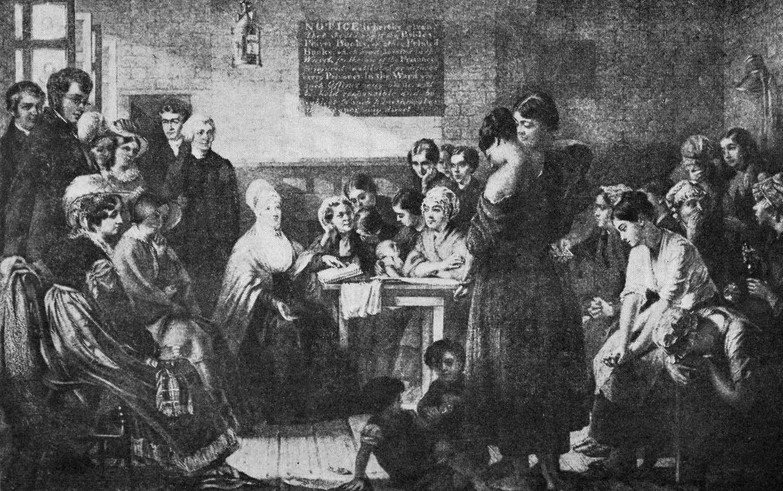
Elizabeth Fry visiting prisoners at Newgate in London
- In Newgate Prison, 300 women and their children were crammed into a small part of the prison.
- Fry believed that sexual abuse was being committed by the male wardens against the female prisoners.
- She set up prayer groups for the female prisoners.
- She organised a school for the children of prisoners.
- Fry also set up educational programmes in the prison, allowing the women to learn useful skills such as sewing and knitting in order to improve their chances of finding employment when released, and so avoid prostitution.
In 1823, the Gaols Act was passed, which stated that prisons should be secured; goalers should be paid; male and female prisoners should be separated; and doctors and chaplains should visit prisons.
19th-Century Prison Designs
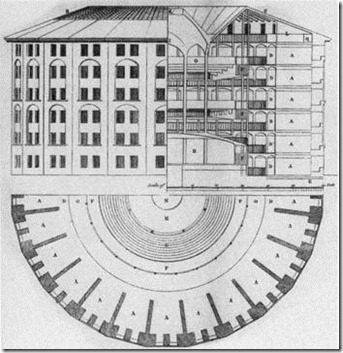
Panopticon-style prison designed by Jeremy Bentham in 1791 which inspired 19th century prisons
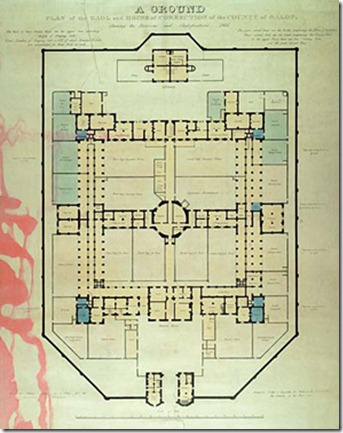
Ground plan of Shrewsbury prison in 1831
SEPARATE AND SILENT SYSTEMS
Note
Pentonville Prison was established by an Act of Parliament and the first prisoners were sent there in 1842. The prison was designed to allow for the rehabilitation of prisoners and the design of the building reflected that. Pentonville allowed the implementation of the Separate System.
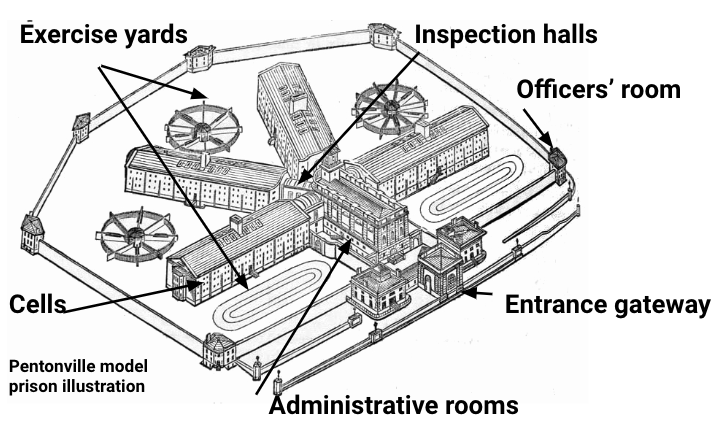
Under the Prison Act of 1839, new prisons adopted the separate system designed to isolate prisoners to allow them to reflect on their behaviour and to prevent negative influences that they might pick up from other prisoners. This isolation had a detrimental effect on some prisoners, with suicide attempts and mental illness.
By the 1860s, there was an increasing fear of crime. This was largely fuelled by the press that published stories about violent crimes such as garrotting (strangulation with a wire).
Note
The Silent System was a reaction to this fear and an increasing belief that human nature could not be changed. This meant people believed that punishments should be harsh - prisoners were not allowed to talk, had a very basic diet and were forced to do pointless tasks such as unpicking rope or turning a crank handle for hours on end.
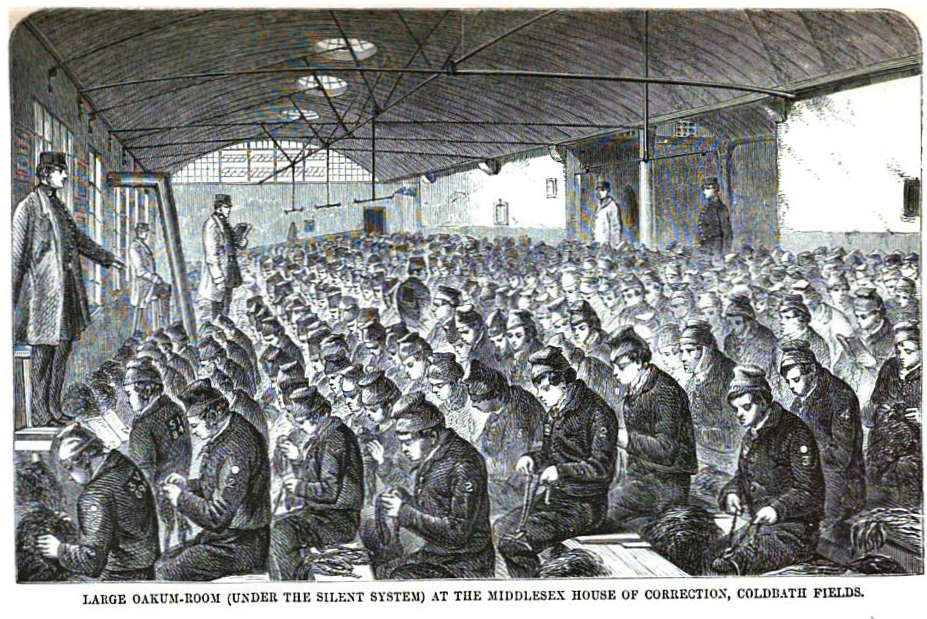
Silent prison labour at Middlesex House of Correction, 1864
In 1830, the first new prison in Wales was built in Beaumaris, followed by Cardiff in 1832 and Swansea in 1861.
Note
By the end of the 19th century, both Separate and Silent Systems failed to decrease the rate of re-offenders. Moreover, the increase in the number of prisoners committing suicide or going insane led the government to abandon the system.
Going back to harsher methods of deterrence, the Penal Servitude Act was passed in 1865. This Act characterised all prison sentences with hard labour, hard fare and hardboard. In 1877, all prisons came under the control of the government and became known as 'Her Majesty's Prisons'.
Under hard labour, prisoners were subjected to at least three months of hard work. They were given bread and water for food and subjected to corporal punishment for disobedience. For hard board, prisoners slept on narrow board beds.
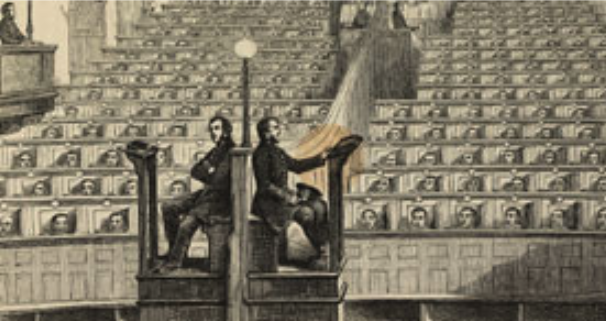
Separate system in Pentonville Prison during service, 1862
Note
Glossary of Terms:
INDUSTRIAL REVOLUTION
A period of industrialisation and urbanisation that first took place in Britain between the late 18th to early 19th centuries.
METROPOLITAN POLICE
Britain's first official police force and was established to police London established in 1829.
ROOKERIES
Slum areas caused by poor urbanisation during the Industrial Revolution.
BOW STREET RUNNERS
A private police force, established in London in 1749.
TRANSPORTATION
Also known as banishment, it was method of punishment by sending criminals overseas.
PENAL COLONY
A far-away settlement to exile prisoners.
Note
Example Assessment Question: ANALYSIS SOURCE A:
"The East End is London's poor quarter. It is also the area most identified with social problems. Life is hard for those living in its maze of tiny streets. Many of the overcrowded tenement buildings house up to thirty families, some of whom live directly above cesspits. Many children die before they reach the age of five. Women who could not get "respectable" work prostitute themselves." — From a report by a social reformer on life in the East End of London, 1890
SOURCE B:
'The population of London within the registration limits (says the Registrar- General in his Twenty-eighth Annual Report) is by estimate 2,993,513; but beyond this central mass there is a ring of life growing rapidly, and extending along railway lines, over a circle of 15 miles radius from Charing Cross. The population within that circle, patrolled by the Metropolitan Police, is about 3,463,771.' — The Commissioner of Police in June 1870
Given the sources, write a substantial narrative on the causes and nature of crime in the late 19th century.
Note
Example Assessment Question: PERSPECTIVE Examine the source and answer the questions provided.
SOURCE C:
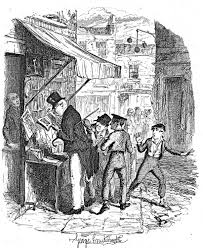
- Identify the crime and criminals.
- Given the historical setting, why do you this kind of crime became common?
- Many argued that the Industrial Revolution brought wealth to Britain, what is your perspective on the economic gap it created between the rich and the poor?
- What methods of punishment were used during this period?
Note
Example Assessment Question: DISCUSSION: SOURCE D:
"Obdurate idlers shall…be banished out of this Realm…and shall be conveyed to such parts beyond the seas as shall be…assigned by the Privy Council." — Act of Parliament 1597
Examine the source and write a substantial discussion on its purpose. You may cite historical events and developments to support your answer.