The contrasting lives of rich, middling and poor Elizabethans (OCR GCSE History B (Schools History Project)): Revision Notes
📚Revision Notes
The contrasting lives of rich, middling and poor Elizabethans
Like centuries before it, Elizabethan society was highly structured and worked on a system of patronage. This system was entrenched in the belief that it was ordered by God as the Great Chain of Being.
Note
Three groups of people were identified in Elizabethan England: the rich, the middling sort and the poor.
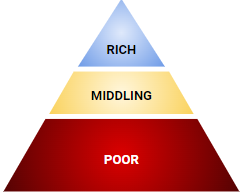
The rich included the gentry, who were landowners.
The middling sort in Elizabethan England sat above peasants but firmly below nobility.
Half of the population in Elizabethan England were the labouring poor.
The gentry displayed their status by extending their homes, and showing off through fashion, food and entertainment.
-
Members of the gentry all owned land, where their wealth generally came from.
-
Most of them did not have to work. They acted as Justices of the Peace who maintained law and order. The rising middle class included the lesser landowners, merchants, freeholders, tenant farmers and craftspeople.
-
They ran their own businesses in the town. In the countryside, they were the yeoman and husbandmen.
-
Members of the middling sort owned a bit of land but not as much as the gentry. Poverty gripped a third of the population and poor people faced starvation. There is only little written evidence about the poor.
-
The poor were lucky to have an acre or two of land and to enjoy common rights.
-
Most of them worked in the countryside on the farms of yeomen and husbandmen.
Note
The differences between the lives of the rich, the middling and the poor can be traced back to land ownership and were seen in their type of food, housing and forms of entertainment.
The differences in food and houses between the Rich and Poor
The Rich
- The gentry enjoyed lavish food, fine wines imported from France and Italy, and fruits and vegetables from their own gardens.
- Houses of the gentry were multi-storeyed with lots of glass windows.
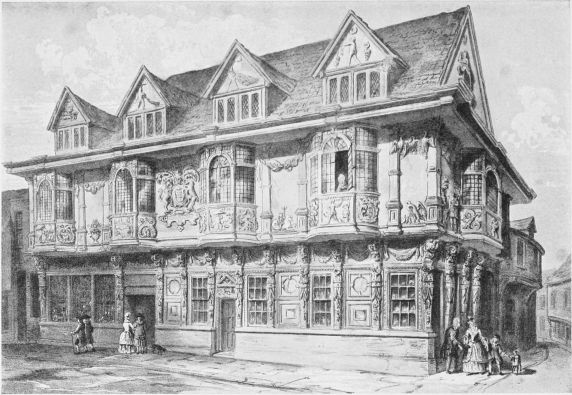
Old House at Ipswich, Suffolk
The middle class
- The middle class could afford to eat well, had beer and mead, and enjoyed fruits and vegetables from their gardens.
- Houses were typically two-storeyed with some glass windows.
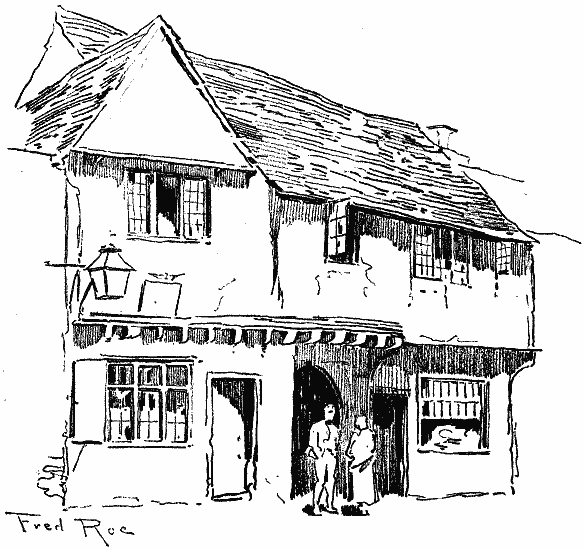
Half-timbered house
The poor
The poor's staple diet was barley and rye bread, supplemented by soup. When harvests failed, their families starved.
Houses were one storey with a thatched roof.
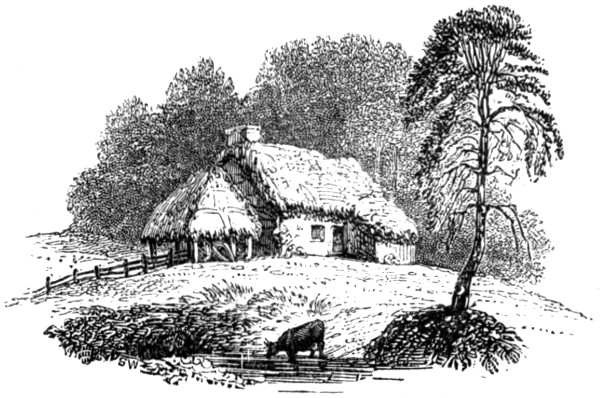
Thatched roof
Contrasting living conditions
The rich
- Wealth was on the increase with more landowners as a result of Henry VIII's dissolution of the monasteries.
- The gentry and the middle class benefited from booming wool trade and emerging investment in trading companies.
- Houses of the gentry had many rooms and windows and were lavishly decorated.
- Swathes of land owned by the nobility were rented by tenant farmers.
- The wealthy had more leisure time and grand landscaped gardens were designed.
The poor
- Poor harvests and focus on wool production meant food shortages that impacted the poor.
- Abled-bodied unemployed were harshly punished.
- Begging and vagrancy increased, in part due to monasteries being dissolved as the homeless had nowhere to go.
- Single-storeyed huts were usually filled with smoke from the cooking fire and had small open windows, open sewage and unsanitary conditions.
Contrasting diet according to class
- The rich ate meat and the poor ate bread and vegetables.
- As a staple, even bread varied by status. The upper classes ate fine white bread called manchet, the poor ate coarse, dark bread of barley or rye.
- Since water was contaminated, everyone drank ale.
- Scurvy was rife as fruit and vegetables were rarely eaten - the wealthy considered it peasant food, and for the poor, land was used for wool production rather than food.
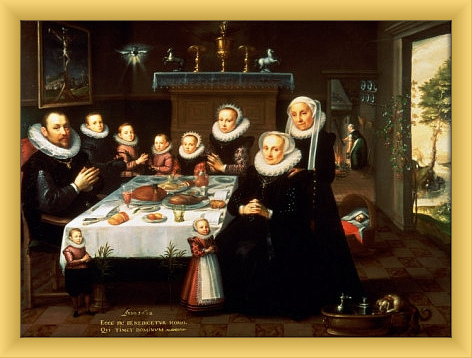
Painting depicting a meal for wealthy Elizabethans
- The wealthy used rich spices, which came to England through trade, to show off wealth and mask the smell of old salted meat.
- Desserts were common for the upper classes and tooth decay featured, even for Elizabeth.
- Hospitality was a necessary expense for the wealthy and could even be ruinous when Elizabeth and her entourage stayed for a few weeks.
- Increased trade abroad brought new foods and spices for the wealthy and middle classes, but saw no benefit to the poor.
- Cumbria, the poorest and most isolated part of England, suffered a six-year famine beginning in 1594. Inflation, diseases and natural disasters also contributed to the scarce food supply.
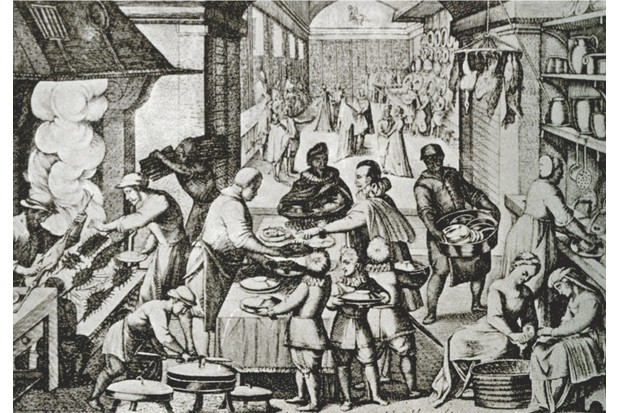
Depiction of a wealthy Tudor kitchen
Fashion of the rich and the poor
- Clothes and fashion varied greatly between rich and poor. For the wealthy, opulence and luxury reigned. Fashion was a huge spend for those at court hoping to get the attention of Elizabeth.
- For the middle classes, emphasis lay more on the quality of the cloth, rather than its cut and colour.
- Sumptuary Laws were enforced to prevent lower classes wearing clothes above their rank.
- Nobles and royalty could wear ermine fur and velvet, lesser nobles were permitted to wear fox and otter fur and wool.
- Colour also denoted class, with purple reserved for the queen, gold for royalty, while lower classes wore sombre shades.
- The trend was for abundance and ornamentation, but modesty was important with busts, necks, wrists and ankles covered.
- For the poor, clothing was as practical as possible.
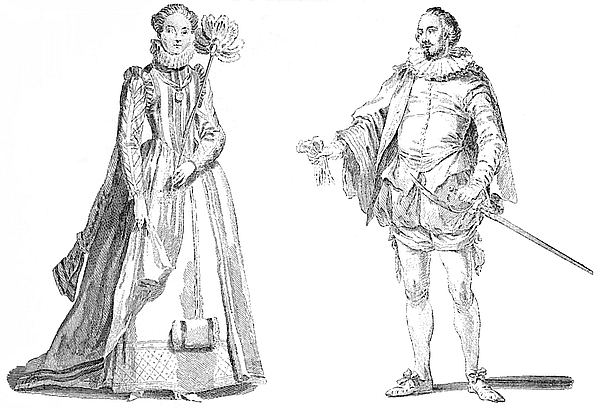
English lady of quality and a nobleman
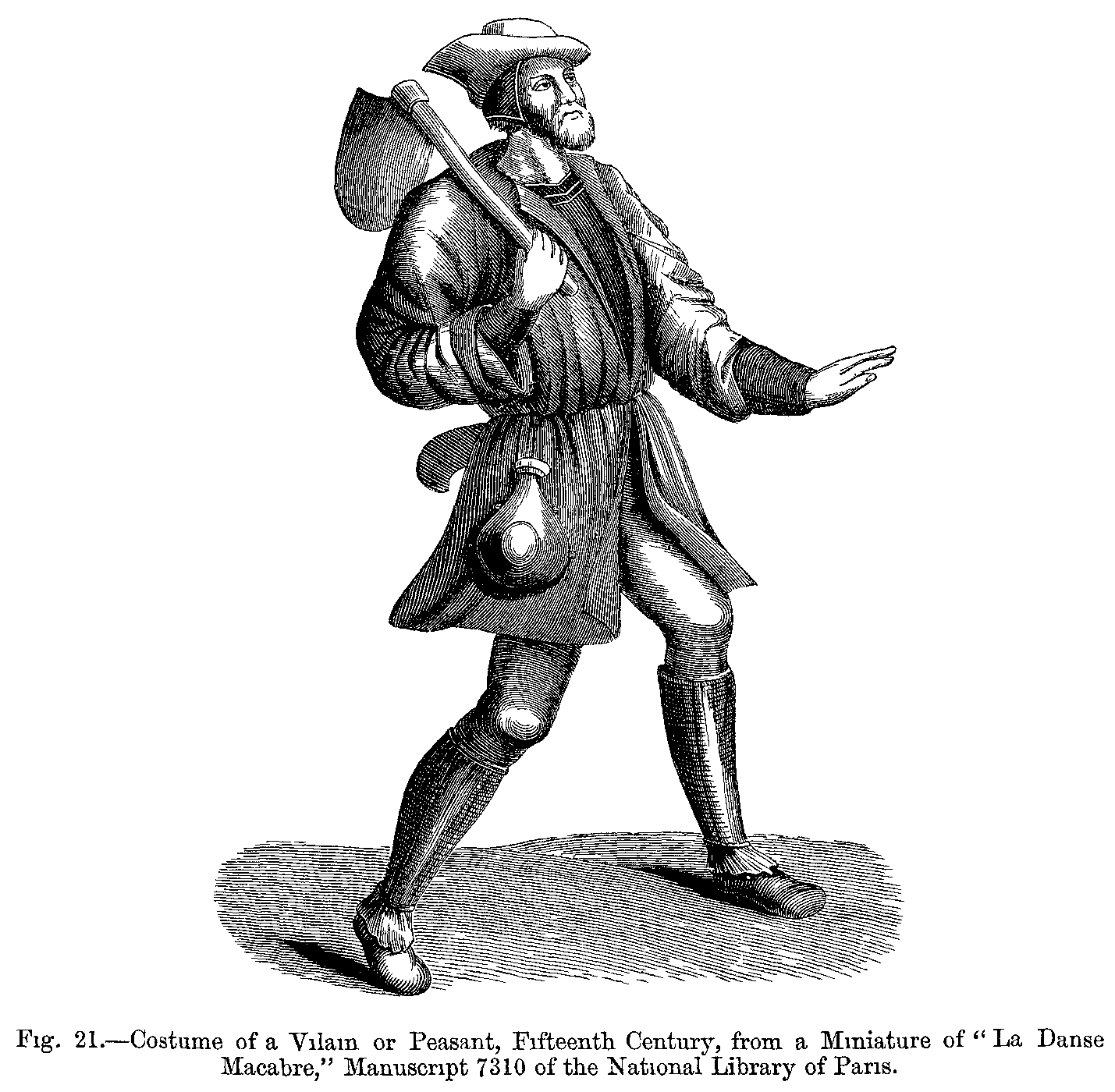
Peasant