Norman society, culture and warfare pre-1066 (OCR GCSE History A (Explaining the Modern World)): Revision Notes
📚Revision Notes
Norman society, culture and warfare pre-1066
Note
France in the eleventh century was a country like no other: its government and the power of its ruler were different from that of Anglo-Saxon England.
What were the significant events in France before 1066?
The duchy of Normandy was founded when the King of the Franks, Charles the Simple, granted land around the city of Rouen to Rollo. In return, Rollo protected the area, received baptism and took the Christian name, Robert.

Emma, sister of Duke Richard II of Normandy, married Æthelred ('the Unready'), King of England. Their son was the future Edward the Confessor.
William, the future Conqueror of England, then aged just seven or eight, succeeded his father as Duke of Normandy.
Duke William spoke with his second cousin, King Edward the Confessor of England.
The Norman Robert Guiscard with his brother Roger embarked on the conquest of Sicily.
Norman society
Note
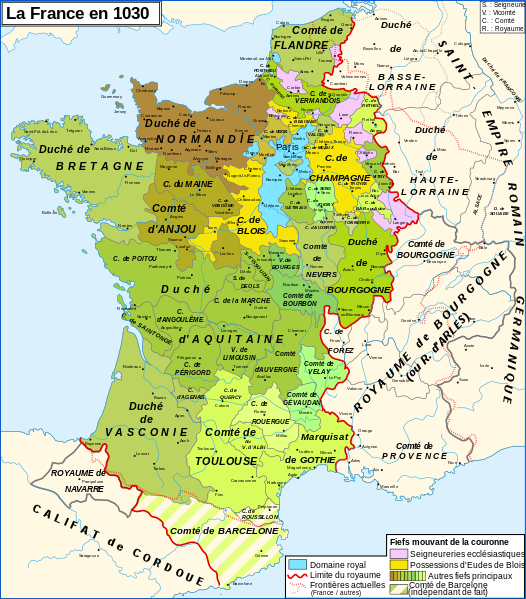
Map of the kingdom of France in 1030
The country was not called France until the thirteenth century but a king ruled over the collection of lands albeit with less central control.
Whilst the King of the Franks ruled over the lands in the kingdom, he could claim to rule only a small region of land since the duchies and counties were held by the dukes and counts.
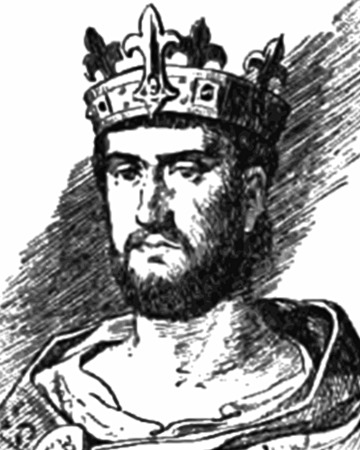
King of the Franks from 940 to 1060

940
Hugh Capet
996
Robert the Pious
1027
Henry I
1060
Philip I
King
- The country followed a feudal system, in which duchies, known as fiefs, were granted to the dukes and counts.
Dukes and counts
- In return, these dukes and counts were vassals, who swore their loyalty to the king, and pledged to get their armies to fight for the kingdom when needed. Additionally, they exercised the day to day power in lands.
Knights
- The knights provided protection and military service whilst serfs would reside upon and work a parcel of land for their lord In exchange for a place to live and protection.
Serfs
As fiefs transformed into hereditary holdings, counties and duchies began to break down into smaller holdings as castellans and lesser seigneurs took control of local land. Since this breaking down of power was not systematic, some dukes and counts were able to maintain control of their lands for a long period of time, like in Normandy.
Who were the Dukes of Normandy before 1066?
Note
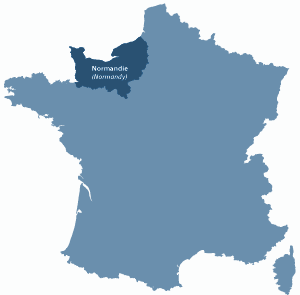
Duchy of Normandy

996
Richard II
the Good
1026
Richard III
1027
Robert I the Magnificent
1035
William the Conqueror
Norman culture and warfare
Dynasty
The dukedom of Normandy that began with Rollo's rule was powerful and practically independent of the crown.
Cavalry
Norman knights were expert in fighting on horseback, hence the name chevaliers. Normans bred particular horses, called destriers, which were strong enough to carry the knights in armour. Stirrups were put into good use in the Norman invasion.
Religion
The Normans converted to Christianity when they made a pact with the King of the Franks. North-men raids destroyed churches in the region but because of Norman settlement, the churches were rebuilt.
Warfare
Private armies were strengthened by providing the loyal supporters with armour and weapons. These supporters became full-time professional soldiers.
Nobility
Whilst the Normans had Scandinavian roots, they developed a distinct culture in their language and customs.