Economic, political, social and cultural change (OCR GCSE History A (Explaining the Modern World)): Revision Notes
📚Revision Notes
Economic, political, social and cultural change
Changes in 20th-century British Society
Note
At the beginning of the 20th century, social groups were largely categorised by income. British society was divided into aristocracy, middle class and working class. However, this attitude gradually change by the end of the century.
Events/factors that changed British society in the 20th century
WARS:
The two world wars brought significant changes in technology, medicine, immigration and the role of women in Britain.
MASS MEDIA
The invention of radio, television and cinema both entertained and informed the people.
POLITICS
When the Labour Party began to dominate politics, young people became more interested in societal issues.
WELFARE STATE
In 1948, with the establishment of the NHS, the British government took care of its people's health.
CIVIL RIGHTS MOVEMENTS
Beginning with the Suffragettes, minority groups in Britain began to seek equality and inclusion in British society and politics.
Key points of liberal reforms
Note
The 1906 General Election returned a Liberal government. Between 1906 and 1914, liberal welfare reforms were introduced by the majority - the Liberal Party. Reforms included management of poverty and support for the elderly, sick and unemployed.
- Improvement of children's welfare In 1906, Free School Meals were introduced. This allowed educational authorities to provide free meals to children. On a local basis, about half of all educational institutions followed the scheme. By 1914, an estimated 14 million meals were given to children. In 1907, free medical tests were given to children. Similar to free meals, local authorities managed this scheme.
In 1908, the Children and Young Persons Act was passed as part of the Liberal Party's reform package. Also known as the Children's Charter, this act established juvenile courts.
Moreover, registration of foster parents was also introduced to protect children from abuse.
Note
In addition to juvenile courts, borstals were established to house juveniles separately from adult prisoners. The sale of alcohol and cigarettes to children under 16 years old was forbidden. Furthermore, begging was escalated as an offence.
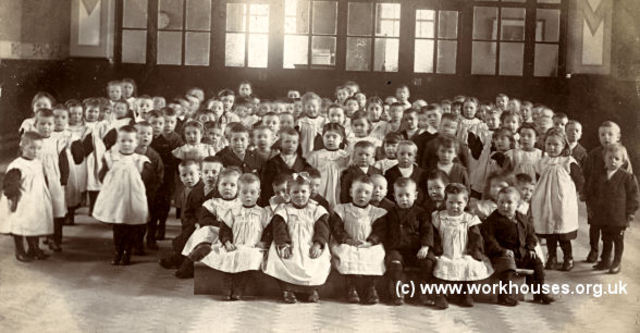
Children's Charter
- Elderly care In 1907, the Old Age Pensions Act was passed which provided minimal financial support to poor elderly people aged 70 or above. The pension per week was between 1 and 5 shillings. Before the outbreak of WWI, about 1 million people were recipients of a pension.
However, eligibility for receiving pensions was limited to:
- British citizens who had lived in the UK for 20 years
- Those with clear criminal records in the last 10 years
- Those with proof of age through birth certificate
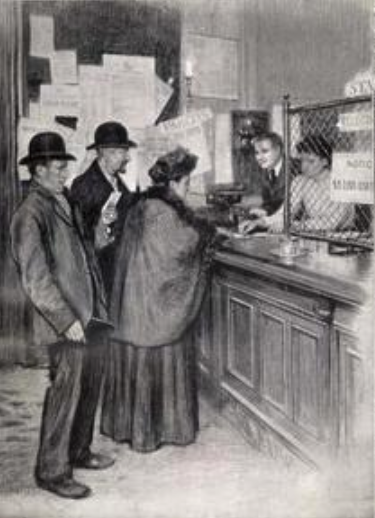
Old pensioners
- Aid to those unemployed In 1909, the liberal economist and director of the Board of Trade William Beveridge proposed the use of labour exchanges. Beveridge believed that unemployment was due to lack of available jobs. He urged employers to advertise vacant jobs for free in labour market placement agencies. By 1914, about 3000 people per day found work. About 390 labour exchanges were opened by January 1916. The national exchequer funded advisory committees in managing labour exchanges. There were no fees levied to either applicants or employers.
Additional reforms for the working class
- In 1906, the Workmen's Compensation Act provided workers pay for injuries incurred at work.
- By 1908, the Coal Mines Regulation Act limited miners' working hours to eight hours per day.
- The Shops Act of 1911 granted shop workers a weekly half-day holiday. A maximum of 60 hours work per week was also set.
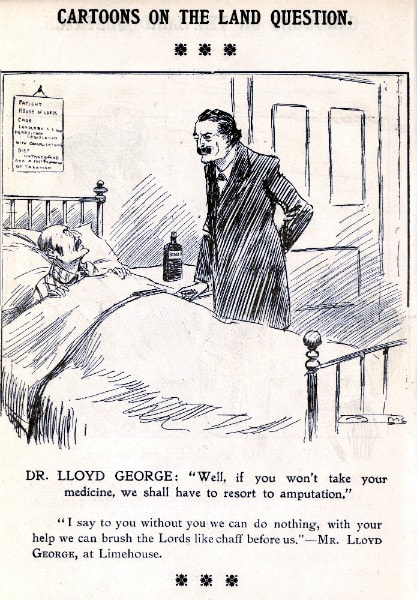
Lloyd George political cartoon
Note
Amidst unpopularity among the people, the Conservatives still dominated the House of Lords. In 1911, the Liberal government took action to lessen their powers. The Parliament Act reduced the powers of the Lords in terms of preventing the passage of money bills and other means of delaying legislation.
The 1911 Parliament Act changed the constitutional and political landscape of the United Kingdom. Despite retaining the equality of the two Houses of Parliament, the act gave significantly more power and authority to the House of Commons in terms of passing financial-related bills.
In case the House of Lords rejected or vetoed a public bill, the House of Commons could still pass it after the delay period. Under this procedure, there were seven bills that became acts.
These were:
- Government of Ireland Act 1914
- Welsh Church Act 1914
- Parliament Act 1949
- War Crimes Act 1991
- European Parliament Elections Act 1999
- Sexual Offences Act 2000 (Amendment)
- Hunting Act 2004
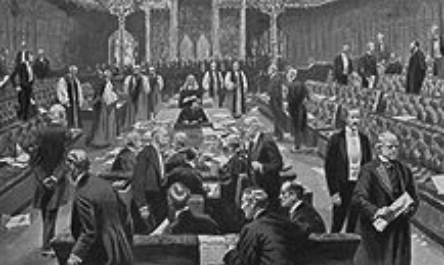
Depiction of the passing of the 1911 Parliament Act by Samuel Begg
Timeline overview of Liberal Reforms; School, pollution and housing
1899-1902: The Boer War
1900s: The liberal government took measures to improve the living conditions of the British people.
- Free school meals for poor children in 1906
- Medical inspections in schools
- 1908 Old-Age Pensions Act
- Introduction of minimum wages in specific industries
- 1911 National Insurance Act
- 1919 Ministry of Health Act 1920s and 1930s: Further improvements were made to housing, and benefits like unemployment benefits were introduced
Example: At the end of WWI, 80% of the British people rented homes from private landlords. To address the poor housing standards and give returning vets good homes, the 1919 Housing Act of David Lloyd George provided subsidies for local authorities to build council houses.
1930s: The Wall Street Crash impacted the British economy severely and put a damper on social reforms because of lack of money.
1940s: Between 1945 and 1951, following the war, the Labour government built around a million council houses with electricity, running water and indoor toilets.
1950s: In 1952, about 12,000 people were killed by smog in London. In response to polluted air, the Clean Air Acts were passed in 1956 and 1968.
1960s: Compared to the rest of Britain, there was more unfit housing in Wales. Many slums were cleared out. People were relocated in new towns, such as Milton Keynes, to decongest overcrowded industrial towns.
In order to supply clean water, reservoirs were built in Wales, including Lake Vyrnwy, Elan Valley and Llyn Celyn. However, many argued against the displacement of Welsh-speaking communities.
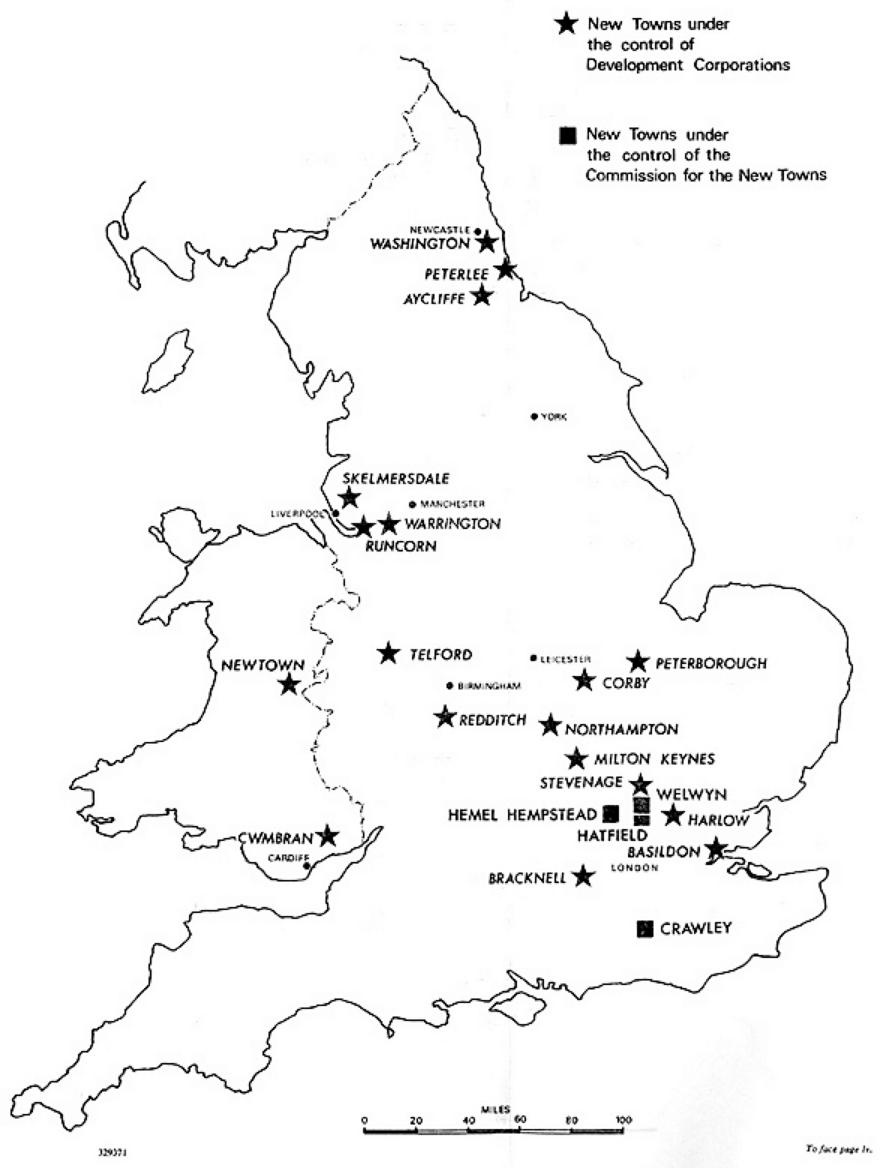
Map of new towns in the 1960s
Growth of the Labour Party
Note
Founded in 1900, the Labour Party is a centre-left political party in the United Kingdom which grew out of the trade union movement in the late 19th century and gained prominence in the early 20th century.
Significant events in the growth of the Labour Party
1893: A socialist propaganda society named the Independent Labour Party was set up by Keir Hardie, Scottish MP for West Ham
1900: To support the working class in the elections, the Labour Representation Committee was created by the Trades Union Congress
1903: To consolidate solid votes, the LRC and the Liberal Party agreed to send one candidate against the Conservatives
1906: 29 candidates supported by the LRC who won the elections called themselves the Labour Party
1910: 42 Labour MPs were elected. The Liberal government sought the support of the Labour Party
1918: A new constitution was adopted which supported redistribution of wealth and nationalisation of industry. 63 seats were taken by the Labour Party
1922: 142 seats were taken by the Labour Party in the election
1924: The Labour and the Liberals formed a coalition under Labour PM Ramsay MacDonald.
Reasons for the growth of the Labour Party
- In 1900, the LRC began to support Labour candidates. Financing of election campaigns expanded and became more legitimate after 1913, when Trade Unions were allowed to fund candidates.
- In 1911, the payment of MPs allowed working men to become part of Parliament.
- In 1918, the new Labour constitution and manifesto, Labour and the New Social Order, gained support from the working class. As a result, membership grew.
Note
Results of the 1924 elections:
258 seats - Conservatives
191 seats - Labour
158 seats - Liberals