Early Modern Britain 1500 - 1750 (OCR GCSE History A (Explaining the Modern World)): Revision Notes
📚Revision Notes
The impact of local and national government on public health
Note
Between the 16th and 17th centuries, there were significant attempts to improve public health. During King Henry VII's reign, he ordered that all slaughterhouses should be positioned outside town walls. While his son, Henry VIII, granted towns to tax people and gather money for building sewage systems.
In 1665, the Great Plague reminded Londoners that public health had not really improved since the early mediaeval period. One of the first examples of national policies towards public health was the issuance of plague orders in 1518, 1578 and 1604. In addition to mayors, watchmen and aldermen, corporations also took initiative to keep the cleanliness of towns. Streets were paved with stone while footways for pedestrians were built. By the 1680s, streets were lit with oil-burning lamps.
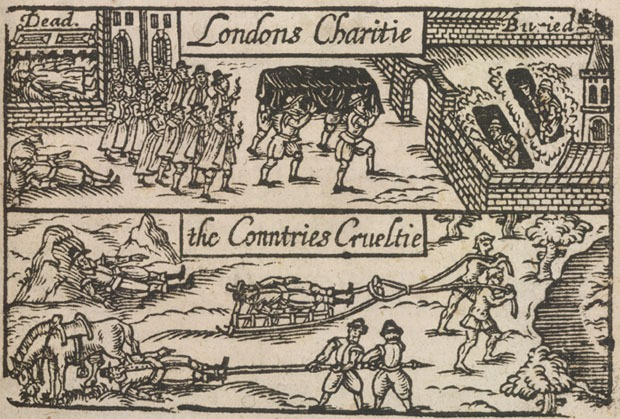
Illustration of the Great Plague of London
Gin Craze
Since the mediaeval period, drinking ale and beer was common in England. Due to this demand, alehouses grew while drunkenness became a serious problem. In 1550, Puritans began to attack ale and beer as a demon drink. As a result, Justices of the Peace in towns attempted to control alehouses by licensing.
By 1660, dram shops selling cheap gin and brandy opened in London. Initially, these spirited drinks were imported from Holland. But by the 1650s, gin was locally made. In 1689, distillers in England were urged to produce when Parliament banned gin importation.
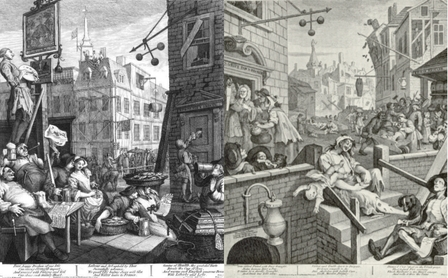
Depiction of the gin craze in England
As a result of incredibly cheap gin, gin drinking among London's poor population increased. By the early 18th century, gin drinking became a serious social and health problem.
As a result, crime and death rates increased. In response, Parliament passed the 1729 Gin Act which obliged sellers to pay an annual £20 for a licence, while distillers paid 5 shillings per gallon of gin they produced. Due to its failure to control gin drinking, another Gin Act was passed in 1736. This act increased the licence fee to £50 and tax to 20 shillings. In 1743, another Gin Act was passed which restricted alehouses offering beer, wine and ale from selling gin. However, gin drinking still continued to increase.
Finally, in 1751, the new Gin Act became effective. The harsher act penalised illegal gin sellers. First-time offenders were imprisoned and whipped for a second offence. For a third offence, offenders were subjected to transportation.
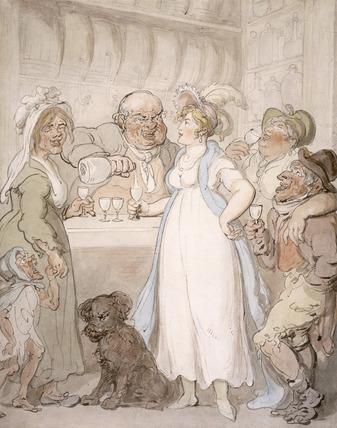
'A Gin Shop', Thomas Rowlandson. Produced c.1808-1809
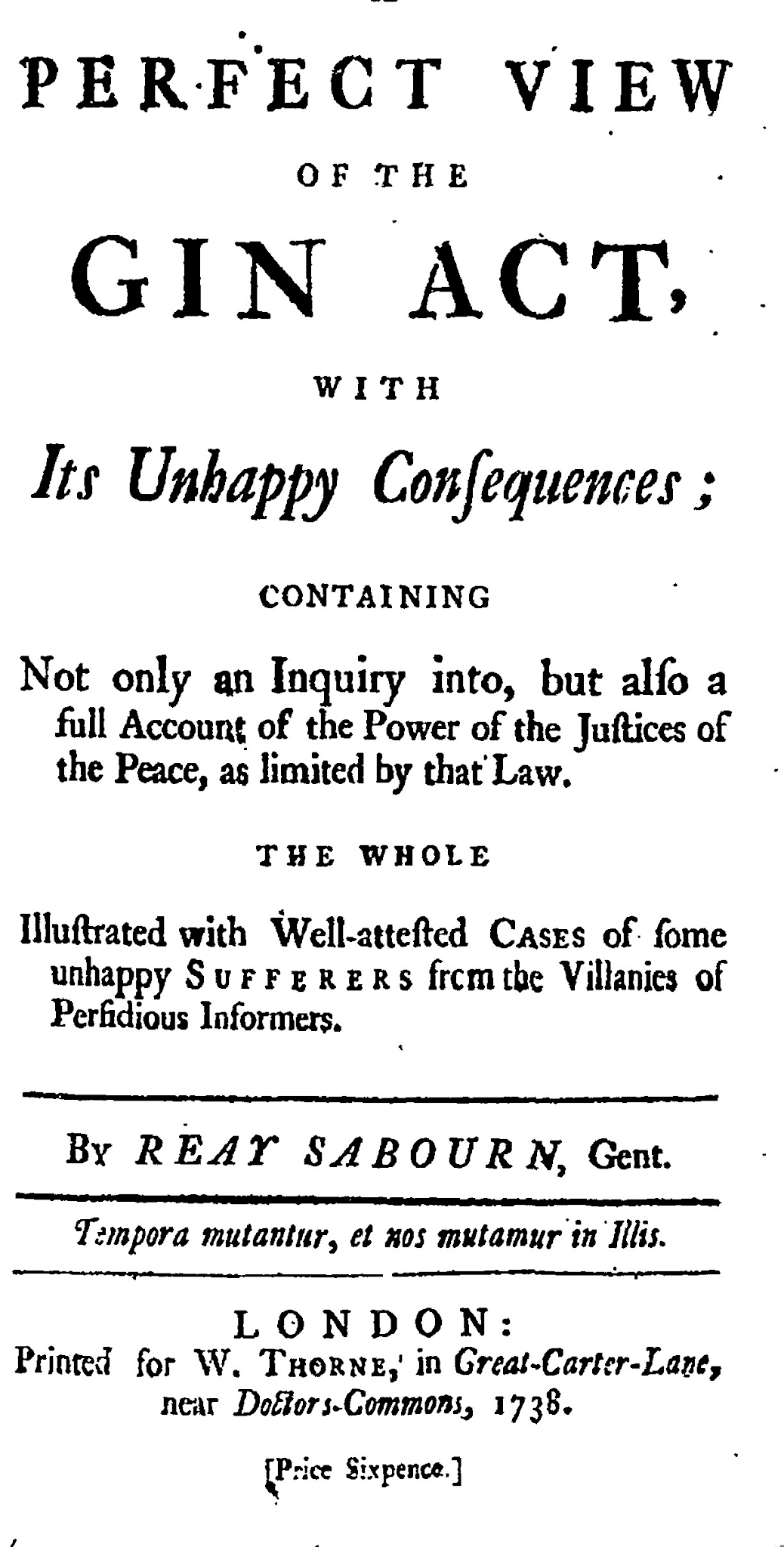
The title page of Reay Sabourn's A Perfect View of the Gin Act
Note
Glossary of Terms
GREAT PLAGUE OF LONDON
A plague outbreak caused by bacterium Yersinia pestis in London between 1665 and 1666.
CONDUITS
A system for conveying water.
GREAT FIRE OF LONDON
A devastating fire that swept London in 1666. Some believed that it ended the plague.
PLAGUE DOCTORS
Mediaeval physicians in costume who treated victims of epidemics.
GIN CRAZE
A period in British history, particularly London, in which gin drinking became a serious social and health problem.
Note
Example Assessment Question: ANALYSIS Examine the source and answer the questions provided.
- What is the purpose of the source?
- Describe its implication for the status of health in early modern Britain.
- How is it different and similar to the 14th-century Black Death?
SOURCE A:
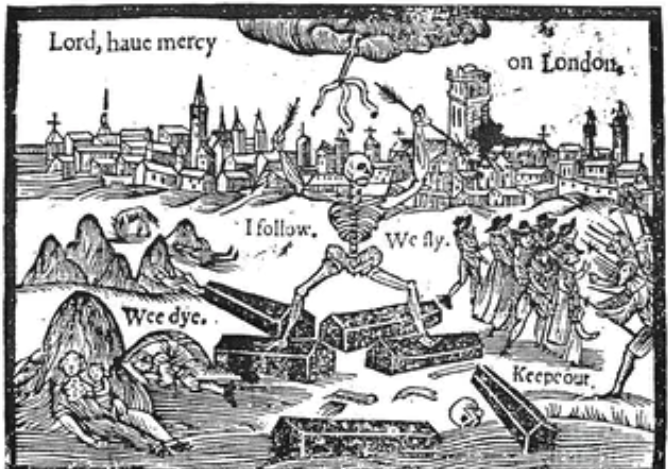
Note
Example Assessment Question: INFERENCE Read and examine the source, then answer the questions which follow. 4. What is the purpose of the source? 5. Substantially discuss its significance for the prevention of disease and illness in early modern times. SOURCE B:
"Almost all the floors are made of clay and rushes from the marshes, so carelessly removed that the bottom layers sometimes remain for 20 years, keeping there below spittle and vomit and urine of dogs and men, beer that has been thrown down, leftovers of fishes and filth unnamable...It would help also if people made the council keep the streets less dirty from filth and urine." — A letter from the Dutch writer Erasmus to an English doctor (1524)
Note
Example Assessment Question: DISCUSSION Given your understanding of the gin craze and government response to it, analyse and discuss Source C.
SOURCE C:
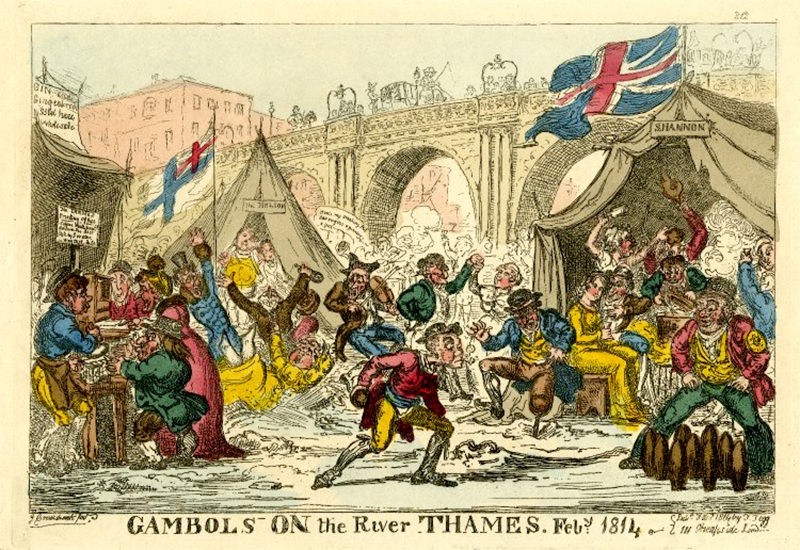
Identify the elements present in the source to substantiate your discussion. Consider the following:
- Symbols used in the source, its meaning and implication.
- Government measures on public health.
Add your inference of Source D to the discussion.
SOURCE D:
Briton! If thou would'st sure Destruction shun, From these curs'd walls, as from Serpent run: For there a Thousand Deaths in Ambush lie, Fatal to all, who dare approach too nigh. — 'Chalk'd on the Shutters of an Infernal Gin-Shop