Cultural, social and economic change including the growth of towns (OCR GCSE History A (Explaining the Modern World)): Revision Notes
📚Revision Notes
Cultural, social and economic change including the growth of towns
Note
Between 1500 and 1750, London became the largest and busiest city in Europe. From a population of 120,000 in 1550, numbers grew to 375,000 in 1650. The city became the centre of government, business, education and entertainment.
However, this growing number of people living in the city was halted when the bubonic plague returned in 1665. This epidemic was similar to the Black Death in the 14th century which killed about a third of Europe's population. The plague first devastated poor people living in the crowded parish of St. Giles before spreading to the rest of London.
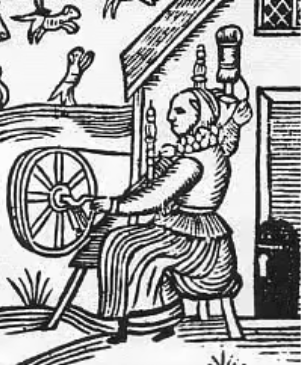
Woodcut with woman spinning with a spinning wheel – 17th century
During this period, woollen cloth was the main industry in England. People wore woollen clothes which were typically produced in homes using spinning wheels and handlooms. The regions of East Anglia, West Yorkshire and the West Country were known for this industry. As a result of this booming economy, many migrated to England. They introduced skills in weaving linen, cotton and silk.
Invented in 1712 by Thomas Newcomen, a steam engine to pump water was widely used in England in 1750. Specifically used to pump water out of mines, this invention boost the coal mining industry in northeastern England. As a result, many worked in coal mines followed by tin, lead and iron-ore mines. More and more people migrated to urban centres which later created overcrowding.
Moreover, this industrial change later led to the age of mass production and factories in the mid-18th century which created a massive influx of people in the cities.
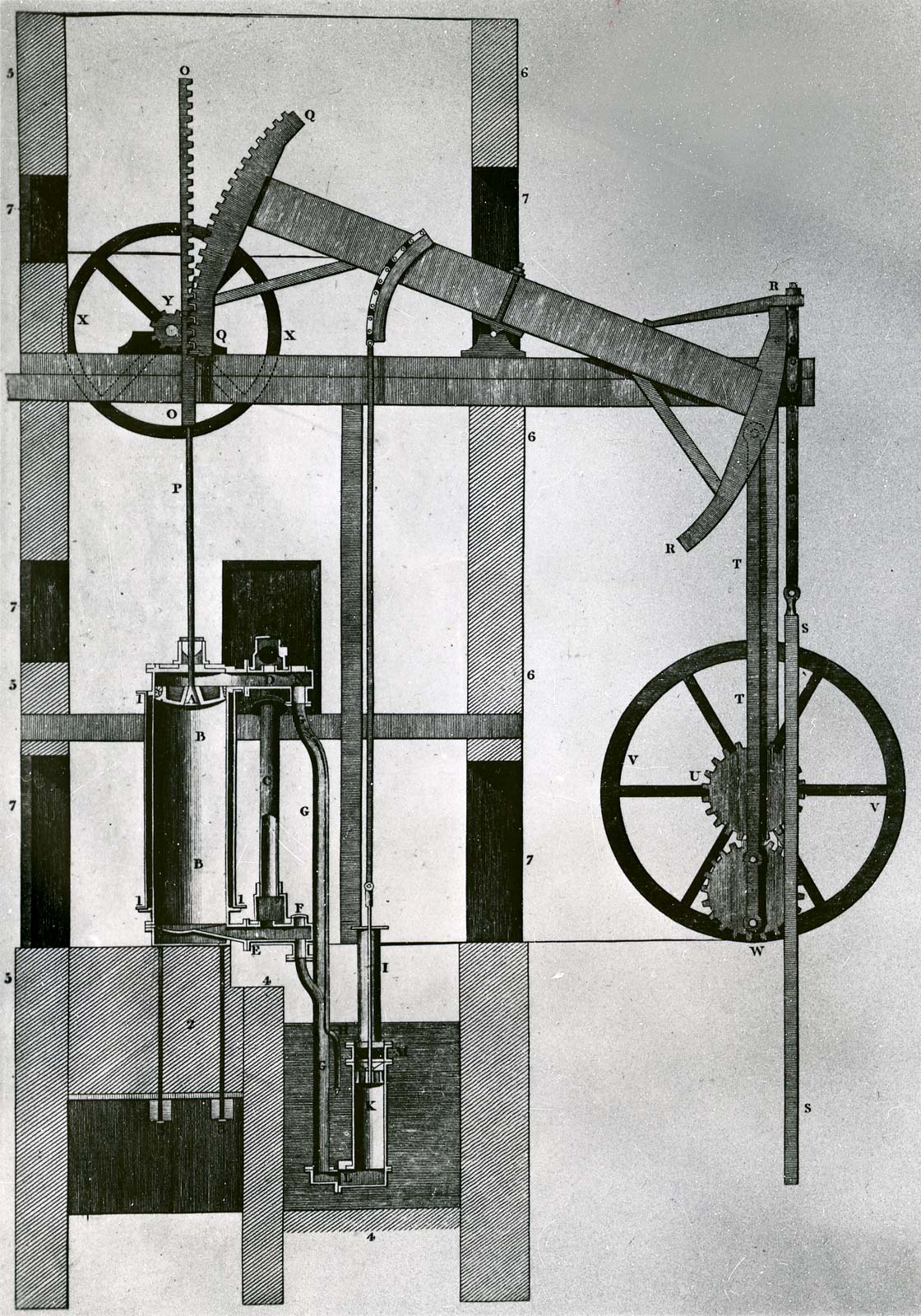
Thomas Newcomen's steam engine, 1747
Note
After Henry VIII's split from the Catholic Church, he ordered the dissolution of monasteries in England, Wales and Ireland, in the 1530s. This action greatly impacted patient care because most monasteries served as hospitals during this period.
In 1536, the Act of Suppression closed small monasteries with income below £200 per year. By 1539, the Second Suppression Act dissolved larger monasteries and religious houses.
In response, authorities in London petitioned both Henry VIII and Edward VI to reopen monasteries serving as hospitals. Through endowments, both kings reopened five hospitals, two of which were St. Bartholomew's and St. Thomas'.