Responses to outbreaks of plague (OCR GCSE History A (Explaining the Modern World)): Revision Notes
📚Revision Notes
Responses to outbreaks of plague
Note
The year 1665 was marked by a scorching summer. As the population in London continued to grow, many lived in poverty and squalid conditions. Indeed, the only way for people to get rid of their waste was to throw it out of their windows onto the street. The city of London was, therefore, very dirty and an ideal habitat for rats.
Naturally, the first victims of the plague were the people living in the most precarious and miserable conditions. These people lived in slums and could not avoid contact with rats or infected people.
Response to the Plague
During the resurgence of the plague, it was believed that cats and dogs were responsible for transmitting the disease. The Mayor of London, therefore, decided to eliminate all of them, which meant fewer predators of rats. Daniel Defoe – in his book Journal Of The Plague Year – states that about 40,000 dogs and 200,000 cats died needlessly since the plague did not come from them.


Note
When the plague began to spread the healthy people, who could afford to, started abandoning the city. In June, the roads were filled with sick individuals, and the mayor responded by closing the gates. People were forbidden from leaving the city unless they had a certificate of good health.

The poor were the most affected by the plague, and London authorities decided to take drastic measures to prevent the disease from spreading further. All families whose members were affected by the disease were quarantined in their homes with a ban on going out.
The house was chained from the outside, and a red cross was painted on the door in order to warn others. The only people who were allowed in were nurses and doctors.
- In reality, the 'nurses' had no medical training and were local women who were paid to visit the infected houses. Thus, they went to see how the victims felt and brought food to those who could afford it.
- Some people condemned this practice since a few of these nurses took advantage of their status in order to steal goods from the houses they visited.

Those who remained in London tried to stop the infection from spreading. They used flaming torches night and day, believing it would keep the air clean, and spices such as pepper and resins were used as incense to combat miasma. In addition, the authorities urged citizens to consume tobacco.
Note
London was not the only city in England to be struck by the plague. The most famous is the case of Eyam village in the Derbyshire region, where the plague was carried by a trader who transported fabric bought in London: despite efforts to contain the infection, over 70% of the population died.

After the Great Fire in 1666, historians believed that it halted the spread of the plague and contributed to the improvement of urban planning in the city. The city was rebuilt with wider streets, while stone houses replaced wooden materials easily burnt by the fire. By the 18th century, as many people gained wealth, wooden houses were replaced with brick and slate roofs.
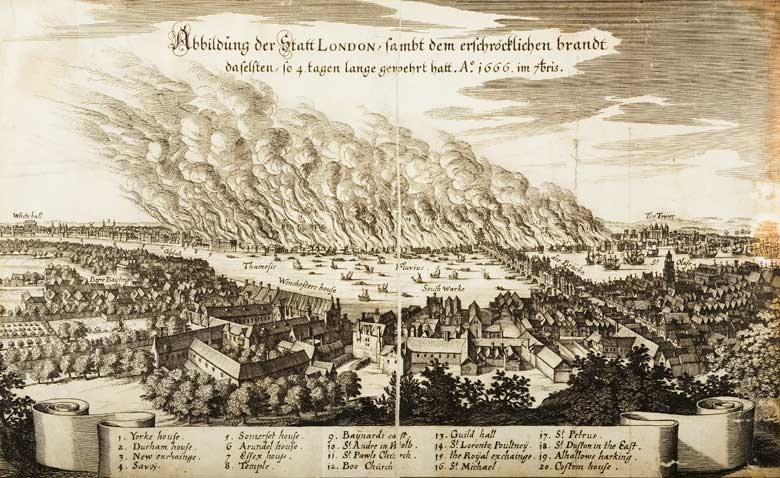
Illustration of the Great Fire of London
Note
The fire left about 100,000 Londoners homeless.
Mortality rate during the Great Plague of London (1665-1666)
Amidst the additional disaster, people believed that the fire ended the Great Plague as it killed and drove out rats that caused the disease.
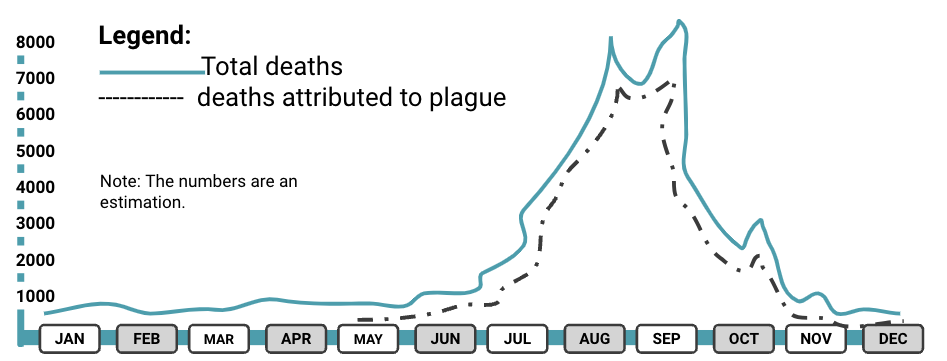
Note
Episodes of plague continued for several months until the outbreak of the Great Fire, which devastated much of the city of London. On 2 September, 1666, a fire started in the King's Bakery in Pudding Lane near London Bridge. Due to the very hot summer and a strong easterly wind, the fire quickly spread across wooden houses and buildings.
Plague Orders
- In 1518, King Henry VIII issued a royal proclamation which isolated people infected with the plague. Houses of infected people were marked with bundles of straw. Moreover, infected people were obliged to carry a white stick to warn the public of their disease.
- Additional measures were added including the establishment of pesthouses outside town walls to isolate plague victims. In the 1550s, watchmen were tasked with preventing the movement of infected people, burying the dead and collecting funds in parishes to provide food for infected people.
- In 1578, Queen Elizabeth I's Privy Council ordered the printing and distribution of plague orders all over England. Some of the orders included the following:
- Once every three weeks meeting of Justices of the Peace and aldermen during epidemics.
- Appointment of 'searchers' in every parish to report on the development of the epidemic.
- Collection of money to support the sick.
- Reciting of special prayers for the sick.
- Cleaning of streets and alleys.
- Banning of dogs, cats and pigeons in streets.
- Burning of clothes and bedding of plague victims.
- Funeral of victims at dusk.
- Shutting up of all infected houses for at least six weeks. Watchmen should ensure that all family members, including the sick and healthy, stay inside the house.
- The Plague Act of 1604 also extended help to plague-infected people.
- In 1604, new plague orders were passed by Parliament. The Plague Act introduced punishment to those deviating from the policy of isolation. An infected person mingling with others could be hanged, while healthy people who left an infected house could be whipped in public.
- The locking up of sick and family members became controversial but was enforced until 1667.
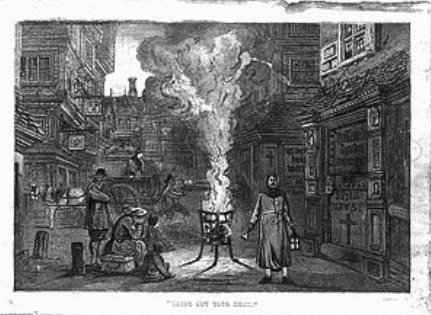
A street during the plague in London with a death cart
Plague Doctors
In 1630, royal physician Charles de L'Orme first described the plague doctor costume. The mask was made of a waxed fabric overcoat with a beak-shaped nose. Plague doctors usually carry scented materials such as roses, leaves, cloves, camphor and myrrh because they believed that disease was caused by bad smell or miasma. Aside from herbs, they also performed bloodletting to cure people infected with the plague.
Note
During the 1619 plague in Paris, doctors wore the costume as a protective measure not to catch the plague from their patients. During plagues, physicians, barber-surgeons, apothecaries, herbalists, midwives and priests also attended to infected people.
<img src="https://simplestudy-assets-prod.s3.eu-west-1.amazonaws.com/assets/backend/uploads/manually-styled-note-images/92e8011a-21c2-4f43-8269-33be11d7eb4d.png" width="650" height="895" alt="Paulus Fürst's satirical engraving called "Doctor Schnabel von Rom", or "Doctor Beaky from Rome"" />
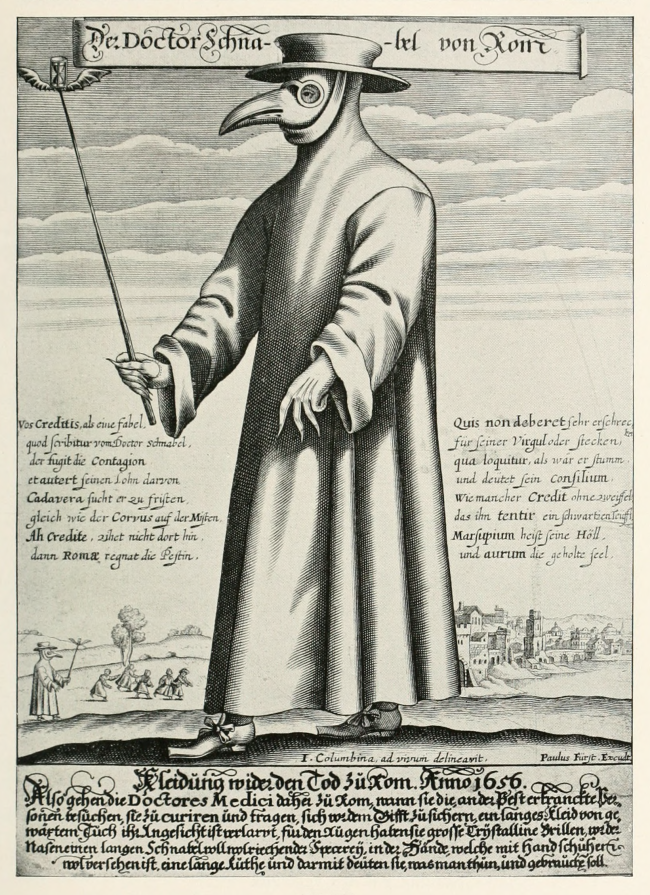
Paulus Fürst's satirical engraving called "Doctor Schnabel von Rom", or "Doctor Beaky from Rome"
According to the book After the Black Death published in 2018 by Susan Einbinder, several plague doctors left written accounts known as plague treaties. These documents included ways of how to prevent plagues.
In addition to miasma, plague doctors also believed that the Black Death was caused by corrupted humours, particularly the black bile.