Urban living conditions in the early nineteenth century (OCR GCSE History A (Explaining the Modern World)): Revision Notes
📚Revision Notes
Urban living conditions in the early nineteenth century
Note
England was becoming increasingly industrialised, which saw the rapid growth of towns comprised of crowded and poor housing, little sanitation infrastructure and dirty water supplies. Diseases such as TB, typhoid and cholera spread quickly.
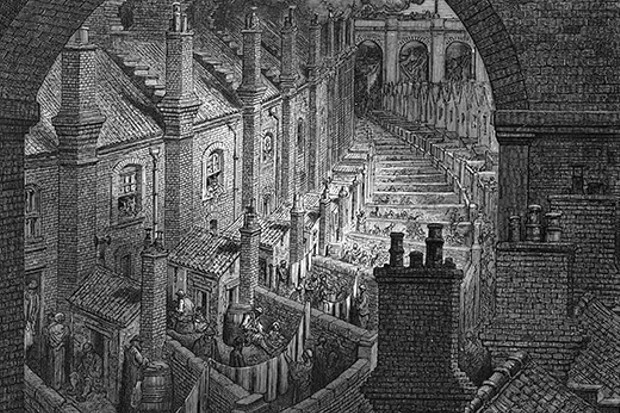
A Victorian London slum by Gustave Doré, 1872
Urbanisation
- Some suburbs predated the Great Fire of 1666.
- Passages and alleys were haphazard.
- Some houses consisted of just two rooms with no through-ventilation.
- Toilets were cesspits shared with neighbours, so some preferred to use the streets.
- Water was drawn from a common standpipe.
- Personal and home hygiene was poor.
Effects of urbanisation
Industrial Revolution
Factories popped up in towns and cities. Redundant farm workers moved into towns to find employment.
As a result, the population in cities like Preston, Bradford and Glasgow grew between 6 to 8 times.

Britain's population grew from 6 to 9 million between 1750 and 1800.
Overcrowding in cities meant vulnerability.
With poor living conditions and lack of space, disease spread rapidly. Death rates were high from frequent outbreaks of smallpox, typhus, TB and cholera.
Note
By 1802, Manchester had 52 textile factories.
Prior to the Industrial Revolution, the market town of Manchester was home to about 27,000 people. Due to its local coal deposits and rapid growth of factories, the population grew to about 95,000 in 1802. As the population grew, people needed houses to live in. In response, builders who wanted to maximise profit built cheap housing that could accommodate many dwellers. The industrial settlement was designed in rows of back-to-back terraced houses.
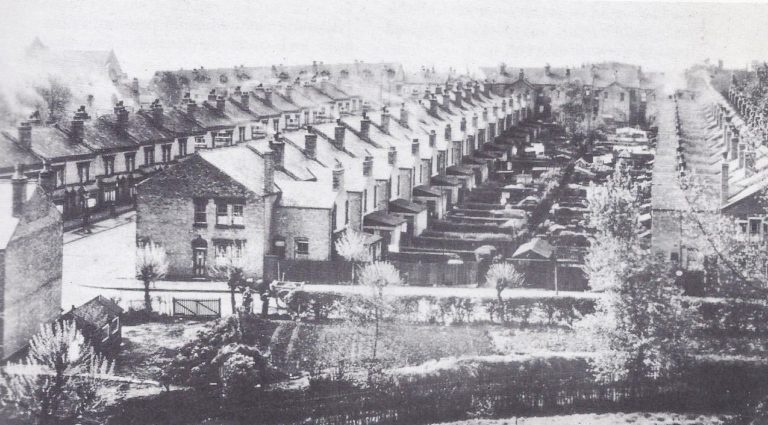
Industrial houses in Birmingham
According to Friedrich Engels, housing in Liverpool was really overcrowded. Based on his accounts, about 45,000, a fifth of the entire population, lived in the filthy, narrow, dark and damp streets of the city.
Industrial cities used communal privies built in the ground and only covered by wooden sheds. If not regularly cleaned, cesspits tended to overflow into the streets. The poor condition of sewers was the same in other industrial cities like Leeds, Edinburgh, Nottingham, London and Manchester.
Note
In addition to overcrowded dwellings, communal privies and no sewers at all, clean water was one of the main problems in industrial towns. Some collected rainwater in buckets, while many used dirty water from waterways. The widespread use of coal to power factories and heat houses created serious air pollution damaging people's respiratory system.
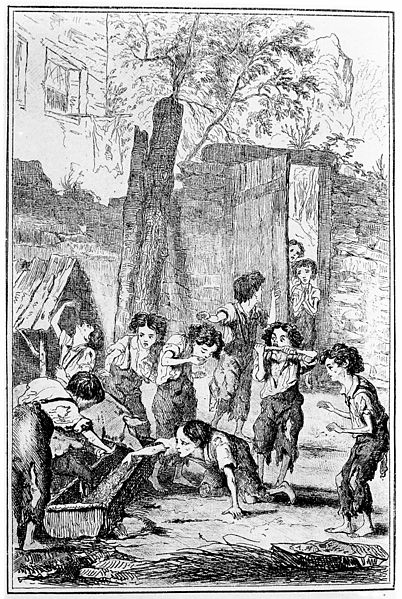
Image of child apprentices in factories
The rapid population growth created a scarcity of food in industrial Britain. Oatcakes, pies, Yorkshire Parkin, boiled bacon and cabbage, bread, eggs, cheese, pudding, gruel and crumpets were the food for common workers. Since workers were low-paid, they could only afford to pay rent for a small room and buy low-quality food. Availability of fruit and vegetables depended on the season.
Since the majority worked in factories, people began packing food for their midday meal. Moreover, eating an early meal before going to work set the tradition of breakfast.