Comparing Series & Parallel Circuits (OCR GCSE Physics A (Gateway Science Suite)): Revision Notes
📚Revision Notes
2.2.3 Comparing Series & Parallel Circuits
Note
The total resistance for two resistors in parallel is less than the resistance of the smallest resistor
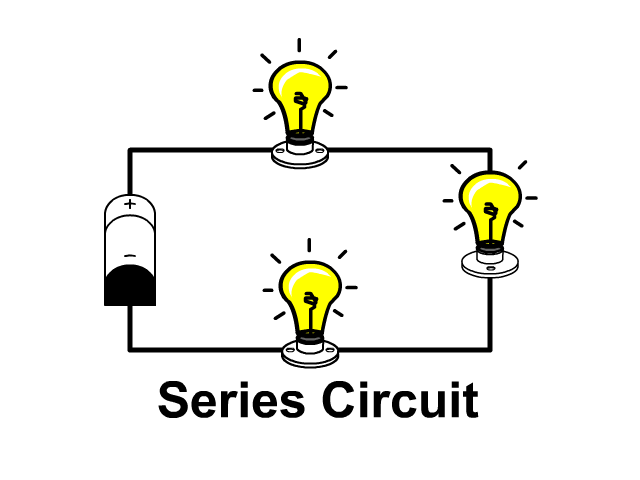
Series circuits
- Components are connected end-to-end
- All the current flows through all the components
- Can only switch them all off at once
- The Potential difference is shared across the whole circuit. The PD of power supply = sum of PD across each component
- The current is the same through all parts of the circuit. The Current at one point = current at any other point
- Total Resistance is the sum of the resistance in each component
- Resistance of two components is bigger than just one of them, because the charge has to push through both of them when flowing round the circuit
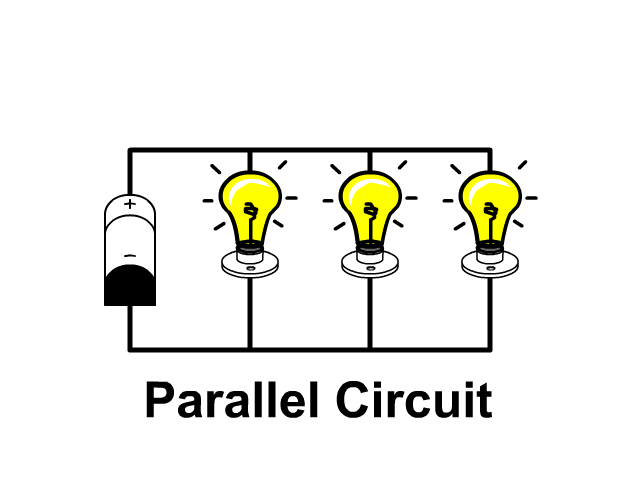
Parallel circuits
- Components are connected separately to the power supply
- Current flows through each one separately
- You can switch each component off individually
- Potential difference is the same across all branches
- PD of power supply = PD of each branch
- Because charge can only pass through any one branch
- Current is shared between each of the branches
- Current through source = sum of current through each branch
- Total resistance is less than the branch with the smallest resistance
- Two resistors in parallel will have a smaller overall resistance than just one
- Because charge has more than one branch to take, so only some charge will flow along each branch