AC & DC (OCR GCSE Physics A (Gateway Science Suite)): Revision Notes
📚Revision Notes
2.2.4 AC & DC
Direct Current (DC)
Note
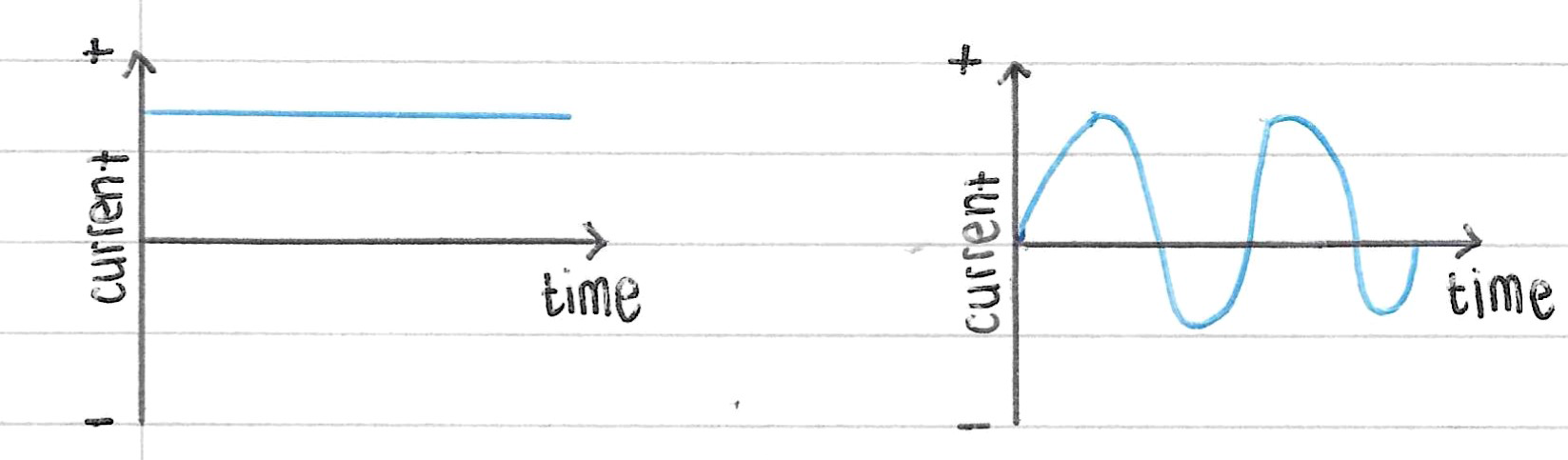
A direct current (DC) is an electric current that constantly flows in only one direction, at a constant voltage. On a graph plotting current or voltage against time for direct current, the line would be horizontal.
Alternating Current (AC)
Note
An alternating current (AC) is an electric current that reverses direction at regular intervals.
Note
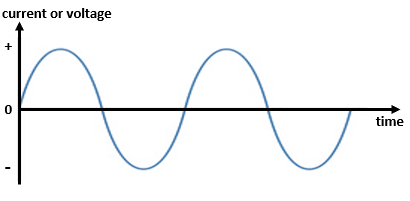
On a graph plotting current or voltage against time for AC, the values will alternate between positive and negative. This shows the direction that the current flows.
- Benefit: Alternating current is used for long-distance energy transmission because it can be transferred more efficiently - It is very easy to use a transformer to increase or decrease the potential difference (P.D.).
- Specifications:
- Frequency: 50 Hz
- P.D.: 230V In the UK, the mains electricity supply operates at a frequency of 50 Hz with a potential difference of 230 V. This means the voltage fluctuates between +230 V and -230 V, causing the current to change direction 50 times per second.
Oscilloscope
- Function: Used to see the pattern of an electrical current.
Note
Formula for Frequency:
- Variables:
- : Time of one cycle
Graphs
- DC Supply: Current remains constant over time.
- AC Supply: Current changes direction periodically over time.