Transmission of Sound Waves (OCR GCSE Physics A (Gateway Science Suite)): Revision Notes
📚Revision Notes
6.1.5 Transmission of Sound Waves
Sound Waves
Note
Sound waves are produced by vibrating particles and are an example of a longitudinal wave. Human ears are uniquely adapted to detect these sound waves. Additionally, certain sound waves, known as ultrasound waves, are used in medicine and echolocation technology.
How Sound Travels
Sound Waves
Note
Sound waves are generated by vibrating objects. These vibrations travel through a surrounding medium, such as air or water.
Note
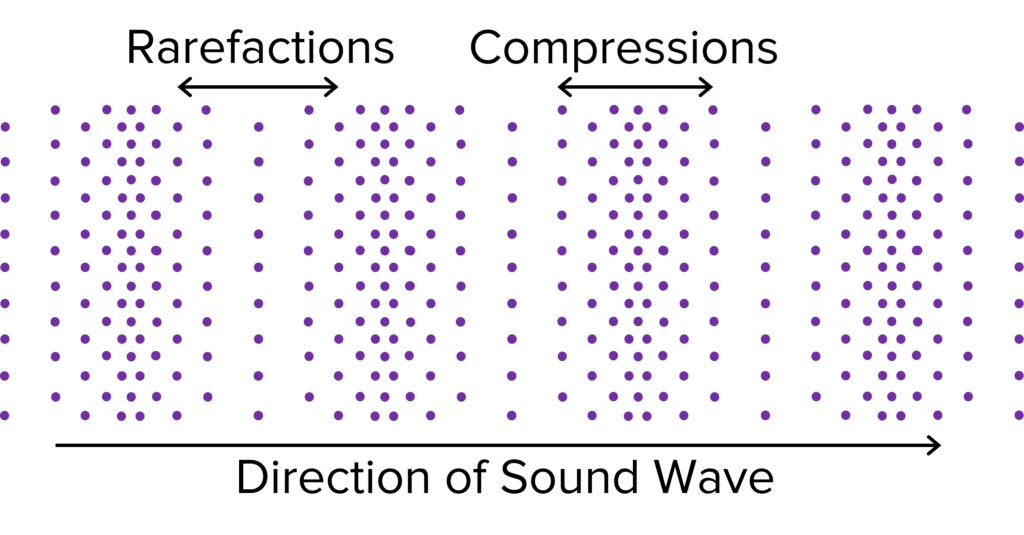
Sound moves through the medium as particles vibrate parallel to the direction of the wave's travel, making sound a longitudinal wave. As the particles vibrate back and forth, they create areas of compression and rarefaction.
Note
Key Points
- Speed of Sound: Sound waves travel fastest in solids because the particles are closer together, allowing vibrations to pass quickly.
- Sound in Space: Sound cannot travel through space because there is no medium (like air or water) to carry the vibrations, meaning no particles are available to transmit the sound.
How We Hear Sound
Note
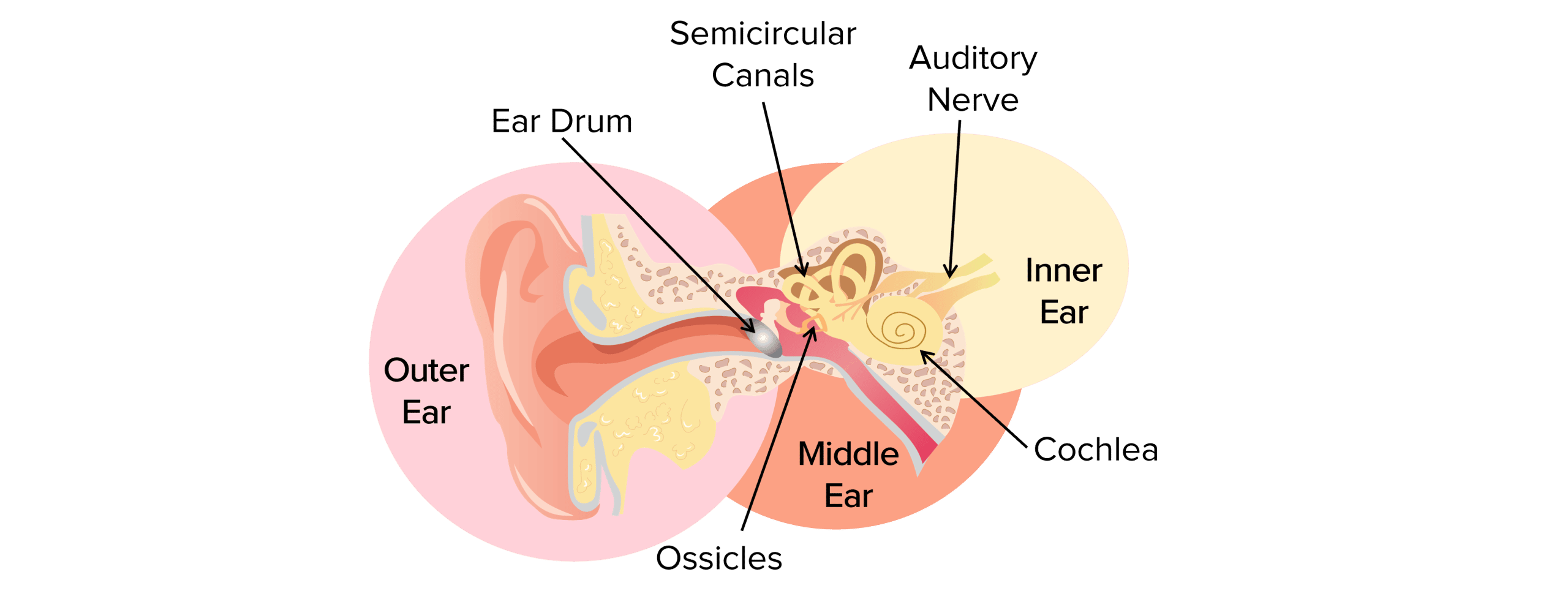
Sound waves enter the ear, causing the eardrum to vibrate. These vibrations are then passed through the ossicles (tiny bones), into the semicircular canals, and finally to the cochlea.
Note
The cochlea converts these vibrations into electrical signals, which are sent to the brain via the auditory nerve.
- Hearing Range: Humans typically hear sounds within the range of 20 Hz to 20 kHz. The size of the eardrum limits this range. Sounds outside this range may be detected by a microphone, but they won't be audible to humans.