Harmonic Accompaniments (Junior Cert Music): Revision Notes
📚Revision Notes
Harmonic Accompaniments
Note
A harmonic accompaniment is an instrumental or vocal layer that is added to the melody to provide harmonic support.
What is a Harmonic Accompaniment?
- A harmonic accompaniment is an instrumental or vocal part that is added to a melody to support it with harmony.
- It can be played by a single musician or a whole orchestra.
- It may include simple single notes or more complex chord progressions.
- Harmonic accompaniments help create a fuller, richer sound.
- Harmonic accompaniments include:
- Sustained notes
- Block chords
- Broken chords
- Harmonic Ostinatos
1. Sustained Notes
- A sustained note is a note that is held for a long time.
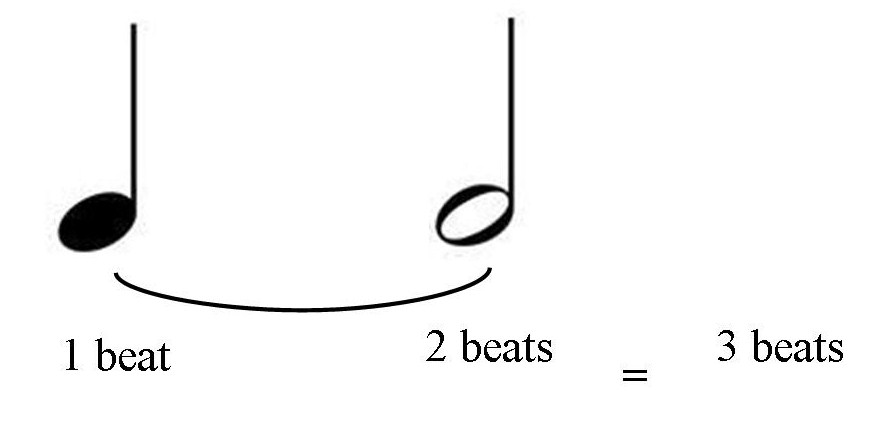
- It can be played using semibreves (4 beats) or tied notes (notes joined by a curved line).
- A tie is a curved line joining two or more notes of the same pitch. It tells the musician to hold the note for the full value of all tied notes.
- Example: Two semibreves tied together are held for 8 beats.
- Sustained notes provide a strong harmonic base and are often used in slow or calm music.
- Types of sustained notes:
- Pedal note: A note that stays the same while the harmony above it changes.
- Drone: a note or chord that is held throughout a piece or section.
2. Block Chords
- A block chord is when all the notes of a chord are played at the same time.
- This type of accompaniment sounds full and strong.
- It is often used in pop, classical, and jazz music.
- Great for supporting the melody with clear, steady harmony.
3. Broken Chords
- Broken chords are when the notes of a chord are played one after another, not together.
- Also called arpeggios.
- Adds a flowing or rippling effect to the accompaniment.
- Helps create rhythm and movement in the music.
- Often used in piano accompaniments.
4. Harmonic Ostinatos
- An ostinato is a short, repeating pattern.
- A harmonic ostinato is a repeating pattern of chords that plays under the melody.
- It can last for a section or the whole piece.
- Often used in pop, rock, film and Baroque music.
- Can be catchy and memorable.
- Played on instruments like guitar or keyboard.
- Sometimes recorded and repeated using a loop pedal.
Processing Effects
- Harmonic accompaniments may be enhanced using processing effects.
- Processing effects are technological changes made to the sound of music.
- Common Processing Effects:
- Reverb: Adds an echo, making the sound feel like it's in a big space (e.g., church or tunnel).
- Distortion: Changes the sound to make it harsh, gritty or fuzzy. Often used with electric guitars.
- Compression: Controls volume levels.
Note
Extra Tip: Chords and Melody
- When notes in the accompaniment match the melody, this is called harmonic support.
- Chords that do this are often called backing chords.
- Backing chords are usually played on guitar or keyboard and are written above the melody using capital letters (e.g., C, F, G).
Recap:
| Feature | Description |
|---|---|
| Sustained Note | A long note held under the melody |
| Pedal Note | A sustained note held while harmony changes |
| Drone | A continuous background note or chord |
| Block Chord | All chord notes played together at the same time |
| Broken Chord | Chord notes played one after another |
| Harmonic Ostinato | A repeating chord pattern under the melody |
| Loop Pedal | A device used to repeat musical patterns in real time |
| Reverb | Echo effect – creates space |
| Distortion | Gritty or fuzzy effect – changes sound quality |