Elements, Compounds, and Mixtures (Junior Cert Science): Revision Notes
📚Revision Notes
Elements, Compounds, and Mixtures
What are elements?
An element is a pure substance that cannot be broken down into anything simpler by chemical methods. Elements are made up of only one type of atom.
Think of elements as the fundamental building blocks of all matter. Just as you can't break down a Lego brick into something simpler while keeping it as a Lego brick, you can't chemically break down an element into anything simpler.
Examples of elements in everyday life
Elements are all around us, even though we might not realise it. Here are some common examples:

- Mercury - used in thermometers
- Helium - fills party balloons
- Aluminium - makes drinks cans
- Neon - creates bright signs
- Sodium - used in street lamps
- Oxygen - essential for breathing and used in hospitals
- Gold - makes jewellery like rings
Understanding atoms in elements
When we draw particle theory diagrams for elements, all the atoms are shown in the same colour to represent that they are the same type of atom.
Note
In particle diagrams for elements, uniform colour indicates that all atoms are of the same type. This visual representation helps us understand that elements contain only one kind of atom, even when those atoms are bonded together in molecules.
For example:
- Copper contains only copper atoms
- Mercury contains only mercury atoms
- Oxygen gas contains only oxygen atoms (joined together in pairs as molecules)
The Periodic Table
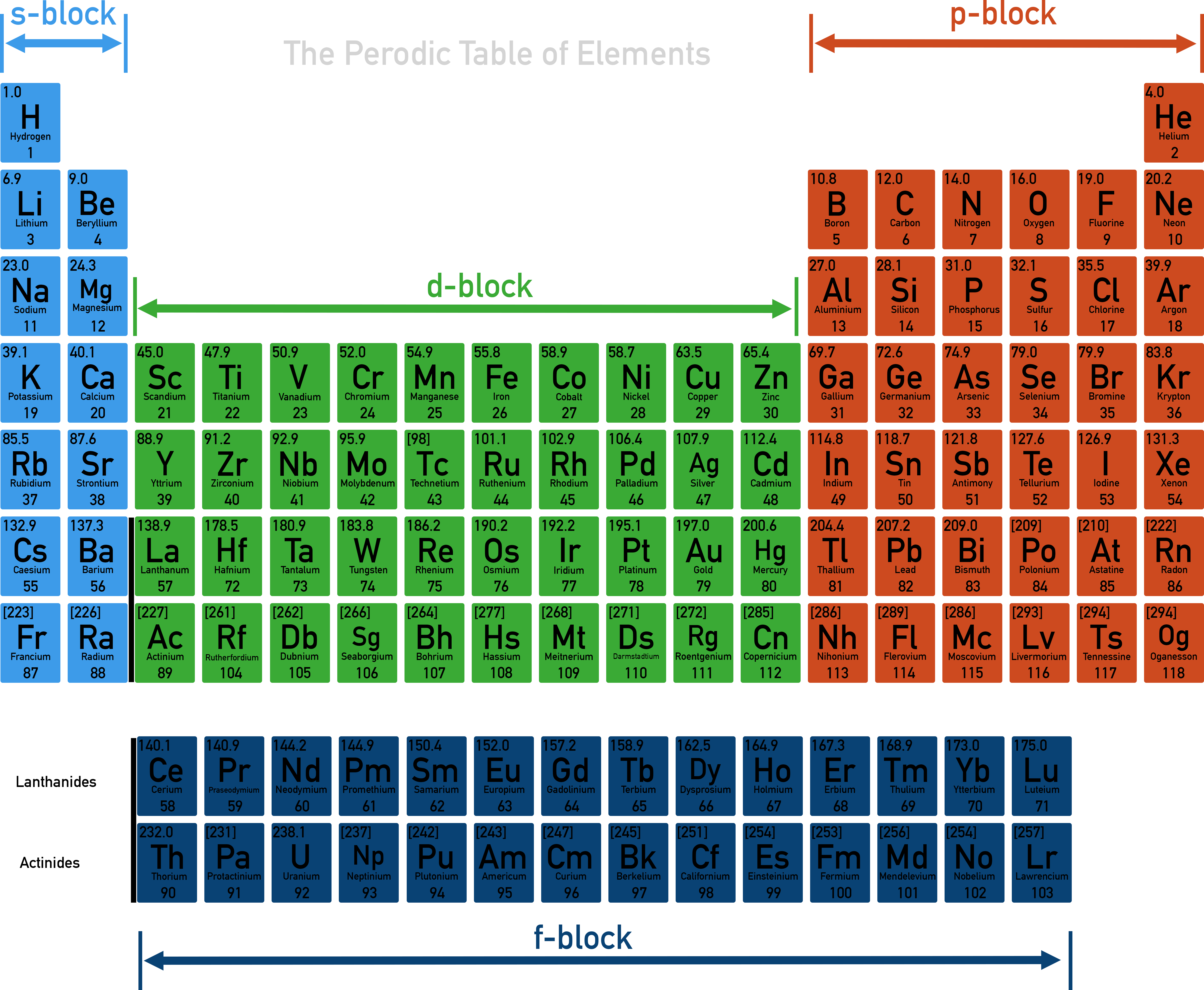
All known elements are organised in a special table called the Periodic Table. This table is printed on the inside back cover of your textbook and is available to use in examinations.
Important
The Periodic Table is your guide to identifying elements. If a substance is listed in the Periodic Table, then it's an element. It's as simple as that! Make sure you're familiar with where to find it and how to read it, as it's an invaluable tool in chemistry.
Names and symbols of elements
Each element has its own unique symbol. This is a shorthand way of representing the element.
How symbols are created:
- Most symbols are simply the first letter of the element's name (always a capital letter)
- Some symbols use the first two letters (first letter capital, second letter lowercase)
- The symbol also represents one atom of that element
Here are some common non-metal elements:
| Element | Symbol |
|---|---|
| Hydrogen | H |
| Carbon | C |
| Nitrogen | N |
| Oxygen | O |
| Fluorine | F |
| Phosphorus | P |
| Sulfur | S |
And some other important elements:
| Element | Symbol |
|---|---|
| Helium | He |
| Neon | Ne |
| Magnesium | Mg |
| Aluminium | Al |
| Silicon | Si |
| Chlorine | Cl |
| Calcium | Ca |
| Manganese | Mn |
| Zinc | Zn |
Latin names for some elements
Some element symbols come from their Latin names rather than their English names. This is because these elements were known to ancient civilisations who spoke Latin.
| Element | Latin Name | Symbol |
|---|---|---|
| Sodium | natrium | Na |
| Iron | ferrum | Fe |
| Copper | cuprum | Cu |
| Silver | argentum | Ag |
| Gold | aurum | Au |
Note
Exam tip: Don't worry if the symbol doesn't match the English name - check if it might come from the Latin name instead! For example, sodium (Na) comes from natrium, and iron (Fe) comes from ferrum.
Robert Boyle and the word 'element'
Note
In , an Irish scientist named Robert Boyle introduced the word "element" into the language of chemistry. He is often called the "father of chemistry" and was born in Lismore Castle, County Waterford. His work helped describe simple substances and laid the foundation for modern chemistry.
What are compounds?
A compound is a substance made up of two or more different elements that are chemically combined together. The elements in compounds are joined by chemical bonds.
Key points about compounds
When elements combine to form compounds, something remarkable happens - the compound has completely different properties from the elements it's made from!
Important
Important features of compounds:
- There are only about different types of atoms (elements)
- However, there are millions of different compounds
- Compounds form when elements combine in a chemical reaction
- The properties of compounds usually differ completely from the elements they contain
- Compounds are described as pure substances because their molecules are the same as each other
Chemical formulas
A chemical formula is a shorthand method that chemists use to represent compounds.
Example
Worked Example: Understanding Chemical Formulas

Water ():
- Water is a compound
- It contains two different elements: hydrogen and oxygen
- There are two atoms of hydrogen joined to one atom of oxygen in each water molecule
The chemical formula is much easier to write than "two atoms of hydrogen joined to one atom of oxygen"!
Common Salt (): Common salt (table salt) is a compound that contains the elements sodium and chlorine. Its chemical formula is . This tells us that the ratio of sodium atoms to chlorine atoms is .
Particle theory diagrams for compounds
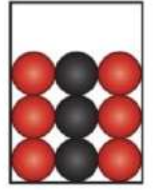
When drawing particle theory diagrams for compounds, we use different colours to show the different types of atoms that are bonded together.
Note
For example:
- Carbon dioxide () consists of molecules with one carbon atom (black) joined to two oxygen atoms (red)
- Water () consists of molecules with two hydrogen atoms joined to one oxygen atom
- Hydrogen chloride () consists of molecules with one hydrogen atom joined to one chlorine atom
Each molecule in a pure compound has exactly the same arrangement of atoms.
What are mixtures?
So far, we've looked at two types of pure substances: elements and compounds. However, not all substances around us are pure. Many of the everyday objects we see are made up of two or more elements or compounds that are blended together. These are called mixtures.
A mixture consists of two or more different substances mingled with each other but not chemically combined.
Understanding mixtures
The key thing to remember about mixtures is that the substances in them are just mixed together - they haven't formed chemical bonds with each other. This means:
- The substances keep their own individual properties
- The different substances can be present in varying amounts
- It's usually quite easy to separate the substances in a mixture
Examples of mixtures in everyday life
Mixtures are everywhere! Here are some common examples:
- Air - a mixture of nitrogen, oxygen, carbon dioxide, and other gases
- Crude oil - a mixture of different liquid chemicals
- Toothpaste - a mixture of sodium fluoride, glycerol, and calcium carbonate
- Concrete - a mixture of sand, cement, and water

Note
Remember: Even though these substances are mixed together, they haven't chemically bonded. If you look at toothpaste or a carton of pure orange juice, you'll see that it's actually a mixture of many substances!
Particle theory diagrams for mixtures
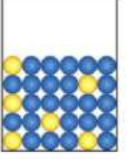
When we draw particle theory diagrams for mixtures, we show different substances present together but not joined by chemical bonds.
Types of mixtures can include:
- A mixture of two solids (e.g., iron filings and sulfur powder)
- A mixture of two liquids (e.g., water and methylated spirits)
- A mixture of two gases (e.g., hydrogen and oxygen)
Note
Notice that in mixtures, the particles keep their own identities - they're just scattered among each other. Unlike compounds, there are no chemical bonds holding different types of particles together.
How can we tell the difference between elements, compounds, and mixtures?
Understanding the differences between these three types of substances is really important in chemistry. Here's a summary table:
| Feature | Mixture | Compound |
|---|---|---|
| Composition | The amounts of substances can vary | Elements are always present in the same fixed amount |
| Number of substances | Contains two or more substances | A single substance |
| Chemical combination | Substances are not chemically combined | Elements are chemically combined |
| Properties | Properties are similar to those of the substances in the mixture | Properties are different from those of the elements that make up the compound |
| Ease of separation | Usually easy to separate the parts | Usually difficult to separate - only possible using suitable experiments |
| Energy changes | Almost no energy changes when a mixture is made | Heat is usually given out or taken in when a compound is formed |
Example: Iron and sulfur
Let's look at a practical example that shows the difference between a mixture and a compound.
Example
Worked Example: Iron and Sulfur - Mixture vs Compound
Creating a mixture: If we mix iron filings and sulfur powder together:
- We get a mixture of iron and sulfur
- The iron remains magnetic
- The sulfur remains yellow
- We can easily separate them using a magnet
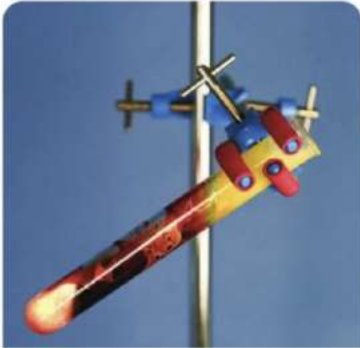
Creating a compound: However, if we heat this mixture:
- A chemical reaction occurs
- The iron and sulfur chemically combine
- A compound called iron sulfide () is formed
- Iron sulfide is a black solid
- It's no longer magnetic
- It looks completely different from the original iron and sulfur
- We cannot separate it back into iron and sulfur using a magnet
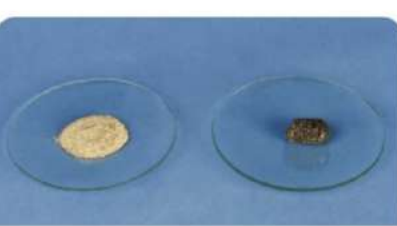
Key observation: A mixture can be separated easily, but a compound is formed through a chemical reaction and has completely different properties from its constituent elements.
Remember!
Summary
Key Points to Remember:
- Elements are pure substances containing only one type of atom and cannot be broken down chemically into simpler substances
- Compounds are substances formed when two or more different elements chemically combine together with chemical bonds
- Mixtures contain two or more substances blended together but not chemically bonded
- All known elements are listed in the Periodic Table
- Element symbols are shorthand representations - some come from Latin names
- The properties of a compound are usually very different from the properties of its constituent elements
- Mixtures keep the properties of the substances they contain and can usually be separated easily