Overview (Leaving Cert Agricultural Science): Revision Notes
📚Revision Notes
Overview
Crop management is the foundation of successful agricultural production, involving a range of practices that influence not only crop yields but also animal welfare, environmental health, and farm sustainability. Understanding these interconnected systems is crucial for modern agricultural science.

Understanding crop management
Crop management refers to the systematic planning and implementation of practices designed to optimise crop production whilst maintaining environmental sustainability. This involves coordinating multiple factors including nutrient supply, water management, pest control, and soil health to achieve the best possible outcomes for both crops and the wider farm system.
Note
Effective crop management requires farmers to balance productivity goals with environmental responsibilities, considering both immediate needs and long-term sustainability.
Impact on animals
Crop management practices create significant effects on both farm animals and wildlife, demonstrating the interconnected nature of agricultural systems.
Positive impacts
Well-managed crops provide substantial benefits for livestock nutrition and welfare. Forage crops such as grass and maize serve as high-quality feed sources that improve livestock nutrition compared to lower-quality alternatives. These crops can be specifically grown to meet the nutritional requirements of different animal species and production stages.
Crop residues like sugar beet tops and straw provide additional feed resources that would otherwise go to waste. This creates a more efficient farm system where crop by-products contribute to animal nutrition, reducing the need for purchased feeds and improving overall farm profitability.
Example
Practical Example: Feed Resource Utilisation
A dairy farm growing maize for silage can provide:
- Primary crop: High-energy maize silage for winter feeding
- Secondary resource: Maize stover (stalks and leaves) for bedding material
- Efficient land use: Meeting both nutrition and management needs from one crop
Appropriate pesticide use helps maintain crop quality by reducing disease levels in feed crops, ensuring that animals receive clean, healthy nutrition that supports their growth and productivity.
Negative impacts
However, poor crop management can harm animal welfare and environmental health. Excessive use of fertilisers and pesticides can contaminate water sources, creating problems for aquatic wildlife and potentially affecting drinking water supplies for farm animals.
Important
Mycotoxin Risk
Mycotoxins represent a serious threat when crops are poorly managed. These toxic compounds produced by fungi can poison animals when present in contaminated feed, leading to serious health issues and even death in severe cases.
Herbicide overuse reduces biodiversity in and around crop fields, destroying natural habitats that support beneficial insects, birds, and other wildlife that contribute to healthy farm ecosystems.
Finding balance
Sustainable crop management practices support both animal welfare and wildlife conservation. This involves using integrated pest management approaches that minimise chemical inputs whilst maintaining crop quality, and preserving field margins and hedgerows that provide wildlife habitats.
Note
The key to sustainable crop management lies in viewing the farm as an interconnected ecosystem where crop, animal, and environmental health all contribute to long-term success.
Crop rotation strategies
Crop rotation involves growing different crops in planned sequences on the same land area to improve soil fertility and break pest and disease cycles. This traditional practice remains one of the most effective management tools available to farmers.
Benefits of rotation
Crop rotation delivers multiple benefits that improve farm productivity and sustainability. Higher yields result from improved soil fertility and reduced pest pressure. Better soil health develops through varied root systems and different nutrient cycling patterns. Workload spreading occurs as different crops have varying seasonal demands, helping farmers manage labour more effectively throughout the year.
The practice also enhances organic matter content in soil through diverse crop residues, improving soil structure and water-holding capacity.
Example
Worked Example: Four-Year Rotation System
Year 1: Wheat (cereal crop - uses nitrogen) Year 2: Oilseed rape (break crop - different pest/disease cycle) Year 3: Barley (cereal crop - lower nitrogen demand) Year 4: Clover (legume - fixes nitrogen for following crops)
This rotation breaks pest cycles, maintains soil fertility, and spreads workload across seasons.
Alternative approaches
Several alternatives complement traditional rotation systems:
Note
Complementary Practices
- Intercropping involves growing two or more crops together in the same field, maximising land use efficiency and creating beneficial interactions between different plant species
- Cover crops and green manures protect and improve soil during periods when main crops aren't growing, preventing erosion and adding nutrients when incorporated into the soil
- Resistant varieties help break disease cycles by reducing pathogen build-up in the soil, whilst biological control methods use natural predators and beneficial organisms to manage pest populations
Modern innovations in crop management
Technology and scientific advances continue to revolutionise crop management practices, offering new tools for precision and sustainability.
Precision agriculture
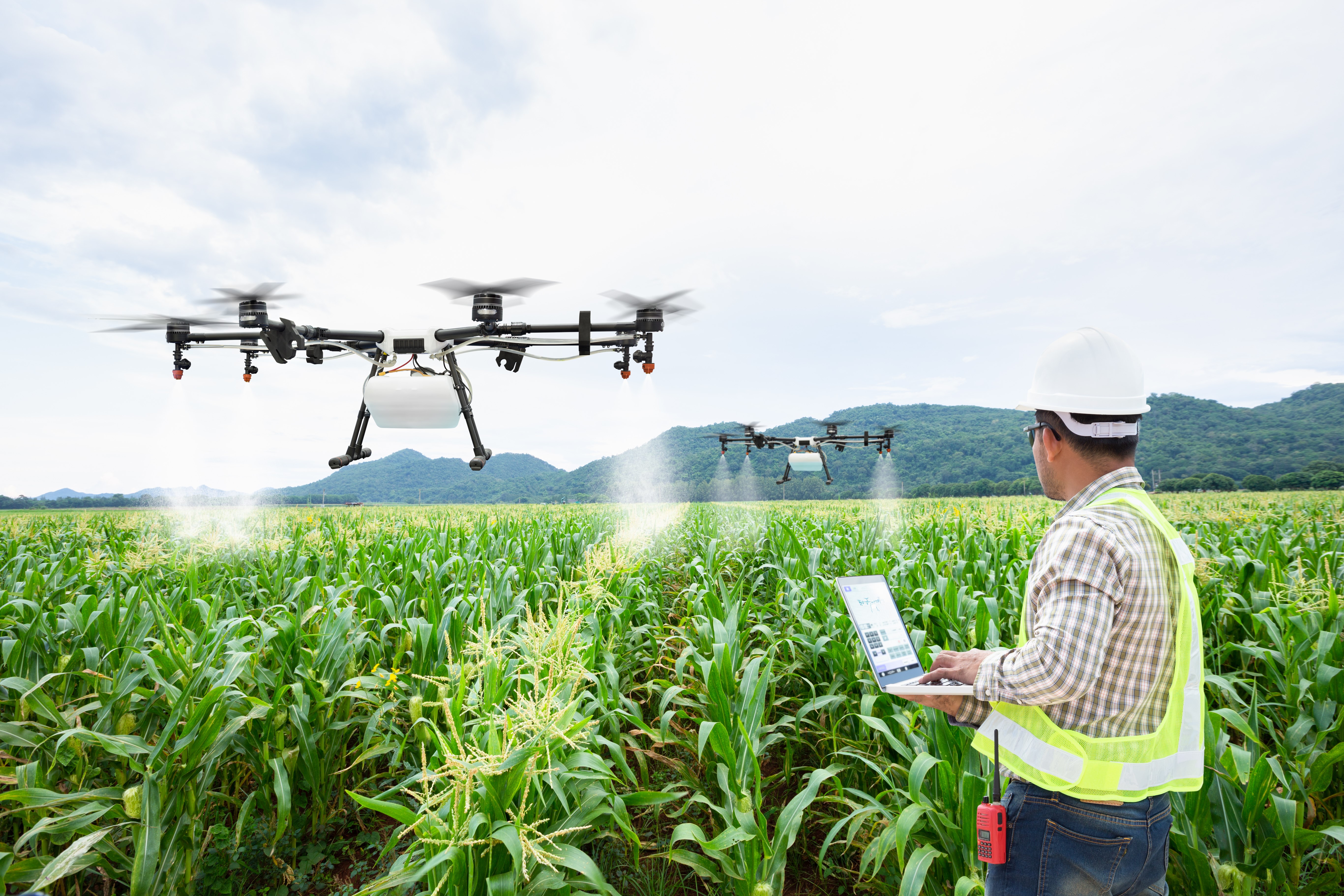
Modern farming increasingly relies on technology to optimise management decisions. Precision agriculture uses GPS technology, sensors, and data analysis to apply inputs exactly where and when they're needed, reducing waste and environmental impact.
Note
Technology Integration
Drones and remote sensing enable farmers to monitor crop health across large areas, identifying problems early and targeting interventions precisely. Automated irrigation systems respond to soil moisture levels and weather conditions, ensuring crops receive optimal water supplies whilst conserving this precious resource.
Biotechnology applications
Genetically modified crops offer solutions to specific agricultural challenges. Blight-resistant potatoes reduce the need for fungicide applications, whilst Bt maize produces its own insect resistance, reducing pesticide requirements.
Modern biotechnology tools include:
- Marker-assisted selection accelerates traditional plant breeding by identifying beneficial genes more quickly, allowing development of improved varieties with enhanced yield potential, disease resistance, or nutritional content
- Biopesticides derived from natural sources provide pest control options with reduced environmental impact compared to synthetic chemicals
- Microbial inoculants, including mycorrhizae and nitrogen-fixing bacteria, enhance plant nutrition and soil health through beneficial biological relationships
Key management factors
Successful crop management requires careful attention to multiple interconnected factors that influence plant growth and development.
Nutrient management
Effective nutrient management involves matching fertiliser applications to crop requirements at different growth stages, avoiding both over-application that wastes resources and under-application that limits yields. Soil testing guides decision-making by identifying nutrient levels and pH status.
Water management
Water management strategies must address both excess and shortage conditions. Drainage systems prevent waterlogging that can damage root systems and reduce yields, whilst irrigation provides water security during dry periods to maintain crop growth.
Pest and disease control
Important
Integrated Pest Management (IPM)
Integrated Pest Management (IPM) combines multiple approaches including biological control, resistant varieties, cultural practices, and targeted pesticide use when necessary. This strategy reduces reliance on chemicals whilst maintaining effective pest control.
Soil health
Maintaining soil organic matter content supports soil structure, water retention, and nutrient cycling. Preventing soil compaction through appropriate machinery use and timing protects soil structure and root development.
Environmental considerations
Modern crop management increasingly considers environmental impact, including strategies to reduce greenhouse gas emissions and protect pollinator populations through careful pesticide selection and timing.
Summary
Key Points to Remember:
- Crop management affects animals both positively (through quality feed) and negatively (through chemical contamination and habitat loss)
- Crop rotation breaks pest cycles, improves soil fertility, and reduces chemical input requirements
- Modern innovations like precision agriculture and biotechnology improve efficiency whilst supporting sustainability goals
- Successful management requires balancing nutrient, water, pest, soil, and environmental factors
- Integrated approaches that combine traditional practices with modern technology achieve the best outcomes for productivity and sustainability