Haploid and Diploid Cells (Leaving Cert Biology): Revision Notes
📚Revision Notes
Haploid and Diploid Cells
Note
In humans and other organisms, cells can have one or two sets of chromosomes, depending on their type and function. Understanding the difference between haploid and diploid cells is essential for grasping how genetic information is inherited and how cell division works. This concept is crucial for topics like mitosis, meiosis, and sexual reproduction.
Chromosomes and Homologous Pairs
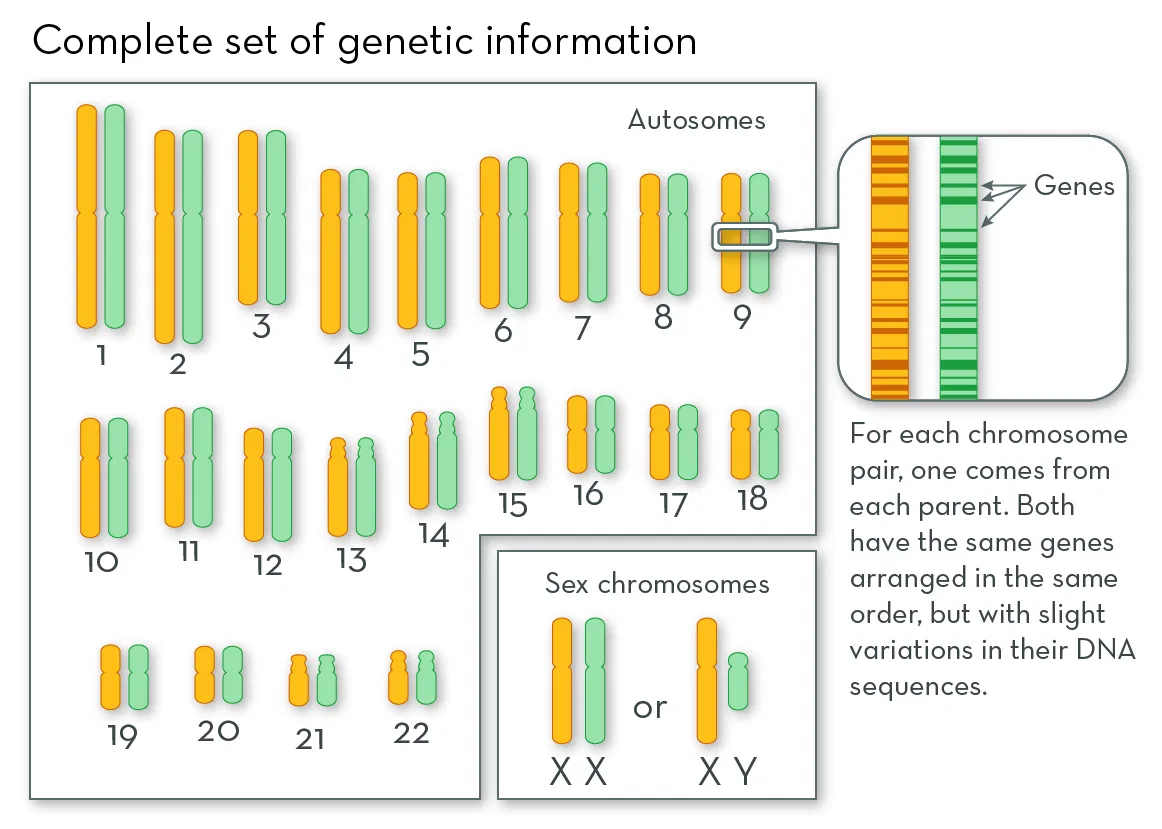
- Humans have 23 pairs of chromosomes in most of their cells. These pairs are called homologous pairs.
- Each homologous pair contains genes that control the same characteristics, but they may not carry the same version of the gene (allele).
Note
What does this mean? "Each homologous pair contains genes that control the same characteristics__, but they may not carry the same version of the gene (allele)."
Each pair of chromosomes carries genes that control the same traits, like eye colour or height. However, they don't always carry the same version of the gene.
For example, one chromosome might carry a gene for brown eyes, while the other might have a gene for blue eyes.
- Pair 1 is the longest and has the most genes, meaning it controls more traits.
- Pair 22 is the shortest and has the fewest genes, so it controls fewer traits.
Sex Chromosomes
- The 23rd pair determines the gender of a person. (The sex chromosomes.)
- Female: XX
- Male: XY
- The Y chromosome is shorter than the X chromosome.
- The sex chromosomes also control some other characteristics, not just gender.
- For example, they can carry genes for traits like hair growth or certain genetic disorders.
Haploid Cells
Note
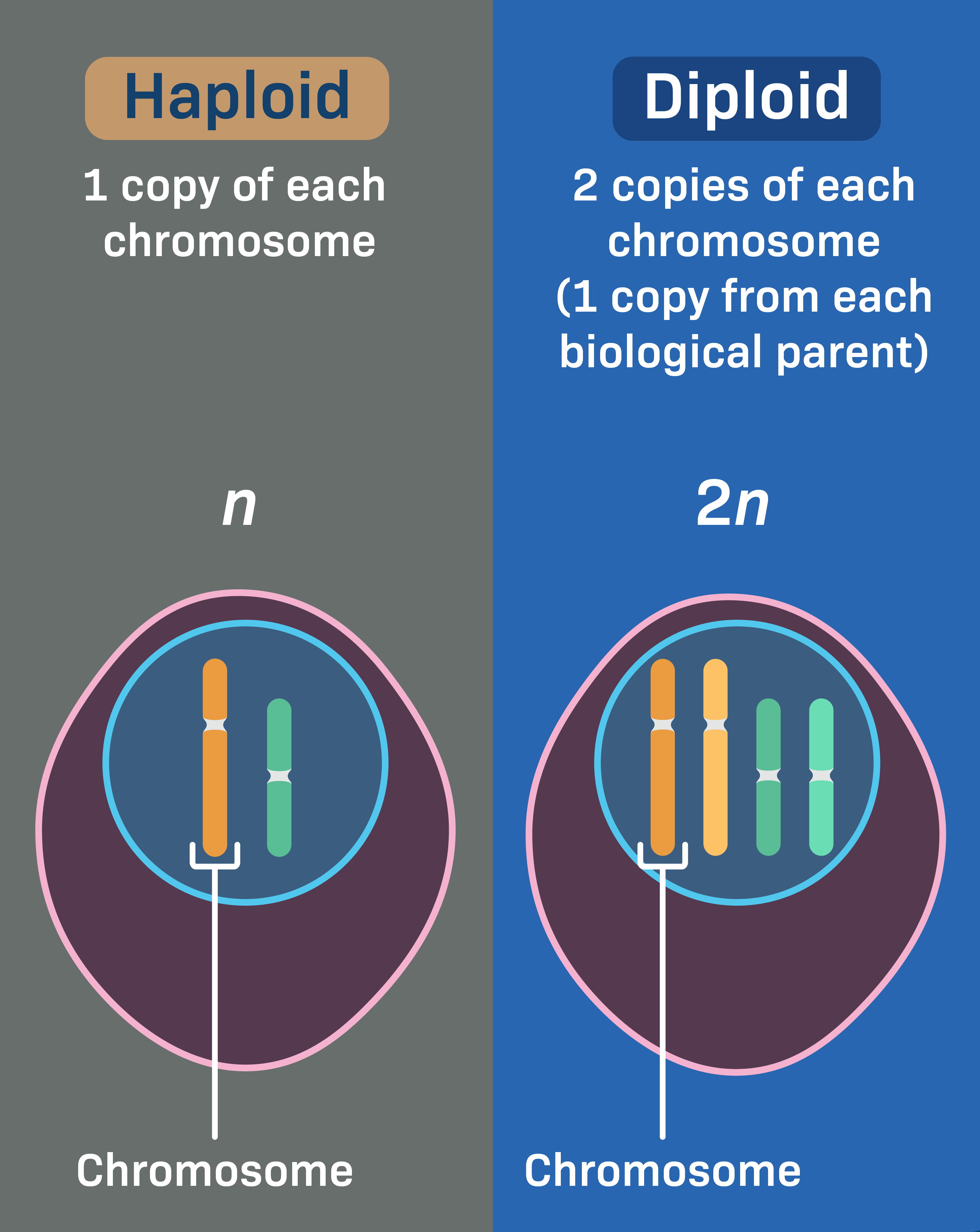
A haploid cell has one set of chromosomes.
- The letter n represents a haploid cell.
- In humans, haploid cells include sperm and egg cells, each with n = 23 chromosomes.
- Haploid cells are crucial for sexual reproduction, as they combine during fertilisation to form a diploid cell.
Diploid Cells
Note
A diploid cell has two sets of chromosomes.
- 2n represents a diploid cell.
- In humans, most body (somatic) cells are diploid, with 2n = 46 chromosomes.
- Diploid cells ensure genetic information is inherited in pairs, one set from each parent.
Note
A haploid cell has one set of chromosomes. (n) A diploid cell has two sets of chromosomes. (2n)
Note
Note: In birds, butterflies, and moths, males have XX chromosomes, and females have XY chromosomes. This is the opposite of humans, where females are XX and males are XY.
Key Differences Between Haploid and Diploid Cells:
| Feature | Haploid Cells | Diploid Cells |
|---|---|---|
| Number of Sets | One set of chromosomes (n) | Two sets of chromosomes (2n) |
| Human Examples | Sperm and egg cells (n = 23) | Most body cells (2n = 46) |
| Role | Sexual reproduction | Growth, repair, and maintenance |
Note
We understand that this topic can feel confusing, but don't worry! Leaving Cert questions are often repetitive, and we'll focus on tackling them in the upcoming notes. For now, concentrate on learning your definitions and grasping the key concepts. If you're finding it difficult, remember that this is a challenging and abstract topic, different from what you've studied before.

Be patient with yourself—hard work will pay off. You've got this, and we're here to support you every step of the way!