Plant Cell (Leaving Cert Biology): Revision Notes
📚Revision Notes
Plant Cell
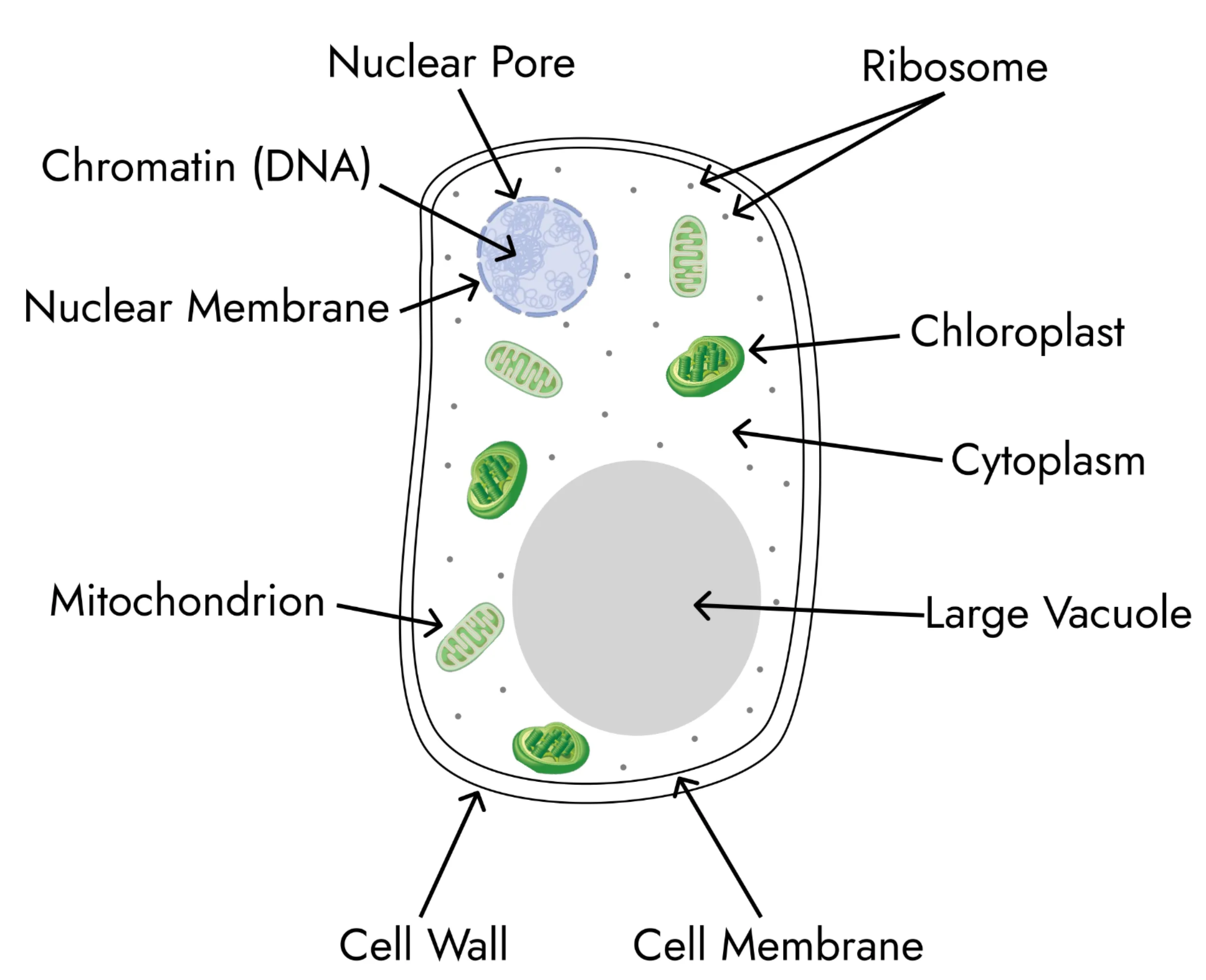
Cell Organelle
- Cell Membrane
- Cytoplasm
- Nucleus
- Ribosomes
- Mitochondria
- Cell Wall
- Chloroplasts
- Large Vacuole
Note
Organelles Found Only in Plant Cells
- Cell Wall
- Chloroplasts
- Large Vacuole
1. Cell Membrane
Function:
-
Retains the cell contents.
-
Controls what enters and leaves the cell.
-
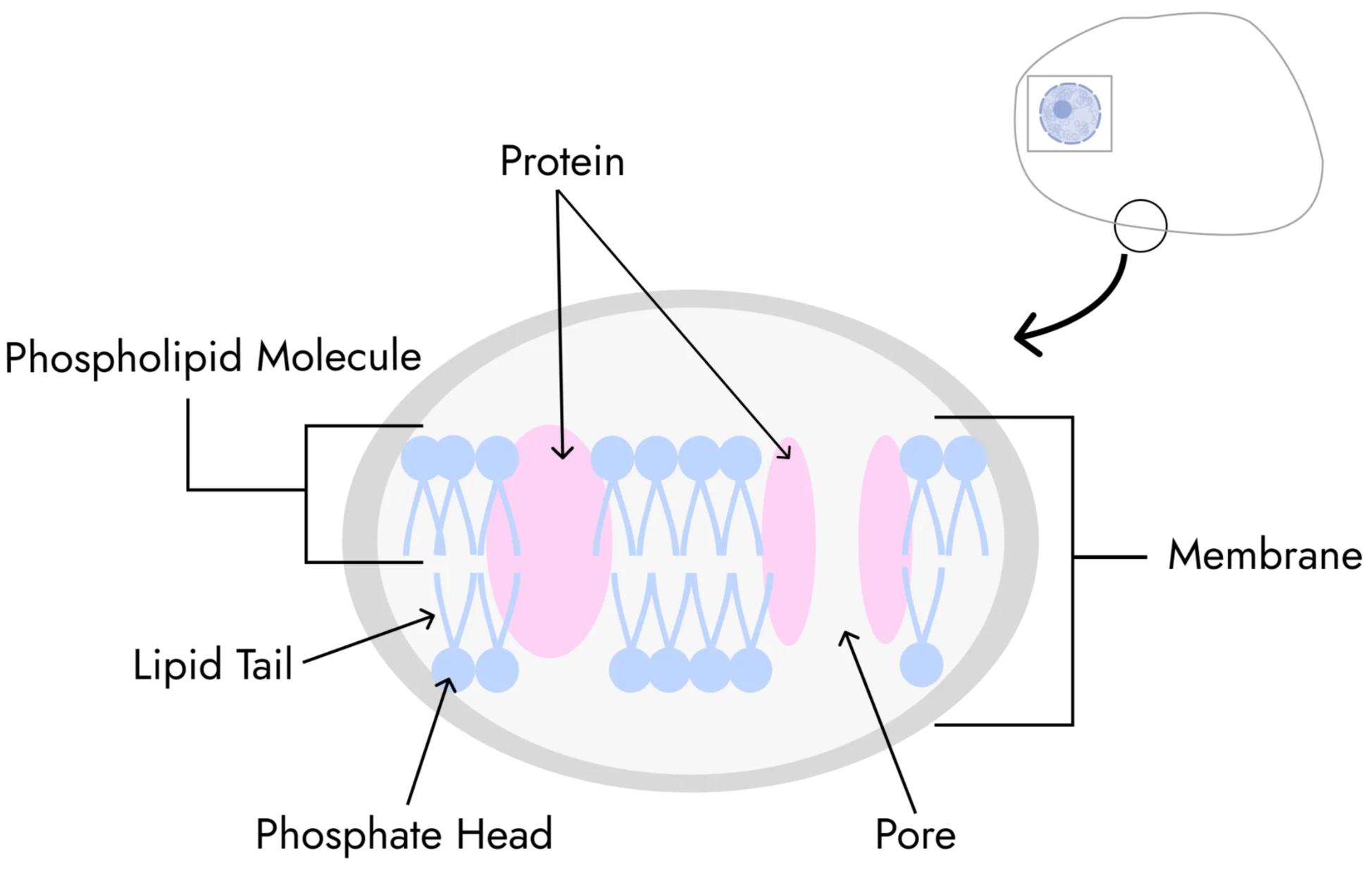
It is selectively permeable. Composition:
-
Made up of a thin layer of lipids and proteins.
-
Two layers of phospholipid molecules form a lipid bilayer.
Note
Selectively permeable means the cell membrane allows certain molecules to pass through while blocking others. For example, oxygen can pass into an animal cell.
Cell Membrane
2. Cytoplasm
Function:
-
A jelly like substance that suspends cell organelle
-
Chemical reactions occur here. Composition:
-
Includes sugars, which are needed for diffusion and osmosis to occur.
Note
Cytosol: the cytoplasm minus organelles.
Note
Quick Definition Review! Diffusion: The movement of substances from an area of high concentration to an area of low concentration.
Osmosis: The movement of water molecules from an area of high water concentration to an area of low water concentration across a semi-permeable membrane.
3. Nucleus
Function:
- The control centre of the cell.
- Responsible for DNA replication and cell division.
Note
DNA: Deoxyribonucleic Acid
Composition:
- Surrounded by a double membrane with nuclear pores.
- Contains DNA which is organised into chromosomes.
Note
Chromosomes are composed of DNA and protein. When a cell isn't dividing, the chromosomes are usually in a thin, thread-like form called chromatin.
4. Ribosomes
Function:
-
Protein synthesis (make protein). Composition:
-
Made of protein and RNA (ribonucleic acid).
5. Mitochondria
Function:
-
Aerobic respiration occurs here. Composition:
-
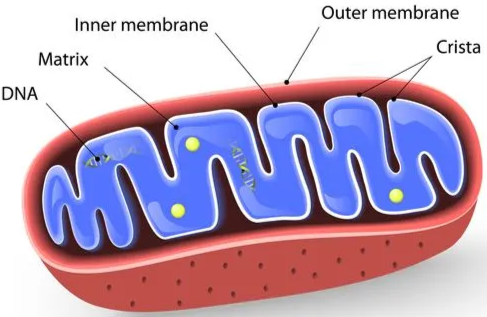
A double membrane with inner folding of cristae.
-
These increase surface area, allowing more energy-producing reactions to occur.
-
For example, mitochondria in the legs are heavily folded, as they require lots of energy.
-
The number of mitochondria in a cell depends on its energy needs.
-
Cells requiring more energy (like leg muscles) have more mitochondria.
-
Mitochondria contain their own DNA.
6. Cell Wall
Function:
-
Provide strength and support to plant cells. Composition:
-
Made of cellulose (a structural polysaccharide).
-
Fully permeable.
Note
Exam Tip: If asked for a structural role of a carbohydrate, remember that cellulose is a structural polysaccharide in plant cell walls.
7. Chloroplasts
Function:
- Photosynthesis.
Note
Photosynthesis is the process by which plants use sunlight, carbon dioxide, and water to produce glucose and oxygen.
Composition:
- Contain the green pigment chlorophyll, which allows plants to photosynthesise.
- They have their own DNA, allowing them to replicate and produce new chloroplasts.
8. Large Vacuole
Function:
-
Store water, food and waste.
-
Helps to maintain the shape of the plant cell (turgid). Composition:
-
A large fluid filled sac.
-
Filled with cell sap (a mixture of water, minerals and pigments).
Note
Turgor Pressure: The outward pressure of the vacuole and cytoplasm against the cell wall.
- A plant cell is turgid when it is full of water. This causes the cell membrane to press against the cell wall and makes the cell firm.
- A plant cell is plasmolysed when it loses water. This causes the cell membrane to pull away from the cell wall. The cell becomes less firm and the plant wilts.