Microorganisms in Industrial Fermentations (Leaving Cert Biology): Revision Notes
📚Revision Notes
Microorganisms in Industrial Fermentations
Note
Bioprocessing: the use of enzyme-controlled reactions to make a product.
Key Points about Industrial Fermentations:
- Micro-organisms Used:
- The main micro-organisms used are bacteria and fungi, especially yeast.
- Although plant and animal cells can be used, micro-organisms are preferred due to their efficiency.
- Fermentation:
- In industry, fermentation refers to the production of useful products by micro-organisms, with or without oxygen.
- Bioreactors:
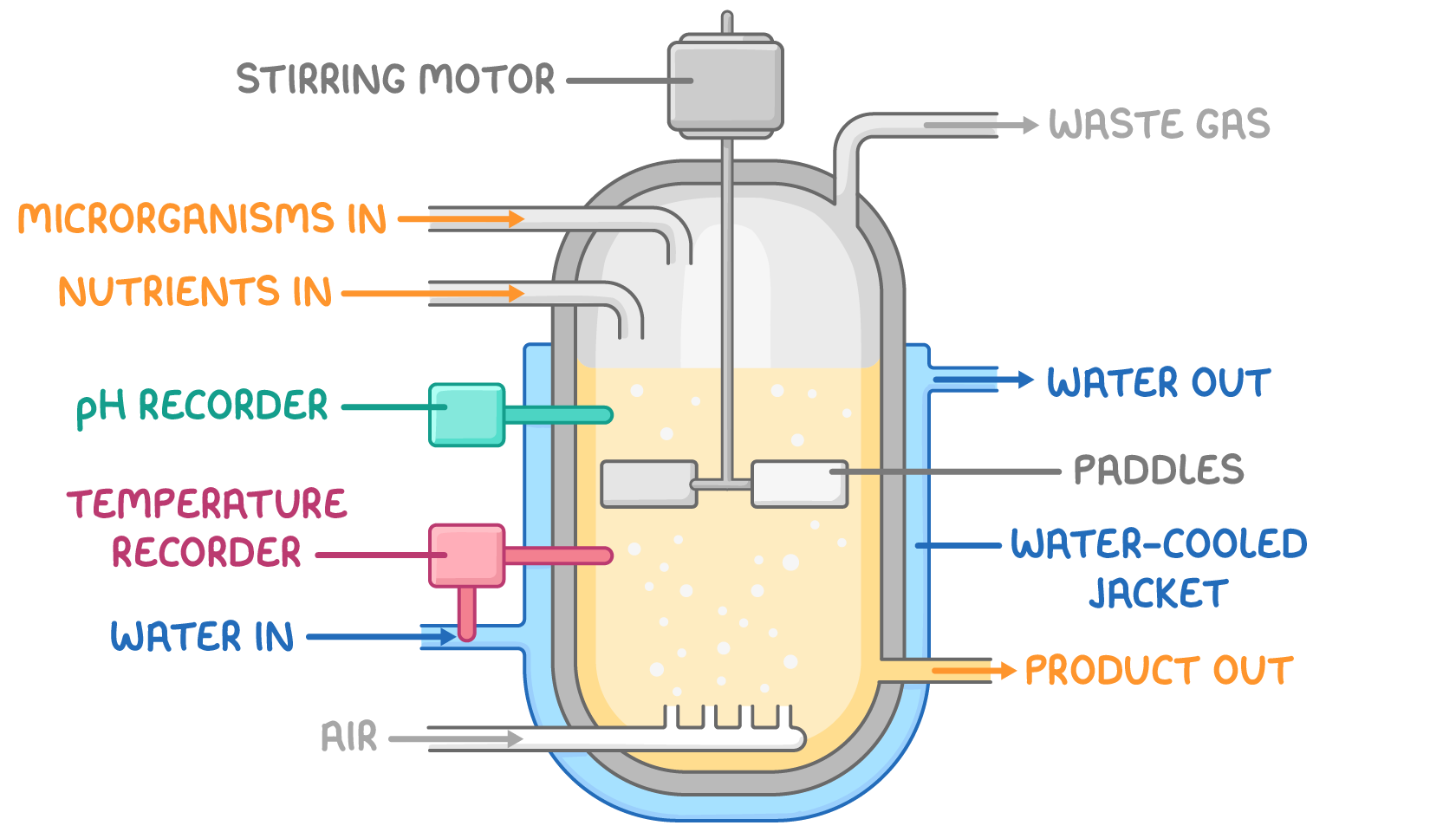
- Industrial fermentations are carried out in bioreactors (large vessels designed for fermentation).
- To ensure the product is properly formed, specific conditions must be maintained:
- Correct nutrients and micro-organisms must be used.
- Temperature and pH must be kept at suitable levels.
- Oxygen may or may not be required, depending on the process.
- A sterile environment is essential to prevent contamination.
- The mixture is usually stirred or agitated to ensure even distribution of nutrients and conditions.
Micro-organisms Used in Bioprocessing:
- Yeast:
- Used to produce beer and wine through alcohol fermentation.
- Produces carbon dioxide to help dough rise in bread making.
- Bacteria and Yeasts (Traditional Products):
- In the past, bacteria and yeasts were used to produce:
- Yoghurt
- Cheese
- Vinegar
- Soy sauce
- Antibiotics
- Genetically Altered Micro-organisms:
- More recently, bacteria, yeasts, and fungi have been genetically modified to produce a wide variety of products, including:
- Solvents
- Amino acids
- Vitamins
- Drugs
- Food additives
- Enzymes to break down stains (e.g., in detergents).
- Fuel such as biogas.
- Flavourings for food products.
- Immobilised Micro-organisms:
- Immobilised E. coli is used in water treatment to detoxify sewage in waste water.
Importance of Micro-organisms in Industrial Fermentations:
- Micro-organisms play a key role in producing a wide range of products used in food, medicine, and industry.
- Advances in genetic engineering have expanded the range of products that can be made using micro-organisms.
- They are cost-effective, efficient, and environmentally friendly.