The Carbon Cycle (Leaving Cert Biology): Revision Notes
📚Revision Notes
The Carbon Cycle
Note
Nutrient recycling: The way in which elements or minerals are absorbed by organisms, released into the atmosphere when organisms decompose and are absorbed by other organisms. Carbon and nitrogen can be continuously recycled and reused.
The Carbon Cycle
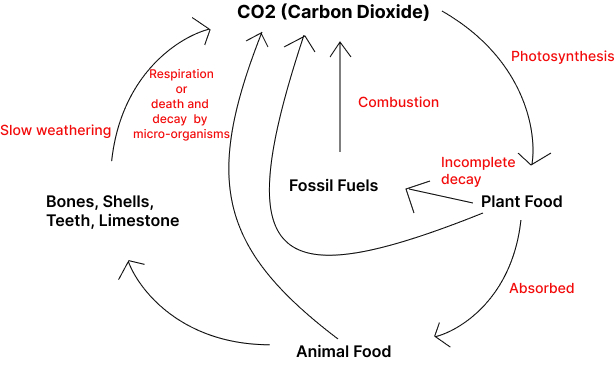
- Photosynthesis: Plants, algae, and some bacteria take in carbon dioxide (CO₂) from the atmosphere and convert it into glucose, storing carbon in organic matter.
- Respiration: Animals, plants, and microbes release CO₂ back into the atmosphere when they break down glucose for energy.
- Decomposition: When organisms die, decomposers break down their bodies, releasing CO₂ (and methane in some cases) back into the air or soil.
- Combustion: Burning fossil fuels (coal, oil, gas) and biomass releases stored carbon as CO₂ into the atmosphere.
- Fossilisation: Over millions of years, dead plant and animal matter can be converted into fossil fuels, locking away carbon.
- Oceans: Oceans absorb large amounts of CO₂ from the atmosphere. Carbon is stored in dissolved form, used by marine organisms to build shells and skeletons, and eventually forms sedimentary rocks (like limestone).
- Volcanic activity: Volcanoes release CO₂ into the atmosphere when carbon-rich rocks are melted and erupted.