Biotic Factors (Leaving Cert Biology): Revision Notes
📚Revision Notes
Biotic Factors
Biotic factors are the living components within an ecosystem that influence other organisms. These biological interactions shape how species survive, reproduce, and evolve together. Understanding biotic factors is essential for studying ecosystem dynamics and species relationships.
Note
Biotic factors are fundamental to understanding how ecosystems function. Unlike abiotic factors (non-living elements like temperature and soil), biotic factors involve direct interactions between living organisms that can dramatically affect population sizes and species survival.
The main types of biotic factors include predation, competition, and symbiosis. Each plays a crucial role in maintaining ecological balance and driving natural selection processes.
Predation
Predation involves one organism hunting and consuming another for survival. The predator is the organism that hunts and kills, while the prey is the organism being hunted and consumed.
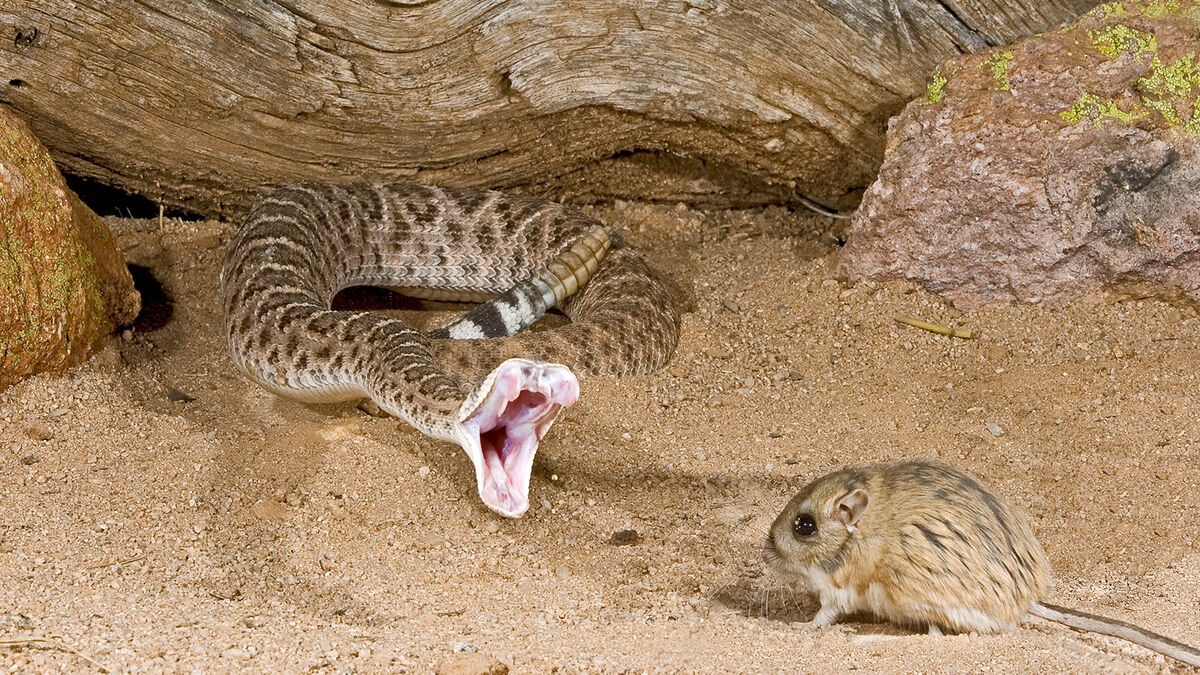
Example
Common Predator-Prey Relationships:
- Ladybirds feeding on aphids - Small insects controlling garden pests
- Blackbirds hunting earthworms - Birds extracting protein-rich prey from soil
- Hawks capturing mice - Aerial predators targeting ground-dwelling mammals
- Otters catching fish - Aquatic mammals hunting in freshwater environments
Biological control applications
Scientists use predator-prey relationships for natural pest management. For instance, ladybirds are introduced to gardens to control aphid populations, and certain bacteria help manage butterfly larvae to protect crops from damage.
Predator-prey population cycles
The numbers of predators and prey are closely linked in repeating patterns. When prey populations increase, more food becomes available for predators, causing predator numbers to rise. However, as predators increase, they consume more prey, causing prey populations to decline. This reduction in prey then leads to fewer predators surviving, allowing prey numbers to recover and restart the cycle.
Important
Key Characteristics of Population Cycles:
- Prey populations typically peak before predator populations
- The maximum number of predators always occurs slightly after the peak in prey numbers
- These oscillating patterns help maintain ecological balance
Understanding this timing is crucial - the predator response always lags behind prey population changes.
Factors influencing predator-prey relationships
Several environmental factors affect how predators and prey interact:
Food availability: Large prey populations provide abundant food for predators, increasing predator survival and reproduction. As prey becomes scarce, predator numbers naturally decline.
Concealment strategies: Prey species develop hiding behaviours and camouflage techniques to avoid detection. When prey populations are small, remaining individuals can conceal themselves more effectively, making it harder for predators to locate sufficient food.
Predator mobility: If prey becomes too scarce in one area, predators may move to regions where prey is more abundant, allowing local prey populations to recover.
Competition
Competition occurs when organisms struggle for limited resources essential for survival. This biological interaction significantly influences population sizes and species distribution patterns.

Types of competition
Intra-specific competition happens between members of the same species. Examples include dandelions competing for soil space or rabbits competing for food sources.
Inter-specific competition occurs between members of different species. For example, blackbirds and thrushes may compete for insects and snails, while grass and buttercups compete for sunlight.
Note
Remember the difference: Intra = within the same species (like siblings fighting), Inter = between different species (like different animals competing for the same habitat).
Competitive strategies
Contest competition involves direct physical confrontation between individuals. Animals may fight for territories, mating rights, or food sources. Usually, the strongest individual wins and gains access to the resource while others receive nothing.
Example
Contest Competition Example:
Male deer competing during mating season engage in physical battles using their antlers to establish dominance. The winner secures territory and reproductive opportunities, while losers are completely excluded from mating.
Scramble competition means all competing individuals share the available resource. This might result in none of the competitors getting enough resources to thrive.
Example
Scramble Competition Example:
Overcrowded seedlings in flower beds all compete for the same nutrients, water, and sunlight. Unless some seedlings are removed, all will receive insufficient resources and grow poorly or fail to survive.
Symbiosis
Symbiosis describes close relationships between two different species living in association, where at least one species benefits from the interaction.
Types of symbiotic relationships
Mutualism benefits both organisms involved in the relationship. Examples include:
- Cellulose-digesting bacteria in animal intestines: bacteria receive shelter and nutrients, while animals can digest plant material
- Bacteria in human intestines: bacteria get habitat and food, humans receive vitamins B and K
- Nitrogen-fixing bacteria in plant root nodules: bacteria obtain nutrients from plants, plants receive nitrates for growth
Commensalism benefits one organism while the other remains unaffected. Examples include:
- Bacteria living on human skin without causing harm or benefit to humans
- Birds building nests in trees without affecting the tree
Parasitism benefits one organism (the parasite) while harming the other (the host). Examples include:
Important
Types of Parasites:
Ectoparasites live outside their host:
- Fleas on dogs
- Mosquitoes feeding on human blood
- Aphids on rose bushes
Endoparasites live inside their host:
- Liver flukes in sheep
- Potato blight fungus in potato plants
- Tapeworms in human intestines
The location matters - ecto means "outside" and endo means "inside".
Ecological roles of symbiotic relationships
Symbiotic relationships serve important functions in ecosystems:
Nutrient cycling: Nitrogen-fixing bacteria in plant roots convert atmospheric nitrogen into forms plants can use, supporting primary production.
Population control: Parasites help regulate host population sizes, preventing any single species from becoming too dominant.
Disease prevention: Beneficial bacteria help control harmful microorganisms, maintaining ecosystem health.
Supporting biodiversity: Symbiotic fungi in plant roots enhance water and mineral absorption, promoting plant diversity and ecosystem stability.
Summary
Key Points to Remember:
-
Biotic factors are living components that influence other organisms in ecosystems through predation, competition, and symbiosis
-
Predator-prey relationships create cyclical population patterns and drive natural selection, with applications in biological pest control
-
Competition for limited resources occurs both within species (intra-specific) and between species (inter-specific), using contest or scramble strategies
-
Symbiosis includes mutualism (both benefit), commensalism (one benefits, other unaffected), and parasitism (one benefits, other harmed)
-
These biotic interactions maintain ecological balance, control population sizes, and support ecosystem functions like nutrient cycling and biodiversity