The Alimentary Canal: The Large Intestine (Leaving Cert Biology): Revision Notes
📚Revision Notes
The Alimentary Canal: The Large Intestine
- Mouth
- Oesophagus
- Stomach
- Small intestine
- Liver
- Pancreas
- Large intestine
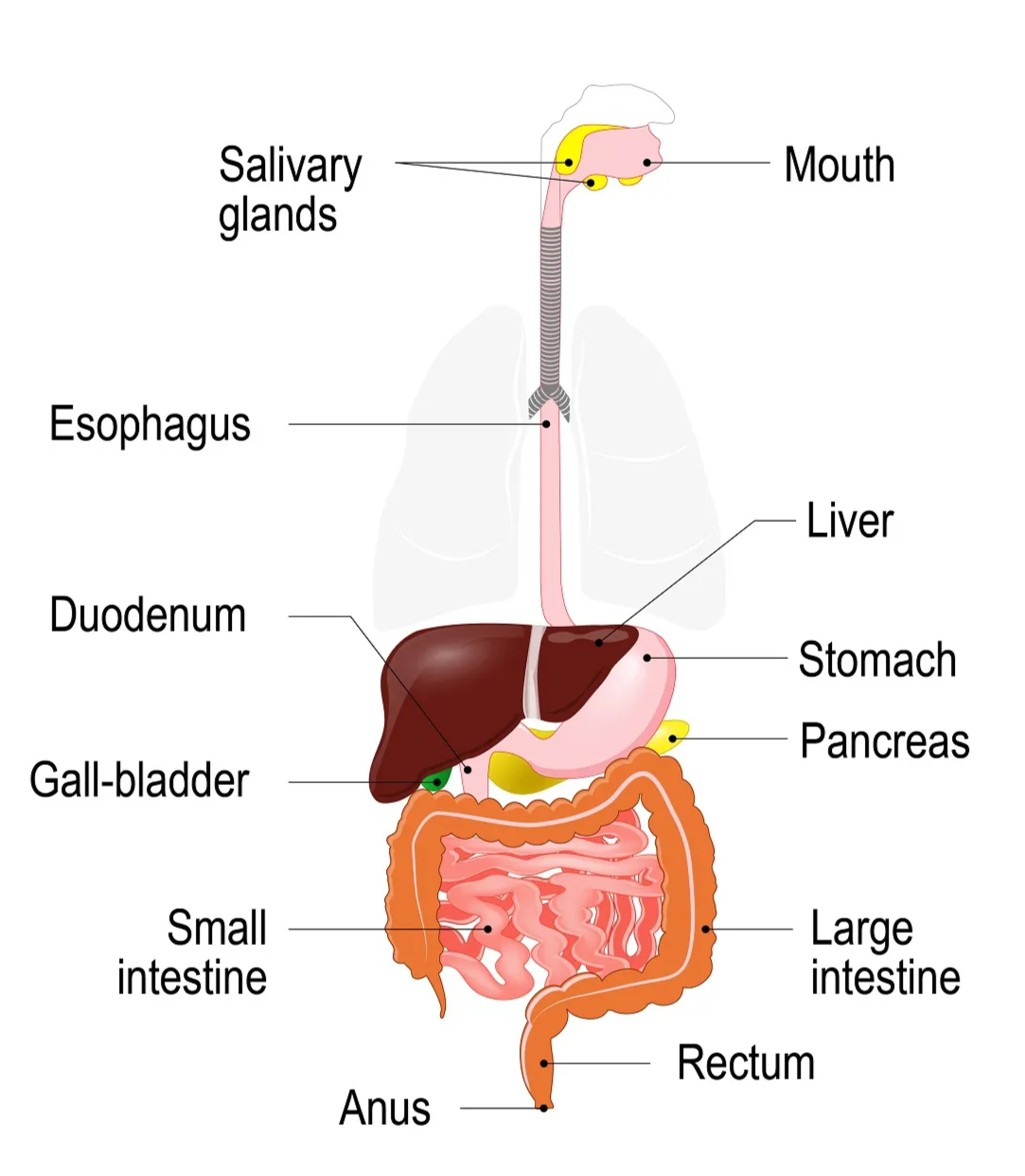
7. The Large Intestine
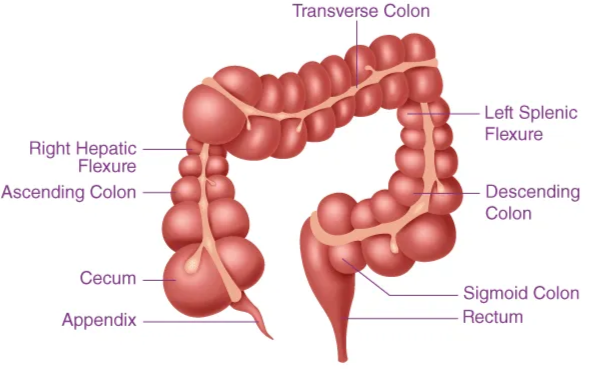
- Although large in diameter, the large intestine is just 1.5m long.
- The function of the large intestine is to re-absorb water. This happens in the colon.
- The appendix and caecum are vestigial organs**.** They were needed for digestion of raw meat and roughage but humans no longer need them.
- They were once important for digesting raw meat and roughage but are no longer essential in humans.
- Faeces is stored in the rectum and egested through the anus.
- Diarrhoea: Occurs when unabsorbed material moves too quickly through the colon, leaving less time for water reabsorption.
- Constipation: Occurs when unabsorbed material moves too slowly through the colon. Too much water is reabsorbed so the faeces are more solid.
Role of Fibre
- Fibre stimulates peristalsis and reduces the risk of constipation.
- Fibre absorbs and stores water.
- This causes the unabsorbed waste to expand.
- The bulk of the waste stimulates the muscles of the intestine to work, and in this way stimulates peristalsis.
Note
Peristalsis: an involuntary wave of muscular contraction that causes food to move through the alimentary canal.
Symbiotic Bacteria in the Intestines
Note
Symbiosis: two organisms from different species that live in close association, where at least one of them benefits.
- The transverse colon contains trillions of bacteria.
- These bacteria benefit humans in two main ways:
- Producing vitamins: including vitamins B and K.
- Feeding on waste: assisting in digestion.
- In return, humans provide bacteria with: 3. A place to live. 4. A food supply.
- This relationship is mutualistic, as both organisms benefit.
Note
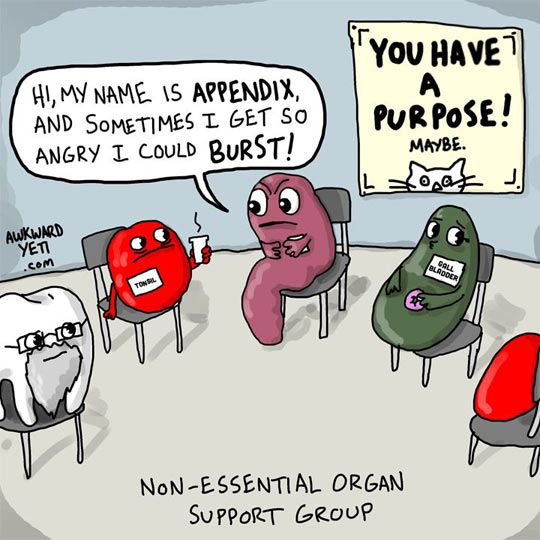
A vestigial organ is a body part that no longer has an important function in the body but was useful to our ancestors. It is like a leftover feature from evolution. For example, the appendix used to help digest certain foods, but now it does not play a major role in our digestion.
Note
Appendicitis
- A bacterial inflammation of the appendix.
- Symptoms:
- Pain starting at the navel, then moving to the right lower abdomen.
- Nausea, vomiting, and thirst.
- If untreated, the appendix may burst, leading to bacterial infection of the abdominal lining (peritonitis).
- Treatment:
- Surgical removal of the appendix (appendectomy) is the most common treatment.