DNA Replication, Protein Synthesis, and Mutations (LC 2027) (Leaving Cert Biology): Revision Notes
📚Revision Notes
DNA Replication, Protein Synthesis, and Mutations
DNA replication overview
DNA replication is the fundamental process where genetic material is copied to produce identical DNA molecules. This process was covered in detail in Chapter 16 of your course. The key point to remember is that DNA replication ensures that when cells divide, each new cell receives an exact copy of the genetic information needed for life.
Note
DNA replication is essential for life because it ensures genetic continuity from one generation of cells to the next. Without accurate DNA replication, organisms couldn't grow, repair tissues, or reproduce successfully.
Protein synthesis: the flow of information from DNA to proteins
Protein synthesis is the process by which cells use genetic information stored in DNA to build proteins. This happens through a two-step process that follows the central dogma of molecular biology: DNA → RNA → Protein. Understanding this flow is crucial for your exam.
Important
The central dogma represents the fundamental flow of genetic information in all living organisms. This one-way flow from DNA to RNA to proteins is the basis of how genetic information is expressed as functional molecules in cells.
Transcription: converting DNA to mRNA
Transcription is the first stage of protein synthesis, where genetic information is transferred from DNA to messenger RNA (mRNA). This process occurs in the nucleus of eukaryotic cells.
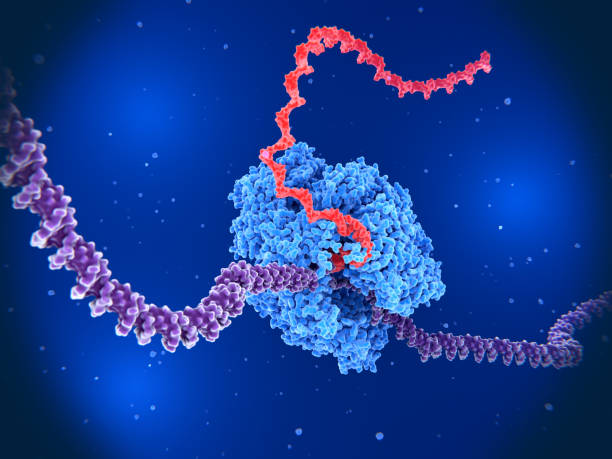
During transcription, the DNA double helix unwinds and separates. RNA polymerase, a key enzyme, reads the DNA template strand and builds a complementary mRNA strand. The bases in DNA (A, T, G, C) are matched with complementary RNA bases (U, A, C, G respectively).
Note
Notice that RNA uses uracil (U) instead of thymine (T). This is one of the key differences between DNA and RNA structure, along with RNA being single-stranded and containing ribose sugar instead of deoxyribose.
The newly formed mRNA strand detaches from the DNA and moves out of the nucleus through nuclear pores into the cytoplasm. Meanwhile, the two DNA strands rejoin to form the original double helix structure. This ensures that the DNA remains unchanged while the information has been successfully copied to mRNA.
Translation: converting mRNA to proteins
Translation is the second stage of protein synthesis, where the genetic code carried by mRNA is converted into a sequence of amino acids to form a protein. This process takes place at ribosomes in the cytoplasm.
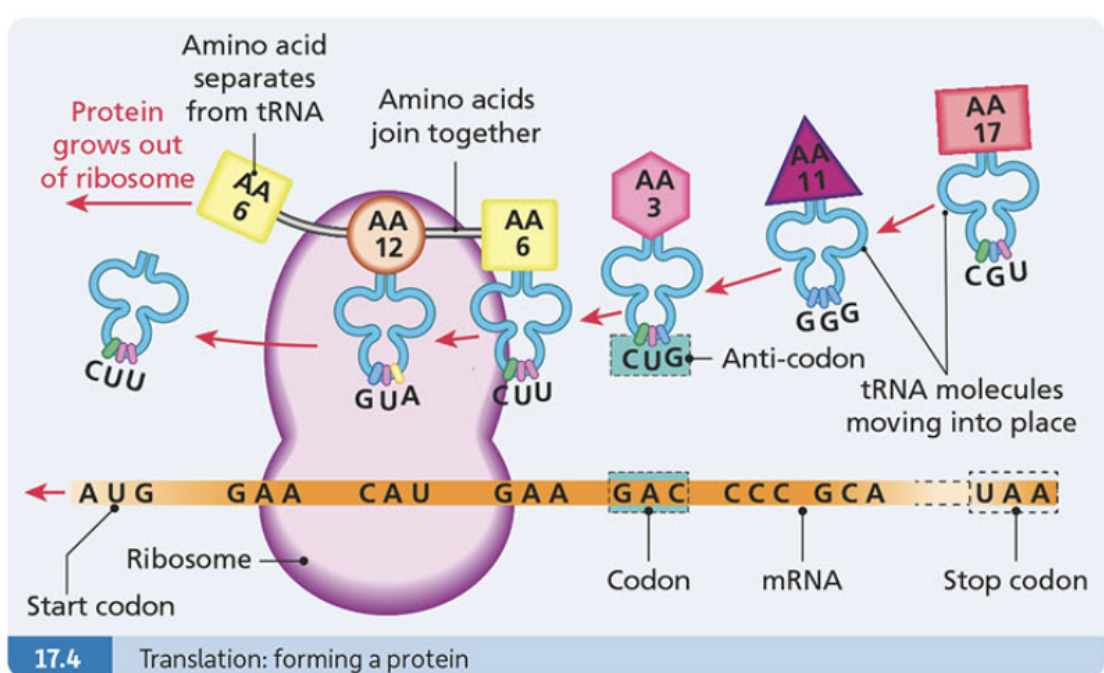
Ribosomes are composed of ribosomal RNA (rRNA) and proteins, creating the perfect machinery for protein synthesis. The mRNA strand passes through the ribosome, which reads the genetic code in groups of three bases called codons. Each codon specifies which amino acid should be added to the growing protein chain.
Transfer RNA (tRNA) molecules play a crucial role in translation. Each tRNA carries a specific amino acid and has an anticodon region that is complementary to a specific mRNA codon. When a tRNA molecule's anticodon matches the codon on the mRNA, the tRNA delivers its amino acid to the ribosome.
Note
The process begins with a start codon (AUG) and continues until a stop codon is reached. This ensures that proteins have defined beginning and ending points, allowing for precise control of protein synthesis.
The process begins with a start codon (AUG) and continues until a stop codon is reached. As each tRNA brings its amino acid, the amino acids are joined together by peptide bonds to form a growing polypeptide chain. Once the stop codon is reached, the completed protein is released from the ribosome and can fold into its functional shape.
Types of RNA and their functions
There are three main types of RNA involved in protein synthesis, each with distinct roles:
Messenger RNA (mRNA) acts as the carrier of genetic information. It forms a complementary strand to DNA during transcription and carries the instructions for protein synthesis from the nucleus to the ribosomes in the cytoplasm. Think of mRNA as a temporary copy of the genetic recipe needed to make a specific protein.
Note
mRNA is like a temporary photocopy of the genetic instructions. Unlike DNA, which stays safely in the nucleus, mRNA can travel to where proteins are made and can be broken down when no longer needed.
Transfer RNA (tRNA) serves as the delivery system for amino acids. Each tRNA molecule has an anticodon that is complementary to a specific mRNA codon, and it carries the corresponding amino acid. The tRNA molecules ensure that amino acids are added to the growing protein in the correct sequence according to the genetic code.
Ribosomal RNA (rRNA) forms part of the ribosome structure along with proteins. It provides the framework where translation occurs and helps catalyse the formation of peptide bonds between amino acids. Without rRNA, ribosomes couldn't function properly.
Mutations: changes in genetic material
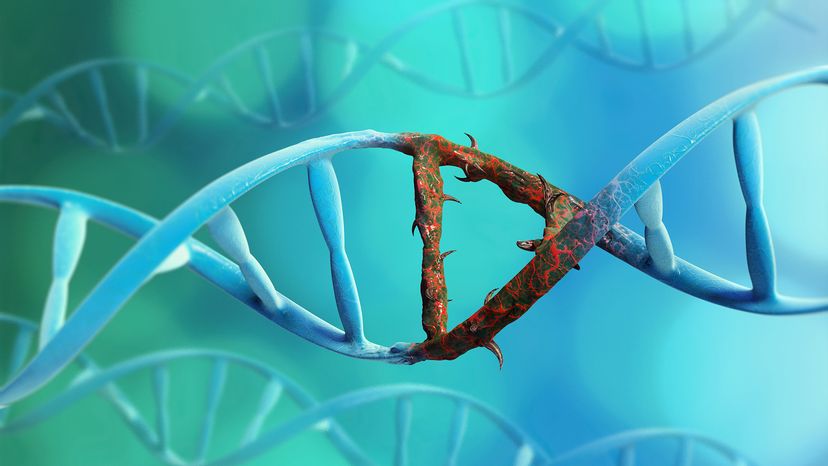
A mutation is defined as a sudden change in the amount or structure of DNA. These changes can occur naturally during DNA replication or can be caused by external factors called mutagens. Understanding mutations is important because they can lead to genetic disorders, but they also provide the variation that drives evolution.
Important
While mutations can cause genetic diseases, they are also the source of genetic variation that makes evolution possible. Without mutations, all organisms would be genetically identical and unable to adapt to environmental changes.
Causes of mutations
Mutations can arise in two main ways:
Natural causes include errors that occur spontaneously during DNA replication. Even though cells have proofreading mechanisms, mistakes can still happen, leading to changes in the DNA sequence.
Mutagens are external agents that increase the rate of mutations. The main categories include:
- Ionising radiation such as X-rays, gamma rays, cosmic rays, and ultraviolet radiation
- Chemical substances including formaldehyde, tobacco smoke, dioxins, caffeine, and various drugs and pesticides
- Biological agents such as certain viruses, including the human papilloma virus (HPV) which can cause cervical cancer
When mutagens are present, the rate of spontaneous mutations increases significantly. Mutagens that specifically cause cancer are called carcinogens.
Note
The distinction between mutagens and carcinogens is important: all carcinogens are mutagens, but not all mutagens necessarily cause cancer. Carcinogens specifically cause mutations that lead to uncontrolled cell division.
Types of mutations
Mutations are classified into two main categories based on their scale and impact:
Point (gene) mutations
Point mutations involve changes in a single gene, affecting one or a small number of DNA bases. These mutations occur when DNA makes copies of itself and incorrect base pairing happens. The altered gene is called an allele.
Common examples of point mutations include:
- Cystic fibrosis: affects the lungs and digestive system
- Haemophilia: impairs blood clotting ability
- Albinism: results in lack of skin pigment melanin
- Some cancers
- Sickle cell anaemia: affects red blood cell shape and function
Example
Worked Example: Cystic Fibrosis Case Study
This inherited genetic disorder is caused by a mutation in a single gene that forms a recessive allele. People who carry one copy of the mutated gene are healthy carriers, but those with two copies (homozygous recessive) develop the condition.
Key Statistics: In Ireland, approximately 1 in 19 people carry the altered gene that causes cystic fibrosis.
Effects: The condition primarily affects the lungs and digestive system, causing the production of thick, sticky mucus that:
- Clogs the lungs and leads to life-threatening infections
- Obstructs the pancreas, preventing proper food digestion
Chromosomal mutations
Chromosomal mutations involve larger-scale changes than point mutations. These affect entire chromosomes or large sections of chromosomes and are sometimes visible under a microscope.
Types of chromosomal mutations include:
- Deletions: when a fragment of a chromosome is missing
- Duplications: when a chromosome fragment breaks off and reattaches to another strand of the same chromosome
- Inversions: when a chromosome fragment breaks off and reattaches itself upside down
- Translocations: when a chromosome fragment breaks off and attaches to a non-homologous chromosome
Example
Worked Example: Down Syndrome Case Study
This condition results from having an extra copy of chromosome 21, giving affected individuals 47 chromosomes instead of the normal 46. This chromosomal mutation is caused by the presence of one extra chromosome, producing a range of physical and intellectual features associated with the syndrome.
Key Pattern: Down syndrome is more common in children born to older mothers, though the exact reason for this pattern isn't fully understood.
Significance: The condition demonstrates how chromosomal mutations can have significant effects on development and health.
Protection and treatment
Modern medicine has developed various approaches to deal with mutations and their effects:
Prevention measures include using lead shields during X-rays to protect against harmful radiation, applying high-factor sunscreen to reduce UV exposure, and avoiding tobacco smoke and other known mutagens.
Gene therapy technologies like CRISPR-Cas9 offer promising new approaches for treating genetic diseases. This technology allows scientists to edit sections of DNA by removing, adding, or altering specific DNA sequences, potentially providing treatments for genetic disorders and improved agricultural crops.
Note
CRISPR-Cas9 represents a revolutionary breakthrough in genetic medicine. This precision gene-editing tool can target specific DNA sequences with unprecedented accuracy, opening up possibilities for treating previously incurable genetic conditions.
Summary
Key Points to Remember:
-
Protein synthesis follows the central dogma: DNA → RNA → Protein through transcription and translation
-
Three types of RNA work together: mRNA carries the message, tRNA delivers amino acids, and rRNA forms part of ribosomes
-
Mutations are changes in DNA: they can be natural or caused by mutagens like radiation, chemicals, and viruses
-
Two main mutation types: point mutations affect single genes (like cystic fibrosis), while chromosomal mutations affect whole chromosomes (like Down syndrome)
-
Modern biotechnology offers hope: techniques like CRISPR gene editing may provide treatments for genetic disorders in the future