Chromosomes and Genes (Leaving Cert Biology): Revision Notes
📚Revision Notes
Chromosomes and Genes
What are chromosomes?
Chromosomes are incredibly important structures found in the nucleus of every cell. Think of them as nature's filing system for storing genetic information. These structures contain all the instructions your body needs to function, grow, and develop.
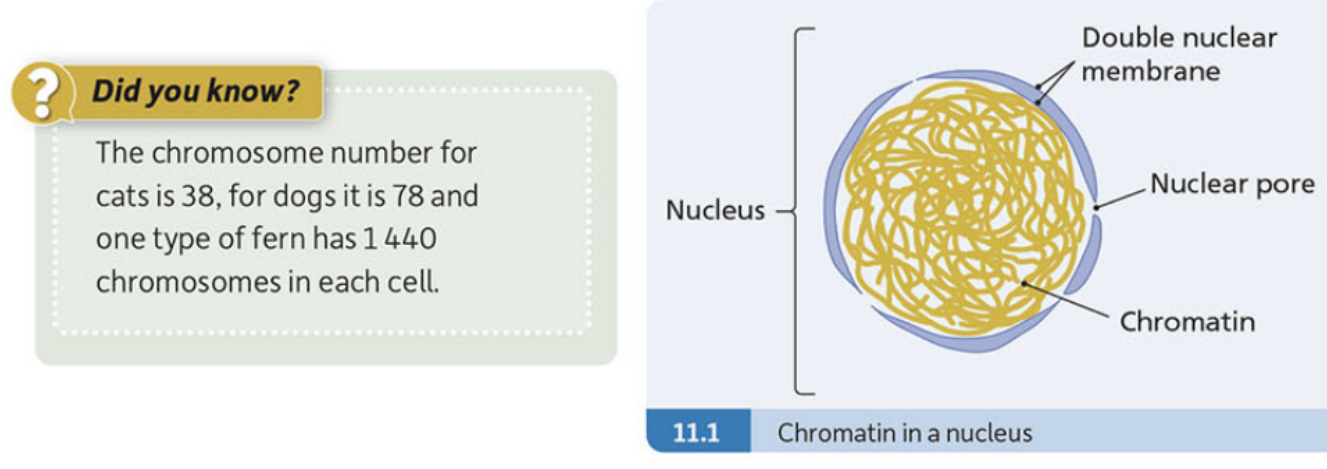
When cells are not actively dividing, chromosomes exist in an elongated form that makes them difficult to see under a microscope. In this state, they appear as tangled, thread-like material called chromatin. The chromatin looks like a messy ball of yarn scattered throughout the nucleus.
Note
The appearance of chromosomes changes dramatically depending on what stage the cell is in. During cell division, they become much more compact and visible, but during normal cellular activity, they exist as the loose chromatin structure.
Chromosome composition
Chromosomes have a fascinating structure that's perfectly designed for storing vast amounts of genetic information. Each chromosome is composed of one extremely long DNA molecule that wraps around special proteins called histones. This clever packaging system allows metres of DNA to fit into the tiny space of a cell nucleus.
The DNA molecule forms a double helix structure, and when it coils around the histone proteins, it creates a compact, organised system for genetic storage. Without this packaging, our DNA would be far too long to fit inside our cells.
Chromosome numbers vary between species
Different living things have different numbers of chromosomes in each cell. This variation shows the incredible diversity of life on Earth.
Note
Chromosome numbers across species:
- Cats have 38 chromosomes per cell
- Dogs have 78 chromosomes per cell
- One species of fern has an amazing 1,440 chromosomes per cell
- Humans typically have 46 chromosomes per cell (except in sex cells, which have 23)
The role of genes
A gene is a specific section of DNA that contains the instructions for producing a particular protein. Think of genes as individual recipes in a massive cookbook - each one tells the cell how to make something specific that the body needs.
Genes serve as the basic units of inheritance, meaning they're the structures that pass traits from parents to their children. Every characteristic you have - from your eye colour to how your body processes food - is influenced by the genes you inherited.
The genome and genomics
The genome refers to the complete set of all genetic material in an organism. This includes every single gene as well as all the non-coding DNA sequences that don't directly make proteins but still have important functions.
Genomics is the scientific study of the entire genome. Scientists working in genomics try to understand how all our genes work together and how they influence our characteristics and health.
Nuclear inheritance
Most of the DNA and genes in a cell are located in the nucleus. This nuclear DNA gets passed down from parents to their offspring through a process called nuclear inheritance.
When parents reproduce, they pass their genetic material to their children through specialised cells called gametes (sperm and egg cells in animals, pollen and ovules in plants). The nuclear DNA is inherited equally from both the father and the mother, which is why children often share characteristics with both parents.
Genetic and epigenetic mechanisms
Understanding inheritance involves learning about two related but different processes: genetics and epigenetics.
Important
It's crucial to understand that genetics and epigenetics are two different but complementary mechanisms that affect inheritance and gene expression. While genetics deals with the actual DNA sequence, epigenetics affects how those genes are expressed without changing the sequence itself.
Genetics - the study of heredity
Genetics focuses on how genes and traits are passed down from one generation to the next. It examines how the DNA sequence itself determines inherited characteristics. Traditional genetics looks at the actual genetic code - the sequence of nucleotides (A, T, G, C) that makes up our DNA.
Epigenetics - beyond the genetic code
Epigenetics is the study of how traits can be inherited through mechanisms that don't involve changes to the actual DNA sequence. Instead, epigenetic factors affect whether genes are turned "on" or "off" without changing the underlying genetic code.
How epigenetics works
Epigenetic changes affect gene expression in several ways:
Methylation occurs when chemical groups attach to DNA and prevent specific genes from working. Think of it like putting a temporary "off switch" on certain genes. The methyl group can later be removed to allow the gene to function again.
Histone modification happens when DNA becomes too tightly wrapped around its protein packaging. When DNA is wound too tightly around histone proteins, the genes in that region become inaccessible and cannot function properly.
Example
Worked Example: Epigenetic Gene Regulation
Consider a gene that produces an enzyme for processing sugar:
Step 1: Normal state - Gene is accessible and produces the enzyme Step 2: Methylation occurs - Chemical groups attach to the gene region Step 3: Gene becomes "silenced" - No enzyme is produced even though the DNA sequence is unchanged Step 4: Methylation is removed - Gene becomes active again and enzyme production resumes
This shows how the same DNA can have different expressions depending on epigenetic modifications.
Environmental factors affecting gene expression
Your environment and lifestyle can influence how your genes work through epigenetic mechanisms. Important factors include:
- Diet and nutrition - what you eat can affect gene expression
- Exercise - physical activity can switch certain genes on or off
- Environment - factors like temperature and pollution can have epigenetic effects
- Social wellbeing - stress and social connections can influence gene activity
- Chemicals - exposure to certain substances can cause epigenetic changes
- Disease - illnesses can trigger epigenetic modifications
- Microbiome - the bacteria in your body can affect gene expression
These epigenetic changes can occur naturally during life or be triggered by external factors. Some epigenetic modifications can even be passed on to future generations, although the DNA sequence itself remains unchanged.
Summary
Key Points to Remember:
-
Chromosomes are structures in the cell nucleus made of DNA wrapped around histone proteins, appearing as chromatin when cells aren't dividing
-
Genes are specific sections of DNA that code for proteins and serve as the basic units of inheritance
-
Nuclear inheritance involves passing DNA from parents to offspring through gametes, with equal contributions from both parents
-
Genetics studies how DNA sequences are inherited, while epigenetics examines how gene expression can be modified without changing the DNA sequence itself
-
Environmental factors like diet, exercise, and stress can influence gene expression through epigenetic mechanisms, potentially affecting both you and future generations