Germination (Leaving Cert Biology): Revision Notes
📚Revision Notes
Germination
Note
Germination is the re-growth of a seed embryo into a new plant.
There are three essential conditions required for germination:
- Water – activates enzymes and softens the testa (seed coat).
- Oxygen – required for aerobic respiration to release energy.
- Suitable temperature – allows enzyme-controlled reactions to occur at an appropriate rate.
Events in Germination
- Seeds contain stored food reserves in the form of oils, starch, and proteins.
- Germination begins when the seed absorbs water (imbibition) through the testa.
- Water activates enzymes that digest the stored food:
- Oils → fatty acids and glycerol
- Starch → glucose
- Proteins → amino acids
- The soluble products of digestion are transported to the growing embryo.
- Glucose and amino acids are used to:
- Build new structures such as cell walls and enzymes
- Fats and some glucose are used in respiration to release energy for growth.
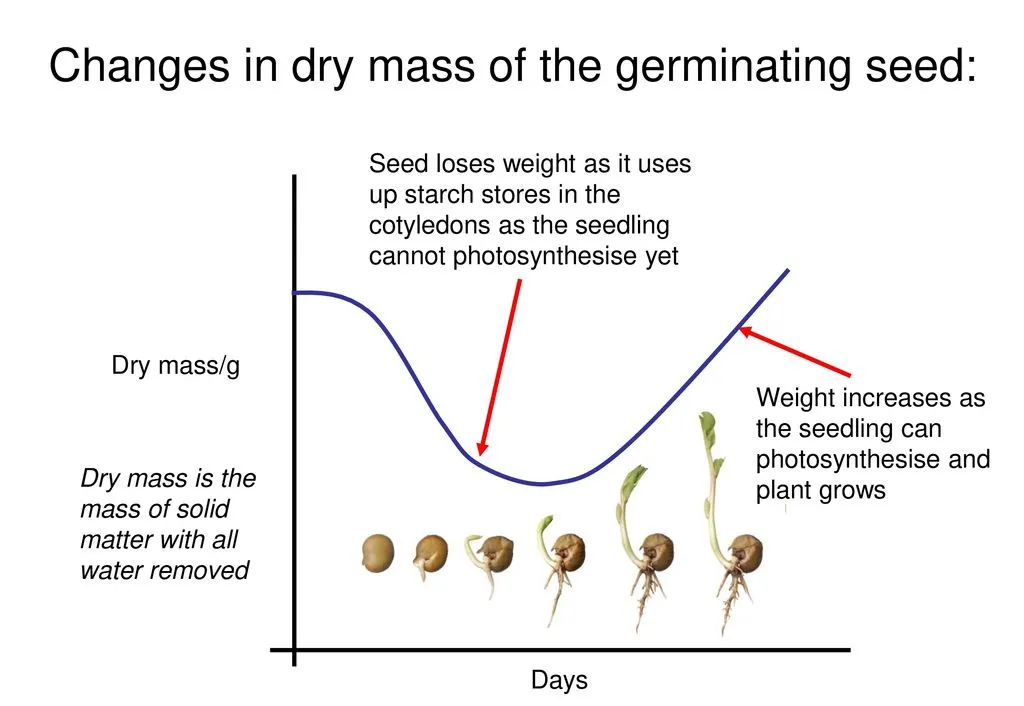
- The dry mass of the seed decreases as stored food is used up.
- The mass of the embryo increases as new cells and tissues are formed.
- The radicle (future root) emerges first, growing downward and absorbing water and minerals.
- The plumule (future shoot) grows upward and emerges above the soil.
- When the first leaves develop and begin photosynthesis, the seedling becomes independent and its dry mass increases again.
Types of Germination
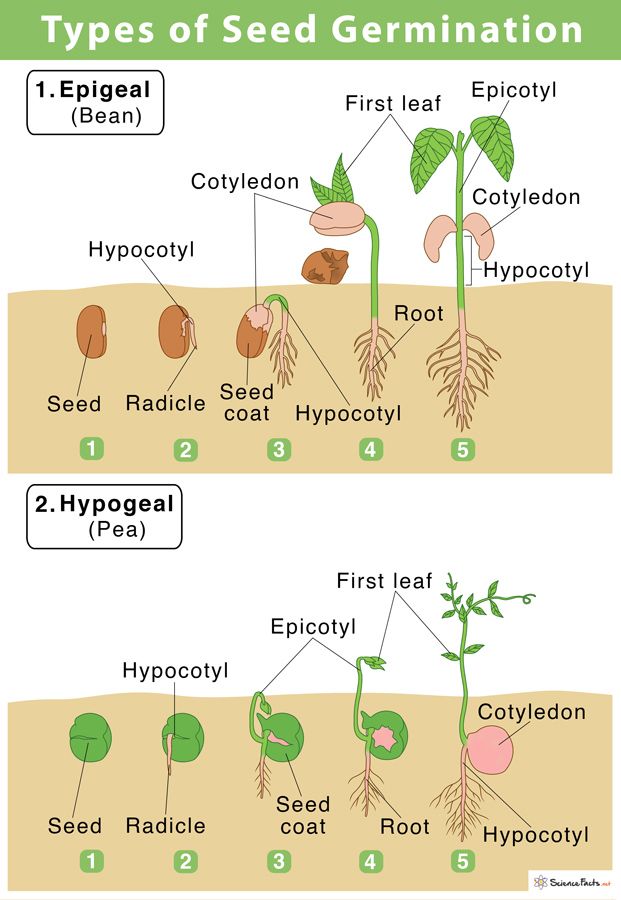
There are two types of germination:
- Epigeal germination
- Hypogeal germination
- After imbibition, the radicle grows downward due to gravity (geotropism).
- Roots develop and begin absorbing water and minerals from the soil.
- Growth of the hypocotyl (region below the cotyledons) determines the type of germination.
Epigeal Germination
- The cotyledons are pushed above the soil surface.
- Cotyledons may become green and photosynthesise.
- Example: Sunflower.
Epigeal = above ground
E for exposed above the soil_
Hypogeal Germination
- The cotyledons remain below the soil.
- They do not photosynthesise and act only as food stores.
- Example: Bean.
Hypogeal = below ground
H for hidden underground_
Note
Summary – Germination
Necessary Conditions
- Water → activates enzymes.
- Oxygen → required for aerobic respiration.
- Suitable temperature → ensures enzymes function efficiently.
Sequence of Events
- Seed absorbs water → enzymes activated.
- Stored food is digested:
- Oils → fatty acids + glycerol
- Starch → glucose
- Proteins → amino acids
- Digested products move to the embryo.
- Glucose + amino acids → new cells, cell walls, enzymes.
- Glucose + fats → respiration → energy.
- Dry mass decreases as food is respired.
- Radicle emerges and grows downward (geotropism).
- Plumule grows upward and forms leaves.
- When photosynthesis begins, the seedling’s dry mass increases again.