Consumer Protection Legislation (Leaving Cert Business): Revision Notes
📚Revision Notes
Consumer Protection Legislation
Conflict often arises between consumers and retailers due to poor quality goods, misleading information, or inadequate customer service. Irish consumers are protected through a combination of non-legislative and legislative methods.
Non-Legislative Methods of Solving Consumer Conflict
- Negotiation is a process of direct communication where both the consumer and the seller try to resolve a complaint informally.
- The consumer outlines the issue and what remedy they expect (e.g. refund, replacement).
- The seller presents their side and the two try to reach agreement.
- Example: If a consumer buys a faulty toaster, they can return to the store, explain the issue, and request a replacement. The store may agree to replace it or offer a refund, resolving the issue informally.
- The Consumers' Association of Ireland (CAI) is a voluntary, non-governmental organisation that represents the interests of Irish consumers.
- The CAI provides expert advice, publishes the magazine Consumer Choice, and lobbies the government to strengthen consumer rights.
- Although it does not intervene in individual disputes, it empowers consumers by educating them about their legal rights and available remedies.
Note
Negotiation: a process of bargaining where the consumer and retailer aim to reach a mutually acceptable solution.
Legislative Methods of Solving Consumer Conflict
Irish consumers are protected by three main pieces of legislation:
- Sale of Goods and Supply of Services Act 1980
- Consumer Protection Act 2007
- General Data Protection Regulation (GDPR) 2018
1. Sale of Goods and Supply of Services Act 1980
This Act outlines the legal rights of consumers when they purchase goods or services.
Rights When Buying Goods
- All goods sold in Ireland must be:
- Of merchantable quality
- Fit for their intended purpose
- As described by the seller
- Conform to any sample shown
Of Merchantable Quality:
- Goods must be of a reasonable standard and quality, taking their price and intended use into account.
- Example: A pair of shoes costing €100 should be expected to last a reasonable length of time.
Fit for Purpose:
- Goods must be capable of performing the task they are intended for.
- Example: A watch must be able to tell the time.
As Described:
- Goods must match any descriptions provided by a salesperson, on packaging, or in advertising.
- Example: A jacket described as "100% wool" must not contain any synthetic fibres.
Conform to Sample:
- When goods are sold based on a sample, the full order must match the sample in quality and appearance.
- Example: Tiles ordered for a kitchen must match the showroom sample in colour and finish.
Rights When Buying Services
Services must be:
- Carried out by someone with the necessary skill and qualifications
- Performed with due care and attention
- Completed using materials of merchantable quality
Qualified and Skilled Provider:
- The person performing the service must be properly trained and competent.
- Example: An electrician must be qualified to install wiring safely and legally.
Due Care and Attention:
- Services must be delivered carefully and thoroughly, without negligence.
- Example: A mechanic must carry out repairs accurately to ensure the car is safe to drive.
Quality Materials:
- Any materials used must meet reasonable quality standards.
- Example: A builder must use high-quality timber when constructing a roof.
Legal Redress Under the 1980 Act
If goods or services do not meet the required standards, consumers are legally entitled to:
- A repair
- A replacement
- A refund
Responsibility lies with the retailer, not the manufacturer.
Note: The principle of caveat emptor ("let the buyer beware") does not apply when goods are faulty or misrepresented.
Small Claims Procedure
The Small Claims Procedure is a low-cost and informal method for resolving consumer disputes. It operates through the District Court system and is designed to be accessible, efficient and user-friendly, especially for private individuals.
This procedure allows consumers to make claims for damages or compensation of up to €2,000 where a business has failed to meet its legal obligations under consumer law.
Key Features:
- Maximum claim: €2,000 Claims must relate to the purchase of goods or services for private use (not business-related purchases).
- Application fee: €25 The process is affordable and straightforward.
- No legal representation is required Consumers do not need a solicitor, making it accessible to the general public.
- How to apply: Claims can be submitted online through the Courts Service of Ireland website (courts.ie) or by visiting the local District Court office.
- Dispute resolution: The District Court processes the claim. The Small Claims Registrar may help the consumer and business settle the issue informally before proceeding to a hearing.
- Examples of disputes covered include:
- Faulty goods that are not of merchantable quality
- Poor quality services that were not delivered with due care
- Overcharging or refusal to honour refunds
- Damage caused by service providers (e.g. a carpet ruined by a cleaner)
Note
Case Study: Small Claims Procedure in Action
Scenario:
Emma purchased a €380 coffee machine online from a Dublin-based electrical retailer. When it arrived, the machine was scratched, leaked water during use, and failed to produce hot coffee. Emma contacted the retailer and asked for a replacement or refund, but they claimed she had damaged it herself and refused to accept responsibility.
Action Taken:
Emma decided to use the Small Claims Procedure. She submitted an application through the Courts Service website, outlining her claim for a full refund of €380, based on her rights under the Sale of Goods and Supply of Services Act 1980. She paid the €25 application fee and did not hire a solicitor.
Outcome:
The Small Claims Registrar reviewed her case and contacted the retailer. The retailer initially offered a €100 partial refund, which Emma rejected. The case proceeded to a District Court hearing, where Emma provided evidence:
- Photographs of the damaged product
- A copy of her email correspondence
- A short video showing the machine leaking The District Court ruled in Emma's favour, ordering the retailer to provide a full refund and cover her €25 application fee.
Key Learning Points:
- Consumers can take legal action without needing a solicitor
- The Small Claims Procedure is appropriate for goods under €2,000
- It enforces legal rights under the 1980 Act efficiently and affordably
- The process empowers consumers who are unfairly treated by businesses
2. Consumer Protection Act 2007
This Act protects consumers from unfair, misleading, and aggressive commercial practices. It is enforced by the Competition and Consumer Protection Commission (CCPC).
1. Misleading Practices
It is illegal for businesses to provide false, deceptive, or misleading information to consumers about products or services.
Example: A mobile phone that does not support 5G connectivity cannot be advertised as "5G-enabled."
2. Prohibited Practices
The Act bans 32 specific unfair commercial practices, which businesses are strictly prohibited from using.
Examples:
- Operating pyramid schemes
- Displaying incorrect prices
- Creating fake urgency, such as false "limited time only" sales
3. Aggressive Practices
This refers to any form of harassment, coercion, or undue pressure used to force a sale.
Example: A salesperson using threatening or manipulative language to push a vulnerable consumer into buying something they do not want.
Role of the CCPC
The Competition and Consumer Protection Commission (CCPC) is responsible for enforcing this Act. It has the power to:
- Investigate businesses suspected of misconduct
- Issue compliance notices and fines
- Take legal action in serious cases
- Educate consumers through public awareness campaigns
Note
We'll look at the role and functions of the CCPC in more detail in the next note. Keep it up - you're doing really well!
3. General Data Protection Regulation (GDPR) 2018
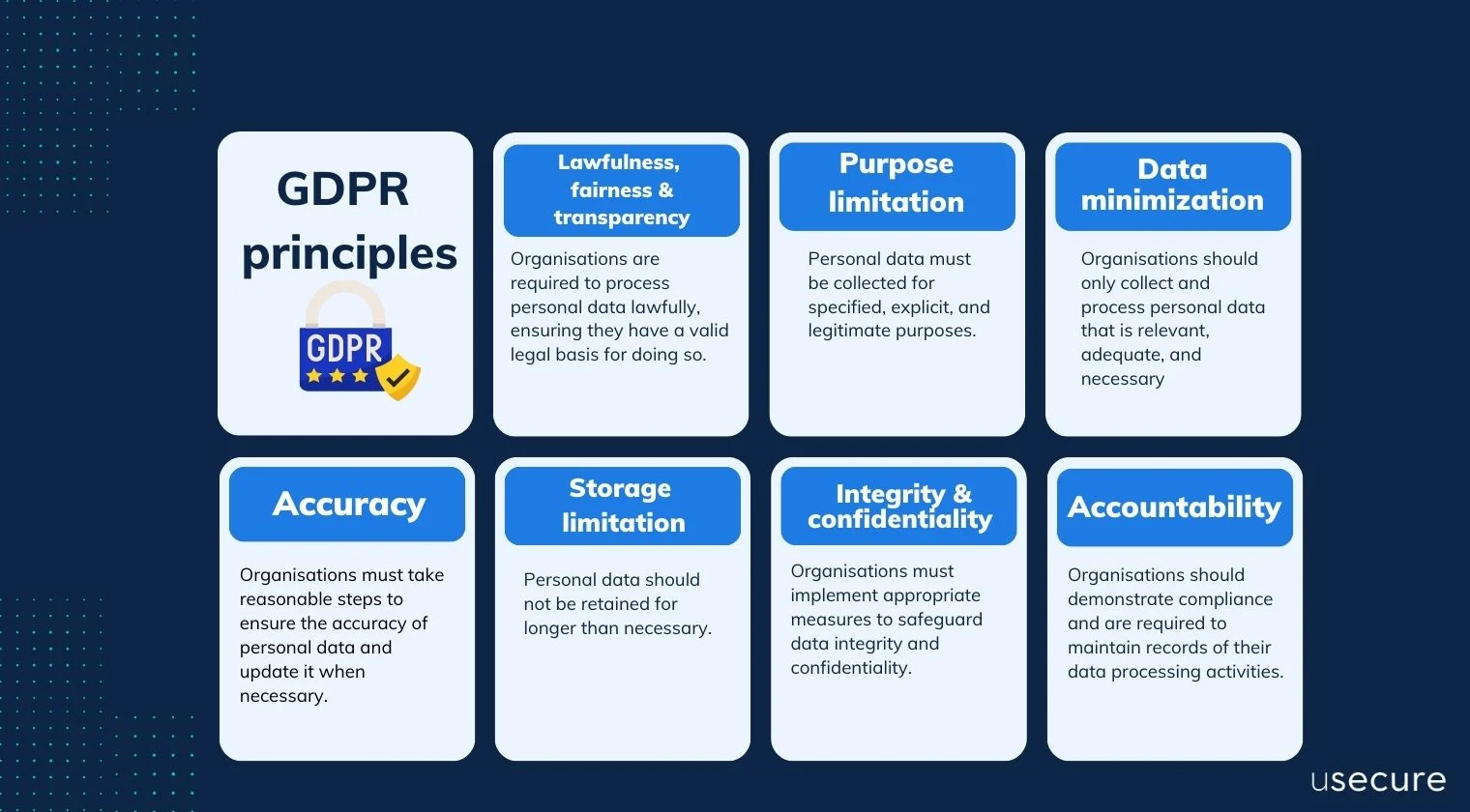
GDPR is an EU-wide regulation that protects the personal data of individuals. It gives consumers several rights concerning how businesses collect, use, and store their data.
Rights include:
- Right to access
- Right to rectification
- Right to erasure
1. Right to Access
Consumers have the right to obtain confirmation of whether their personal data is being processed, and to access that data.
Example: A customer can request a copy of the personal information held by an online retailer.
2. Right to Rectification
Consumers can request that inaccurate or incomplete data be corrected.
Example: A person may ask a bank to update an incorrect phone number on file.
3. Right to Erasure ("Right to be Forgotten")
Consumers may request the deletion of their personal data in certain situations, such as when the data is no longer necessary or they withdraw consent.
Example: A consumer who unsubscribes from a mailing list can request that their details be fully deleted.
Summary Table: Key Legislation and Protections
| Legislation | Protection Offered | Example |
|---|---|---|
| Sale of Goods and Supply of Services Act 1980 | Ensures products and services meet quality and skill standards | Refund for a faulty appliance |
| Consumer Protection Act 2007 | Prevents misleading or aggressive business practices | Fine for false "closing down" sale |
| GDPR (2018) | Protects consumer data and privacy rights | Customer requests deletion of personal data |