Employee Motivation (Leaving Cert Business): Revision Notes
📚Revision Notes
Employee Motivation
What is employee motivation?
Note
Motivation is the set of forces that cause people to behave in certain ways. In the workplace, motivation influences how hard employees work, how satisfied they feel, and how committed they are to their job and organisation.
Understanding what motivates employees is crucial for managers because motivated workers tend to be more productive, take pride in their work, cooperate better with colleagues, and feel like they are part of the company. When employees are motivated, they work more efficiently and help improve the overall morale and performance of the business.

Remuneration and rewards
Types of monetary rewards
Businesses use various remuneration methods to reward employees financially. Each type of payment structure creates different incentives and suits different types of work:
Flat rate (basic pay) provides employees with a fixed amount for a set number of hours, such as hiring a painter for a day. This gives workers security but doesn't necessarily encourage higher productivity.
Time rate involves paying workers a fixed amount per hour for a set number of hours per week. If employees work beyond these hours, they receive overtime pay at different rates. This system is common in retail and hospitality sectors.
Example
Example: Piece Rate in Action
A clothing factory pays workers 50 cent per shirt sewn. If an employee completes 100 shirts in a day, they earn €50. This directly links payment to productivity, encouraging workers to be more efficient while maintaining quality standards.
Commission payments are tied to sales performance, where employees receive a percentage of the value they sell. A salesperson might earn 10% of total sales achieved, which strongly motivates them to make more sales.
Bonus payments recognise extra achievement or reaching targets beyond normal expectations. These one-off payments reward exceptional performance.
Salary provides a fixed sum regardless of hours worked over the year. This gives employees financial security and is common for professional roles.
Profit-sharing schemes distribute a portion of company profits to employees when the business performs well above a certain level. This encourages workers to be more productive and think like business owners.
Employee share ownership schemes give workers actual shares in the company at discounted prices. Employees become part-owners and can influence major business decisions through voting rights.
Share options allow employees to buy company shares at a specified price. If the company performs well and share prices rise, employees can sell at higher prices for profit.
Non-monetary rewards
Benefits in Kind (BIK) are rewards that aren't paid as money but have monetary value. Examples include company cars, free gym membership, staff discounts, or reduced prices for company products.
Note
These benefits can be more valuable to employees than equivalent cash payments because they're often taxed differently. They also help raise the status of positions and boost morale across the organisation.
Factors affecting job satisfaction
Several non-financial factors significantly influence how satisfied employees feel at work:
- Job security is fundamental - employees without secure contracts (such as those on zero-hour contracts) often become dissatisfied and worried about their future
- Meaningful work helps employees feel their roles serve a purpose and contribute to something valuable
- Work relationships matter greatly - employees prefer teamwork and collaboration over isolated cubicle work where they feel disconnected from colleagues
- Fair compensation ensures employees can maintain a decent standard of living, even if pay isn't the highest motivator
- Working conditions include having safe, clean workspaces with proper equipment and tools needed to do jobs effectively
- Company policies should be clear and fair, supporting rather than hindering employee performance
- Promotion opportunities give employees hope for career advancement, higher wages, and increased responsibility. Often the job title and status matter as much as salary increases
- Flexitime allows employees to choose their working hours within agreed timeframes, helping them balance work and personal life more effectively
Motivational theories
Maslow's hierarchy of needs
Abraham Maslow (1908-1970) was an American psychologist who developed a famous theory about human motivation in 1943. He believed people are naturally driven to reach their highest capabilities and that everyone has needs arranged in a hierarchy.
Important
Maslow's theory suggests that people must satisfy lower-level needs before moving up to higher ones. Once a need has been satisfied, it no longer motivates behaviour - people then focus on the next level up.
Physiological needs form the foundation - these include basic requirements like food, shelter, warmth, and clothing. In workplace terms, this means providing adequate pay and working conditions so employees can meet their basic living needs.
Security needs involve safety and job security. Workers need to feel safe in their workplace environment and have consistency in their employment. Offering permanent contracts and following health and safety guidelines helps meet these needs.
Social needs reflect people's desire to belong and be accepted. Providing opportunities for teamwork, offering social facilities, and creating mentoring programmes help employees feel part of the organisation.
Esteem needs relate to status and self-respect. Workers want recognition for their achievements through the organisational hierarchy, job titles that give authority, and acknowledgement of their contributions.
Self-actualisation represents fulfilling one's true potential. This involves enabling people to stretch themselves, grow intellectually, take on challenges, and seek more responsibility in their roles.
Taylor's scientific management
Frederick Taylor (1856-1917) was an American engineer and management consultant who focused on efficiency and productivity in manufacturing. He developed Taylorism - also known as scientific management theory.
Taylor believed that workers are primarily motivated by pay and financial rewards. His key principle was that money is the main factor influencing how productive workers are, and that managers should set targets, reward those who meet targets, and let go of those who don't.
Note
Key points of Taylorism:
- Science can simplify job roles to increase efficiency and productivity
- Workers should focus on one specific task and master it completely
- Organisations should develop the 'one best way' to produce something through standardised approaches
- Time and motion studies can analyse tasks and find the quickest methods
- Managers should break down complex jobs into smaller, manageable tasks
- Employees need motivation through pay to continue working efficiently
Example
Example: Taylor's Approach in Practice
In car manufacturing, rather than one employee building an entire car, Taylor's approach would have each worker focus on one specific area like fitting wheels or installing seats. This specialisation increases efficiency and maintains consistent quality across production.
Modern examples include Amazon's warehouse operations and McDonald's kitchen systems, where each employee has specific tasks designed for maximum efficiency.
Herzberg's two-factor theory
Frederick Herzberg (1923-2000) was an American clinical psychologist who introduced an influential concept about job environment and satisfaction through his dual factor theory.
During the 1950s and 1960s, Herzberg researched what makes employees satisfied and discovered that factors causing satisfaction are different from those causing dissatisfaction. Simply removing things that make people dissatisfied won't automatically motivate them to work harder.
Herzberg identified two distinct categories:
Hygiene factors are elements that cause dissatisfaction when absent, but don't motivate when present. These include:
- Job security: Employees need to feel secure in their positions
- Status: Having meaningful work and recognition
- Relationships at work: Working in teams rather than isolation
- Salary: Fair pay that provides decent living standards
- Working conditions: Safe, clean workspaces with proper equipment
- Fair policies: Clear company policies that don't hinder performance
Motivators are factors that directly encourage employees to work harder and feel satisfied:
- Growth opportunities: Chances to learn and develop new skills
- Advancement: Possibilities for promotion and career progression
- Varied and challenging work: Meaningful tasks that provide fulfilment
- Recognition: Praise and acknowledgement from supervisors and peers
- Responsibility: Job enrichment and empowerment to make decisions
Important
Key Distinctions:
Job enlargement means giving employees more work without necessarily advancing their growth opportunities. For example, increasing production targets or adding extra administrative tasks to existing roles.
Job enrichment involves expanding roles to include more complex and challenging tasks that provide greater meaning. Employees can manage their workloads, seek management approval less frequently, and experience greater achievement.
Empowerment takes job enrichment further by giving employees more responsibility and autonomy. Workers make decisions independently, receive less supervision (demonstrating management trust), and take ownership of their outcomes.
McGregor's theory X and theory Y
Douglas McGregor (1906-1964) was a professor at Massachusetts Institute of Technology (MIT) who outlined two contrasting leadership styles in his 1960 book 'The Human Side of Enterprise'.
Theory X managers assume:
- People naturally dislike work and have an inbuilt dislike of it
- People must be forced, controlled and threatened with punishment
- Employees are lazy and won't work hard unless closely supervised
- Management must offer incentives to motivate workers
- Employees require safety and security as priorities
- Employees lack ambition and will avoid responsibility, preferring to resist change
Theory Y managers assume:
- Employees enjoy working and are willing to work
- People can be taught to accept and seek responsibility
- Employees are self-motivated - no supervision is required as people are committed to shared objectives
- Employees are satisfied when their self-actualisation needs are met
- Satisfying self-actualisation needs is the best way to get effort from people
- Employees should receive suitable training to use their knowledge and initiative
- Many employees' abilities aren't fully used to benefit the firm - skills are often maximised
- All organisation members can help solve problems
Note
Most managers apply aspects of both theories rather than adopting one approach completely. The criticism is that it's unrealistic to imagine managers would solely use either Theory X or Theory Y in practice.
Case study: Google's approach to motivation
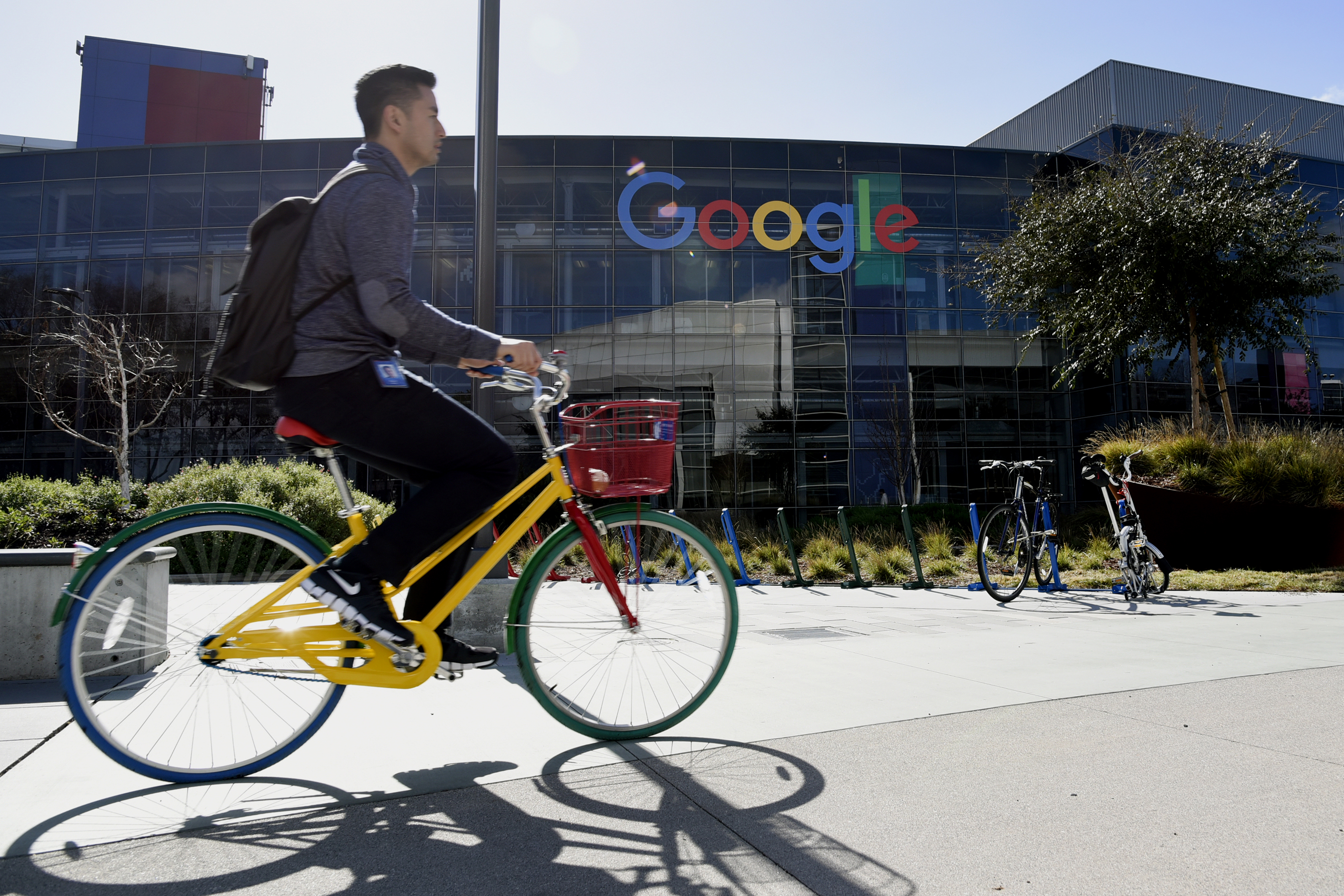
Google demonstrates how companies can apply multiple motivation theories effectively. The technology giant employs over 182,500 people worldwide and offers comprehensive benefits including:
- Health and wellness programmes with free health insurance and dental coverage
- Financial support including comprehensive compensation packages, regular bonuses, student loan reimbursement, and individual financial coaching
- Paid time off for various leave types and flexible working arrangements
- Office perks like free meals, snacks, coffee pods, and recreational facilities
- Growth and advancement opportunities in the workplace
Example
Example: Theory Integration at Google
Google's approach incorporates elements from different theories:
- Meeting basic needs (Maslow's physiological and security levels)
- Providing both hygiene factors and motivators (Herzberg's two-factor theory)
- Adopting Theory Y management assumptions about employee potential and self-motivation
Summary
Key Points to Remember:
-
Motivation involves multiple factors - employees are driven by both financial rewards and non-monetary benefits like recognition, growth opportunities, and meaningful work
-
Different theories complement each other - Maslow's hierarchy shows the progression of needs, Herzberg distinguishes between preventing dissatisfaction and creating satisfaction, while McGregor highlights management approach differences
-
One size doesn't fit all - different employees may be motivated by different factors, so businesses benefit from offering varied reward systems and management approaches
-
Non-financial motivators are powerful - job security, fair treatment, opportunities for advancement, and positive working relationships often matter as much as or more than pay
-
Modern businesses use mixed approaches - successful companies like Google combine elements from multiple theories to create comprehensive motivation strategies that address diverse employee needs