Product (Leaving Cert Business): Revision Notes
📚Revision Notes
Product
What is a product?
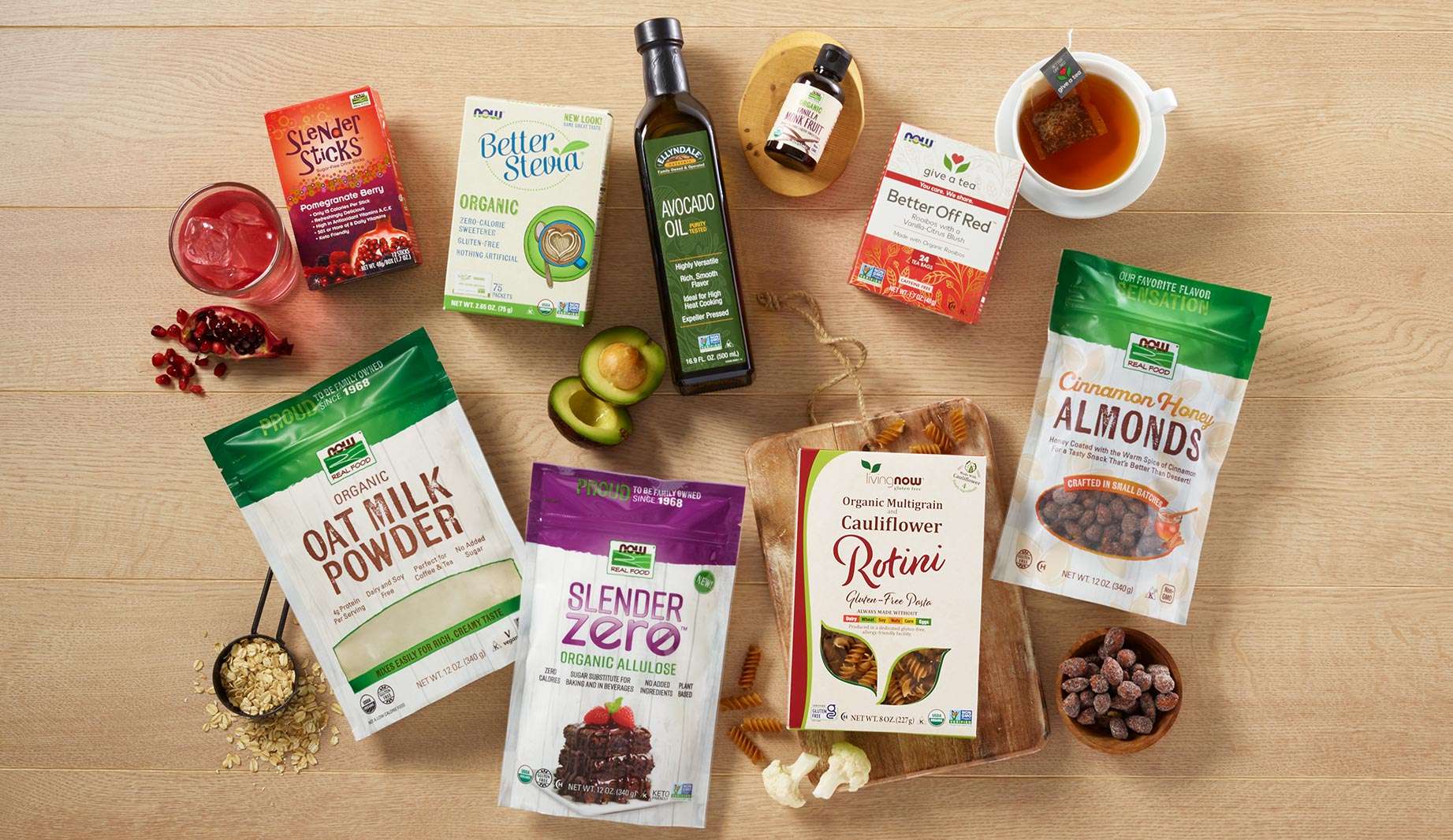
A product refers to any good or service that a business provides to meet the needs and wants of its customers. Products are the foundation of any business operation and represent what customers actually receive in exchange for their money.
Note
The product is just one element of the marketing mix, but it's fundamental to all business success since it represents the actual value being offered to customers.
Every product needs a unique selling point (USP) - this is a special feature or characteristic that makes it different from similar products offered by competitors. The USP is what helps customers understand why they should choose one product over another.
Product positioning involves creating a positive image of the product in customers' minds. This helps emphasise the product's key features and benefits, making it more appealing to the target market.
Product design considerations
When developing any product, businesses must carefully consider four essential design elements:
Function: The product must be able to do what it's supposed to do effectively. It should meet specific customer needs and comply with relevant safety standards and legislation, such as the Consumer Rights Act 2022.
Materials and manufacturing: Companies need to choose materials that are ethically sourced and ensure the product is manufactured with minimal environmental impact. This reflects growing consumer awareness about sustainability.
Form: The product should be attractive and practical. This includes considerations about shape, colour, and overall appearance, as well as ensuring it's user-friendly and accessible.
Cost: The expenses involved in producing and distributing the product must be carefully managed. The final price should cover all costs while still generating profit for the business.
Important
Businesses can protect their product designs through patents (legal protection for inventions) and trademarks (logos legally registered by businesses to distinguish their products from competitors). Famous examples include Nike's swoosh logo and McDonald's Golden Arches.
Branding
Branding means creating a distinct identity for a product that clearly separates it from competitors' offerings. This involves developing a brand name and logo that customers can easily recognise and remember.
A brand leader is the brand that holds the largest market share in a particular product category.
Benefits of branding
Strong branding provides several important advantages:
- Marketing tool: Brand names make products instantly recognisable and easier to distinguish from competitors. This can be used effectively in advertising campaigns to increase sales.
- New product introduction: When customers already know and trust a brand name, businesses can use that reputation to launch new products more easily.
- Premium pricing: Well-established brands can often charge higher prices because customers associate the brand name with quality and reliability.
- Customer loyalty: Over time, consumers develop preferences for particular brands and may not switch to competitors. This loyalty makes it harder for other businesses to compete effectively.
- Brand protection: Popular brands can become so well-known that the product essentially becomes synonymous with the brand name.
Note
Brand loyalty is particularly powerful in competitive markets because it creates a psychological barrier that prevents customers from considering alternatives, even when competitors offer similar or better features.
Own-label brands
Own-label brands are products developed by large retailers who sell them under their own brand name rather than using established manufacturers' brands. These are typically cheaper than well-known branded products.
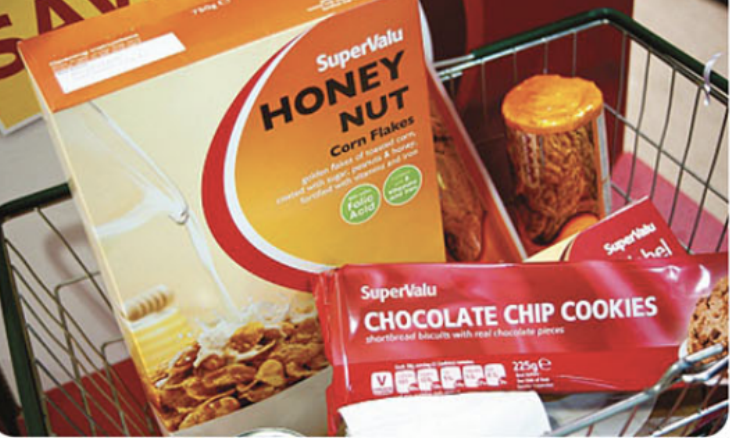
Benefits for different parties include:
- Retailers: Reduced costs from buying cheaper products, considerable advertising advantages, and good profits from selling own-brand items
- Producers: Extra sales achieved from lower manufacturing costs
- Consumers: Wider variety of cheaper products available, with many own-brand products matching the quality of leading manufacturers
Example
Example: SuperValu's Own-Brand Strategy
SuperValu has successfully developed own-label ranges including their standard SuperValu products and premium ranges. Similarly, Tesco offers Value, Standard, and Finest ranges that appeal to different customer demographics and price points, allowing them to capture market share across multiple segments.
Product life cycle
The product life cycle tracks how a product's sales performance changes from its initial launch through to its eventual decline in the market. This cycle is divided into five distinct stages, typically shown as a bell-shaped curve.
Introduction stage
This involves slow sales growth and high spending on advertising as the business launches the product in the market. Key characteristics include:
- Heavy investment in marketing, distribution and sales promotion
- High prices due to limited competition
- Focus on building product awareness among potential customers
Example
Example: iPhone Introduction (2007-2008)
The iPhone's introduction transformed the smartphone industry, with Apple investing heavily in marketing to establish this new product category. Despite the high price point, Apple focused on demonstrating the revolutionary touch-screen interface and internet capabilities to build market awareness.
Growth stage
Sales begin to increase significantly as more customers become aware of the product through advertising and promotional campaigns. During this stage:
- Customer awareness grows and demand increases
- Prices may be reduced to attract a wider market
- Additional investment may be needed to meet growing demand
Example
Example: iPhone Growth (2009-2012)
The iPhone experienced rapid growth with Apple expanding its product range and launching the App Store to support continued growth. Sales accelerated as more carriers adopted the device and developers created thousands of applications.
Maturity stage
The product becomes commonplace in the market, with sales and profits reaching their peak before starting to level off. Characteristics include:
- Peak sales performance with slower growth than before
- Increased repeat purchase behaviour from existing customers
- Prices may need further reduction to maintain market share
- Businesses may seek alternative uses for the product
Saturation stage
Sales slow significantly as the market becomes fully exploited. Key features include:
- Minimal sales growth with brand loyalty becoming critical
- Extensive advertising and sales promotion needed to maintain position
- Profits should remain steady if market share is protected
- Market competition intensifies
Decline stage
Sales and profits fall as consumer preferences change, new competing products emerge, or market conditions shift. Management must decide whether to continue marketing the product or discontinue it entirely.
Important
Not all products must follow the complete life cycle to decline. Smart businesses can extend their product's life by adapting their marketing mix or finding new markets and uses for existing products.
Extending a product's life cycle
Businesses can prolong a product's success by adapting elements of their marketing mix:
Product improvements: Introducing enhanced versions, extensions, or updated features to attract new customers and encourage existing customers to upgrade. Apple regularly introduces new iPhone versions with improved camera features and functionality.
Price adjustments: Implementing pricing strategies such as increasing or decreasing prices to boost sales volume or target different market segments.
Promotion changes: Using innovative and more effective promotional techniques to attract customers and create renewed brand awareness.
Place modifications: Utilising new distribution channels, such as moving to purely online sales platforms to reach different customer groups.
Example
Example: Apple's Life Cycle Extension Strategy
Apple has managed to avoid significant decline by diversifying revenue streams into services like Apple Music, Apple TV+, and Apple Arcade. They've also refreshed the iPhone regularly with new features, colours, and sizes while expanding into new markets globally.
Summary
Key Points to Remember:
- Products are goods or services that businesses provide to satisfy customer needs and wants
- Unique selling points (USPs) help differentiate products from competitors in the marketplace
- Product design must consider function, materials, form and cost to be successful
- Strong branding creates customer loyalty and allows businesses to charge premium prices
- The product life cycle has five stages: introduction, growth, maturity, saturation and decline
- Irish businesses like Supermac's have successfully used branding and trademark protection to compete with global companies
- Products can be extended through marketing mix modifications to prolong their market success