More Covalent Bond Types and Shapes of Covalent Molecules (Leaving Cert Chemistry): Revision Notes
📚Revision Notes
More Covalent Bond Types and Shapes of Covalent Molecules
Double and triple bonds
When atoms need to share more than one pair of electrons to achieve stable electron configurations, they can form multiple covalent bonds. These involve both sigma (σ) bonds and pi (π) bonds.
Understanding sigma and pi bonding
Sigma bonds form through the direct, head-on overlap of atomic orbitals. This creates the strongest type of covalent bond because there is maximum overlap between the orbitals.
Pi bonds form differently - they occur when atomic orbitals overlap sideways, creating regions of electron density above and below the bond axis.

Note
The fundamental difference in how sigma and pi bonds form determines their relative strengths and properties. Sigma bonds always form first in multiple bonding situations.
Formation of double bonds
A double bond consists of:
- One sigma bond (formed first)
- One pi bond (formed by sideways orbital overlap)
Example
Example: Oxygen molecule (O₂)
In an oxygen molecule, the two oxygen atoms share two pairs of electrons, creating a double bond:
- The first pair forms a sigma bond through head-on overlap
- The second pair creates a pi bond through sideways overlap
This double bond makes oxygen more reactive than nitrogen gas.
Formation of triple bonds
A triple bond contains:
- One sigma bond
- Two pi bonds
Example
Example: Nitrogen gas (N₂)
Nitrogen gas demonstrates triple bonding where the two nitrogen atoms are connected by a very strong triple bond. This triple bond consists of:
- One sigma bond (strongest)
- Two pi bonds (weaker but still significant)
The strength of this triple bond makes nitrogen gas quite unreactive under normal conditions.
Key differences between sigma and pi bonds
Important
Critical Differences Between Bond Types
Understanding these differences is crucial for your exams:
Sigma bonds:
- Formed by head-on overlap of orbitals
- Stronger and more stable
- Can exist independently
- Associated with single covalent bonds
- Allow free rotation around the bond axis
Pi bonds:
- Formed by sideways overlap of orbitals
- Weaker and more easily broken
- Cannot exist without a sigma bond first
- Associated with double and triple covalent bonds
- Restrict rotation around the bond axis
Shapes of covalent molecules
VSEPR theory fundamentals
The Valence Shell Electron Pair Repulsion (VSEPR) Theory helps us predict molecular shapes. This theory states that:
Note
Core Principles of VSEPR Theory:
- Electron pairs around a central atom repel each other
- They arrange themselves as far apart as possible to minimise repulsion
- This arrangement determines the molecule's three-dimensional shape
Common molecular geometries
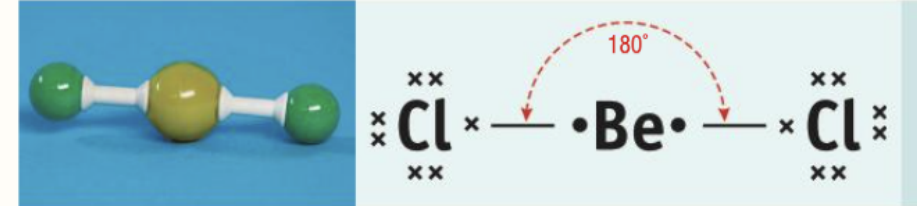
Linear geometry (180°)
Molecules with two pairs of electrons around the central atom adopt a linear shape.
Example
Example: Beryllium chloride (BeCl₂)
- Two electron pairs around beryllium
- Bond angle: 180°
- Electrons arrange themselves on opposite sides of the central atom
Trigonal planar geometry (120°)
Molecules with three pairs of electrons around the central atom form a triangular planar shape.
Example
Example: Boron trichloride (BCl₃)
- Three electron pairs around boron
- Bond angle: 120°
- All atoms lie in the same plane

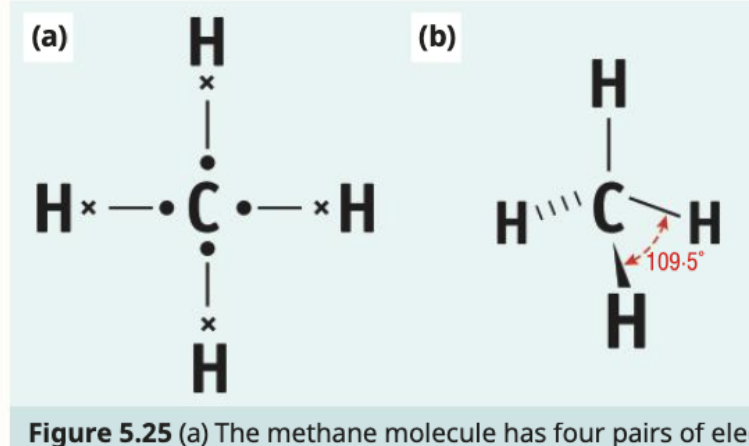
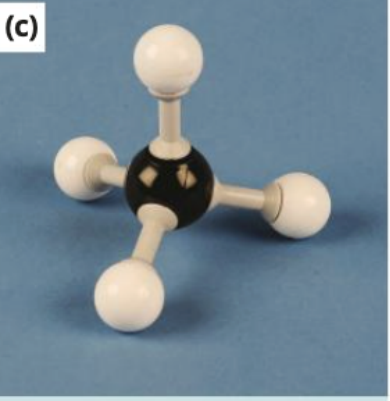
Tetrahedral geometry (109.5°)
Molecules with four pairs of electrons around the central atom adopt a tetrahedral shape.
Example
Example: Methane (CH₄)
- Four electron pairs around carbon
- Bond angle: 109.5°
- Three-dimensional pyramid-like structure
Effect of lone pairs on molecular geometry
Lone pairs (non-bonding electron pairs) significantly affect molecular shapes because they:
Important
Why Lone Pairs Change Molecular Shapes:
- Take up space around the central atom
- Repel bonding pairs more strongly than bonding pairs repel each other
- Cause bond angles to be smaller than the basic geometrical arrangement
Pyramidal geometry (~107°)
Example
Example: Ammonia (NH₃)
- Four electron pairs around nitrogen (3 bonding, 1 lone pair)
- The lone pair pushes the bonding pairs closer together
- Bond angle: approximately 107° (less than tetrahedral 109.5°)
- Shape: pyramidal
V-shaped or bent geometry (~104.5°)
Example
Example: Water (H₂O)
- Four electron pairs around oxygen (2 bonding, 2 lone pairs)
- Two lone pairs cause significant repulsion
- Bond angle: approximately 104.5°
- Shape: V-shaped or bent

Predicting molecular shapes using VSEPR
Note
Step-by-Step Process for Predicting Molecular Shapes:
- Count the valence electrons of the central atom
- Add electrons contributed by other atoms
- Calculate total electron pairs (divide total electrons by 2)
- Determine the basic geometry from the number of electron pairs
- Identify lone pairs and adjust the molecular shape accordingly
- Predict bond angles based on the presence of lone pairs
Exam tips
Important
Essential Exam Points:
- Remember that pi bonds are always weaker than sigma bonds
- Multiple bonds are shorter and stronger than single bonds
- Lone pairs occupy more space than bonding pairs
- Bond angles decrease when lone pairs are present
- Practice drawing Lewis structures before applying VSEPR theory
Summary
Key Points to Remember:
- Double bonds contain one sigma and one pi bond, while triple bonds contain one sigma and two pi bonds
- Pi bonds form through sideways overlap of orbitals and are weaker than sigma bonds
- VSEPR theory predicts molecular shapes based on electron pair repulsion around the central atom
- Lone pairs cause bond angles to decrease from the ideal geometric angles because they repel more strongly than bonding pairs
- Common molecular shapes include linear (180°), trigonal planar (120°), tetrahedral (109.5°), pyramidal (~107°), and V-shaped (~104.5°)