Characters (Leaving Cert Classical Studies): Revision Notes
📚Revision Notes
Characters
Understanding the characters in Sophocles' Antigone is essential for grasping the central themes and conflicts of this powerful Greek tragedy. Each character represents different values and approaches to moral dilemmas, creating a complex web of relationships that drives the tragic action forwards.
Antigone - the defiant heroine
Antigone serves as the play's protagonist and is the daughter of the tragic king Oedipus and his wife Jocasta. Her character embodies the struggle between personal conscience and state authority, making her one of literature's most compelling tragic figures.
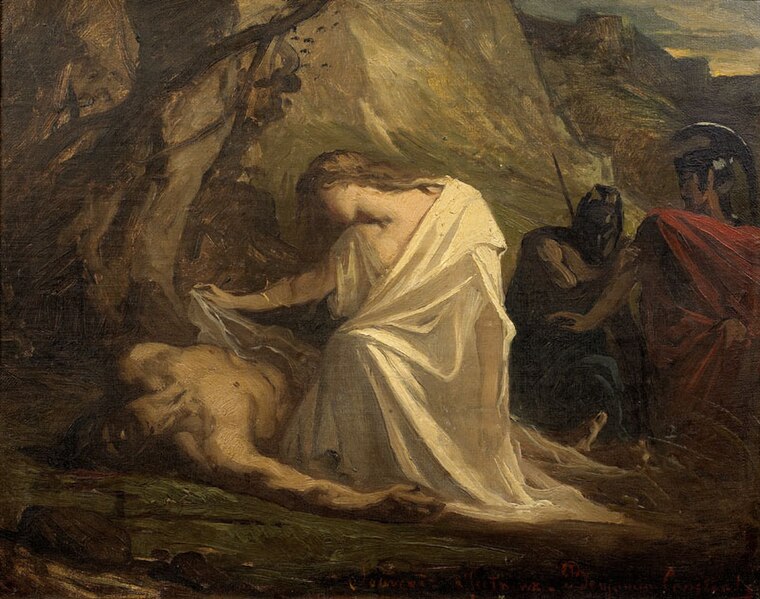
Antigone's defining moment comes when she chooses to defy King Creon's decree forbidding the burial of her brother Polyneices. She firmly believes that divine law takes precedence over human law, demonstrating her unwavering commitment to family loyalty and religious duty. Her character traits include:
- Remarkable courage
- Fierce determination
- Absolute loyalty to family
- Stubbornness
- An uncompromising nature
Note
Through Antigone, Sophocles explores themes of individual conscience, piety, and resistance to tyranny. She represents the voice of moral authority that refuses to bend to unjust political power. Tragically, her principled defiance leads directly to her imprisonment and death, marking her as a true tragic hero whose noble qualities ultimately cause her downfall.
Example
Key Antigone Quotes:
- "I will bury him myself. It is noble to honour the dead."
- "It was not Zeus who made this law, nor Justice who dwells with the gods."
These quotes demonstrate her commitment to divine law over human authority and her determination to honour family obligations.
Creon - the authoritarian ruler
King Creon of Thebes stands as Antigone's uncle and primary antagonist. His character represents the dangers of absolute political power and the conflict between state law and moral law.
Creon's decision to forbid Polyneices' burial stems from his belief that civic order must be maintained above all else, including family ties and religious obligations. He displays traits of:
- Authoritativeness
- Pride (which the Greeks called hubris)
- Unwavering belief that loyalty to the state should supersede all other considerations
Important
The king's inflexibility proves to be his tragic flaw. His rigid adherence to his own decree, even when warned by others, ultimately leads to devastating consequences: the deaths of his son Haemon and wife Eurydice. Through Creon, Sophocles illustrates the dangers of absolutism and excessive pride.
Example
Key Creon Quotes:
- "No one shall bury him; he is a traitor."
- "The city is the king's – that is the law."
These quotes reveal his prioritisation of state authority over family bonds and religious duty.
Ismene - the cautious sister
Ismene, Antigone's sister, provides a stark contrast to the protagonist's boldness. She represents those who choose safety and conformity over moral action, even when they recognise injustice.
Initially, Ismene refuses to help Antigone bury their brother, citing fear of defying Creon's authority. Her cautious and obedient nature reflects the typical response of citizens living under authoritarian rule. However, her character develops throughout the play – when she later offers to share Antigone's punishment, she demonstrates genuine loyalty and love for her sister.
Note
Ismene embodies conformity and fear of authority, serving as a foil to highlight Antigone's exceptional courage. Her character helps audiences understand why Antigone's actions are so remarkable – most people, like Ismene, would choose personal safety over moral principle.
Key quote: "We are only women, we cannot fight with men."
Haemon - the voice of reason
Haemon, son of Creon and engaged to Antigone, represents youthful idealism and the possibility of compromise. His character serves as one of the voices of reason in the play, attempting to bridge the gap between his father's authoritarianism and his beloved's defiance.
Haemon pleads with his father to show mercy towards Antigone, arguing cleverly that public opinion supports her actions. He represents reason, compromise, and youthful idealism – qualities that might have prevented the tragedy if Creon had listened. His attempts at diplomatic persuasion show maturity beyond his years and genuine love for both his father and fiancée.
The young man's ultimate suicide upon discovering Antigone's death demonstrates the destructive cost of Creon's stubbornness. His death serves as the catalyst for the final tragic events, showing how rigid authority destroys the very things it claims to protect.
Example
Key Haemon Quotes:
- "Do not be unbending; change your mind."
- "Her death will cause another."
These quotes show his reasonable approach to conflict resolution and his prophetic warning about the consequences of inflexibility.
Tiresias - the divine messenger
Tiresias appears as the blind prophet of Apollo, bringing divine wisdom and warning to the mortal world. His character represents the voice of the gods and serves as a final opportunity for Creon to avoid catastrophe.
The prophet warns Creon that the gods disapprove of his refusal to allow Polyneices' burial, representing divine authority and wisdom. Despite his physical blindness, Tiresias sees the spiritual truth that Creon, blinded by pride, cannot perceive. Initially, Creon insults and dismisses the prophet, but eventually recognises the truth of his warnings – unfortunately, this realisation comes too late.
Important
Tiresias embodies the theme that divine law ultimately supersedes human authority, no matter how powerful earthly rulers believe themselves to be. His warnings represent the last chance for Creon to avoid the tragic consequences of his actions.
Key quote: "You stand on the edge of fate."
Eurydice - the silent victim
Eurydice, Creon's wife, remains largely silent throughout the play until the devastating climax. Her character represents the innocent victims of political conflicts and authoritarian excess.
She appears briefly upon hearing news of her son Haemon's death, then exits without speaking. Her subsequent suicide serves as the final blow to Creon's pride and power. Through her death, she curses Creon, holding him responsible for destroying their family. Her silence followed by this ultimate act of despair symbolises the total collapse of Creon's household.
Key quote: "Your punishment is the death of your son."
The chorus - voices of wisdom
The Chorus, consisting of Elders of Thebes, serves multiple important functions throughout the play. They represent the city's voice and provide commentary on the unfolding events, often offering wisdom and moderation.
Initially, the Chorus supports Creon's authority, but they gradually shift their sympathy towards Antigone as they witness the tragic consequences of rigid rule. They comment on events, warn against hubris, and urge respect for the gods. Their evolution mirrors how reasonable people might respond to witnessing injustice and its consequences.
Note
The Chorus concludes the play with important moral lessons about wisdom and reverence for the gods, helping audiences understand the tragedy's deeper meanings. Their changing perspective throughout the play reflects the audience's likely emotional journey.
Example
Key Chorus Quotes:
- "Wisdom is the supreme part of happiness, and reverence towards the gods must be inviolate."
- "Pride breeds the tyrant."
These quotes encapsulate the play's central moral lessons about humility and divine respect.
Character relationships and conflicts
The heart of Antigone lies in the central conflict between Antigone, who champions divine law and family loyalty, and Creon, who represents human law and civic authority. This fundamental disagreement creates the tragic tension that drives the entire play.
Comparing Antigone and Ismene reveals the contrast between defiance and obedience, boldness and caution. Both Haemon and Tiresias function as voices of reason that Creon tragically ignores until it's too late. The progression of deaths – Antigone, then Haemon, then Eurydice – shows how Creon's inflexibility destroys everything he claims to protect.
Example
The Tragic Progression:
The sequence of deaths demonstrates the escalating consequences of Creon's rigid authority:
- Antigone's death - Direct result of defying Creon's decree
- Haemon's suicide - Caused by grief over Antigone's death and anger at his father
- Eurydice's suicide - Final consequence of losing her son and blaming Creon
This progression shows how one inflexible decision can destroy an entire family.
Summary
Key Points to Remember:
- Antigone represents individual conscience and divine law – she's willing to die for her moral principles
- Creon embodies state authority and human law – his excessive pride leads to tragic consequences
- The central conflict is between divine law (Antigone) and human law (Creon), with neither willing to compromise
- Haemon and Tiresias both serve as ignored voices of reason – their warnings could have prevented tragedy
- Key character quotes effectively demonstrate personality traits and thematic positions in exam answers