Characters (Leaving Cert Classical Studies): Revision Notes
📚Revision Notes
Characters
Medea - the tragic heroine
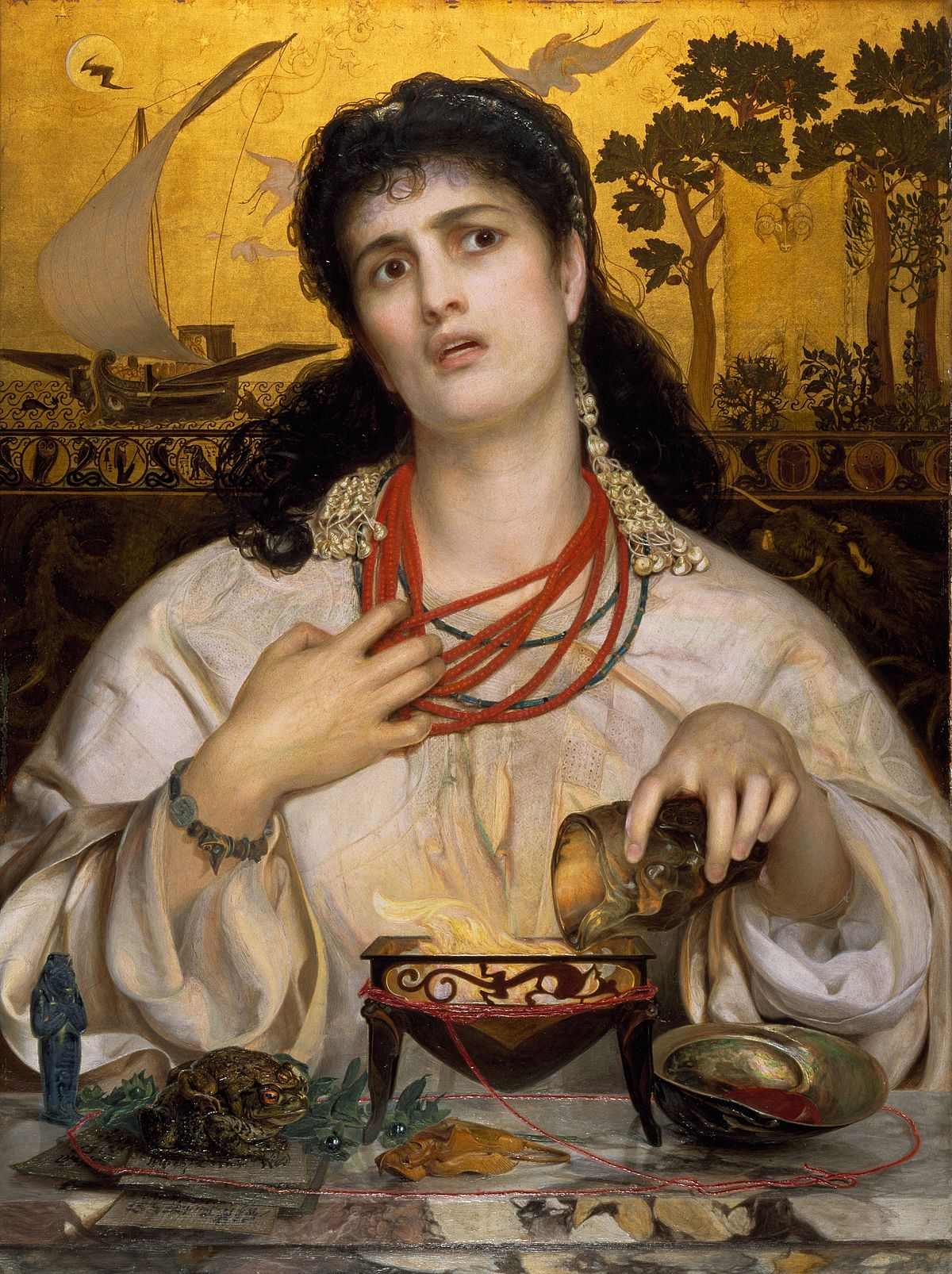
Medea stands as the central figure of Euripides' play, embodying the complex role of both victim and perpetrator. As a foreign princess and sorceress from Colchis, she represents the outsider in Greek society, bringing with her mysterious powers and different cultural values. Her character demonstrates remarkable intelligence and eloquence, yet these qualities become weapons in her quest for revenge.
Note
The playwright presents Medea as fundamentally torn between two powerful forces: her deep maternal love for her children and her burning desire for vengeance against Jason. This internal conflict drives the entire tragedy, as audiences witness her struggle between natural affection and calculated brutality.
Medea's character arc reveals both sympathetic and horrific elements. Her famous speech highlighting women's oppression in Greek society generates audience sympathy, as she articulates the powerless position of females in a male-dominated world. However, this sympathy transforms into horror when she commits the ultimate transgression - murdering her own children to inflict the deepest possible wound upon Jason.
The play concludes with Medea's literal elevation through the deus ex machina device, as she escapes to Athens, suggesting her transformation from mortal woman to something beyond human comprehension.
Key quotes:
"Of all creatures that can feel and think, we women are the worst treated things alive."
"I will slay my children; no one shall take them from me."
Jason - the betraying husband
Jason functions as both Medea's former beloved and her primary antagonist. As the renowned leader of the Argonauts, he possesses heroic status, yet the play reveals his moral failings through his treatment of Medea. His decision to marry Glauce, King Creon's daughter, represents a calculated political move designed to secure advancement for himself and their children.
Note
Jason embodies patriarchal arrogance in his assumption that he can discard Medea without consequence. He attempts to rationalise his betrayal as beneficial to their family, demonstrating his fundamental misunderstanding of Medea's character and capabilities.
This underestimation of his wife's intelligence and rage ultimately leads to his complete destruction. The playwright uses Jason to represent traditional Greek male values - status, political advantage, and rational decision-making - while simultaneously exposing the weakness inherent in such thinking. His final confrontation with Medea leaves him utterly powerless, having lost everything he sought to protect.
Key quotes:
"It is not for the sake of any woman I have made this royal marriage, but for your sake and for my children's."
"No Greek woman would ever have dared this."
Creon - the fearful king
King Creon of Corinth represents political authority attempting to control dangerous forces. As Glauce's father, he becomes unwittingly entangled in Medea's revenge plot. His character demonstrates the tension between showing mercy and maintaining security.
Creon recognises Medea's intelligence and potential for harm, leading to his decision to banish her from Corinth. However, his compassion becomes his weakness when he grants her one additional day to prepare for exile. This moment of pity provides Medea with the opportunity she needs to execute her revenge plan, ultimately resulting in both his and his daughter's deaths through the poisoned gifts.
Important
Creon's fatal flaw lies in underestimating the danger that compassion can pose to authority. His single act of mercy - granting Medea one day - becomes the catalyst for the tragic climax, demonstrating how even well-intentioned rulers can become victims of their own humanity.
Key quote:
"You are a clever woman, versed in evil arts... therefore I banish you."
Glauce - the innocent pawn
Glauce (also called Creusa) serves as the innocent victim caught in the web of political alliances and personal revenge. As Creon's daughter and Jason's new bride, she represents the displacement of Medea's position as wife.
Her character symbolises how women in ancient Greek society often became pawns in male political games. Her vanity and desire for beautiful gifts - natural traits for a young woman - become the instruments of her destruction when she accepts Medea's poisoned wedding presents. The messenger's vivid description of her death by the golden crown emphasises the horror of her fate.
Key quote (Messenger):
"The crown of gold poured forth a stream of all-devouring fire."
The chorus - voices of society
The Corinthian women who form the chorus serve multiple dramatic functions throughout the play. They initially provide sympathy for Medea's plight as a betrayed wife, representing the female perspective often silenced in Greek society.
Their role evolves as the play progresses, offering moral commentary and reflexion on the unfolding events. The chorus experiences the same emotional journey as the audience, shifting from support and understanding to horror and revulsion as Medea's revenge becomes increasingly extreme.
These women represent the community's voice, showing how society processes and responds to transgressive behaviour. Their transformation from allies to horrified witnesses demonstrates the boundary between justified anger and unforgivable action.
Key quote:
"Terrible is the anger and almost beyond cure when strife severs the bond of marriage."
Aegeus - the political ally
The King of Athens appears as a crucial figure who provides Medea with the security necessary to complete her revenge. His childlessness and desperate search for a cure for infertility make him vulnerable to Medea's magical assistance.
Aegeus's promise of sanctuary in Athens gives Medea the confidence to proceed with her murderous plans, knowing she will have protection afterward. This character represents the theme of political alliances and demonstrates how personal desperation can lead to unwitting participation in evil.
His appearance also emphasises the theme of exile - showing how the displaced and powerless must forge new alliances to survive.
Key quote:
"You shall have sanctuary in my land... I am bound by oath to protect you."
The children - silent victims
Important
Though silent on stage, Medea's children occupy the emotional centre of the play. They represent pure innocence destroyed by adult betrayal and revenge. Their presence creates the play's most profound moral conflict, as audiences witness a mother choosing vengeance over maternal love.
The children's murder serves as the climactic horror that transforms audience sympathy into revulsion. Their deaths highlight Medea's complete transformation from sympathetic victim to monstrous perpetrator.
Key quote (Medea):
"My heart dissolves, women, when I see the shining faces of my children... but anger, stronger than all my resolutions, drives me on."
Exam preparation strategies
Note
Effective Character Analysis Approaches
Understanding character relationships proves essential for exam success. Focus on the opposition between Medea and Jason - passion versus rationalisation, loyalty versus betrayal, power versus weakness. Always connect Medea's identity as both woman and foreigner to her role in challenging Greek social norms.
Use the chorus as a barometer of audience reaction, tracking their movement from sympathy to horror. Key quotations provide excellent evidence - Medea on women's oppression, Jason justifying his marriage, the chorus on marital anger, and the messenger describing the poisoned gifts.
Prepare to discuss whether Euripides presents Medea as monster, victim, or both - this complex characterisation reflects the play's enduring power and relevance.
Summary
Key Points to Remember:
- Medea embodies the conflict between victim and perpetrator - her sympathetic position as betrayed wife transforms into horrific revenge through child murder
- Character oppositions drive the drama - Medea's passion versus Jason's rationality, her loyalty versus his betrayal, creating powerful theatrical tension
- The chorus represents shifting audience sympathy - their journey from support to horror mirrors the audience's emotional experience throughout the play
- Political alliances and exile themes connect through characters like Aegeus and Creon, showing how personal relationships intersect with public power
- Silent characters carry enormous emotional weight - the children's presence creates the play's central moral conflict without speaking a word