Context (Leaving Cert Classical Studies): Revision Notes
📚Revision Notes
Context
The playwright: Euripides (c. 480-406 BC)
Euripides stands as one of the three towering figures of classical Athenian tragedy, alongside Aeschylus and Sophocles. What set him apart from his contemporaries was his innovative approach to drama and his willingness to challenge conventional thinking.
Euripides became renowned for his deep exploration of human psychology, particularly focusing on characters who existed on the margins of Greek society. His works frequently gave voice to women, slaves, and foreigners - groups that typically held little power in Athenian society. Through these characters, he often presented viewpoints that directly challenged traditional Athenian values and assumptions.

Note
The timing of Medea is particularly significant. Euripides wrote this tragedy in 431 BC, precisely at the beginning of the devastating Peloponnesian War. This historical context meant that themes of conflict, betrayal, and the breakdown of trust would have resonated powerfully with contemporary audiences who were experiencing similar upheavals in their own lives.
The mythological background
Understanding Medea's story requires knowledge of her origins and history before the events of the play. Medea was a powerful sorceress who originated from Colchis, a distant land located on the shores of the Black Sea. This geographical detail is crucial because it establishes her as fundamentally foreign to Greek society.
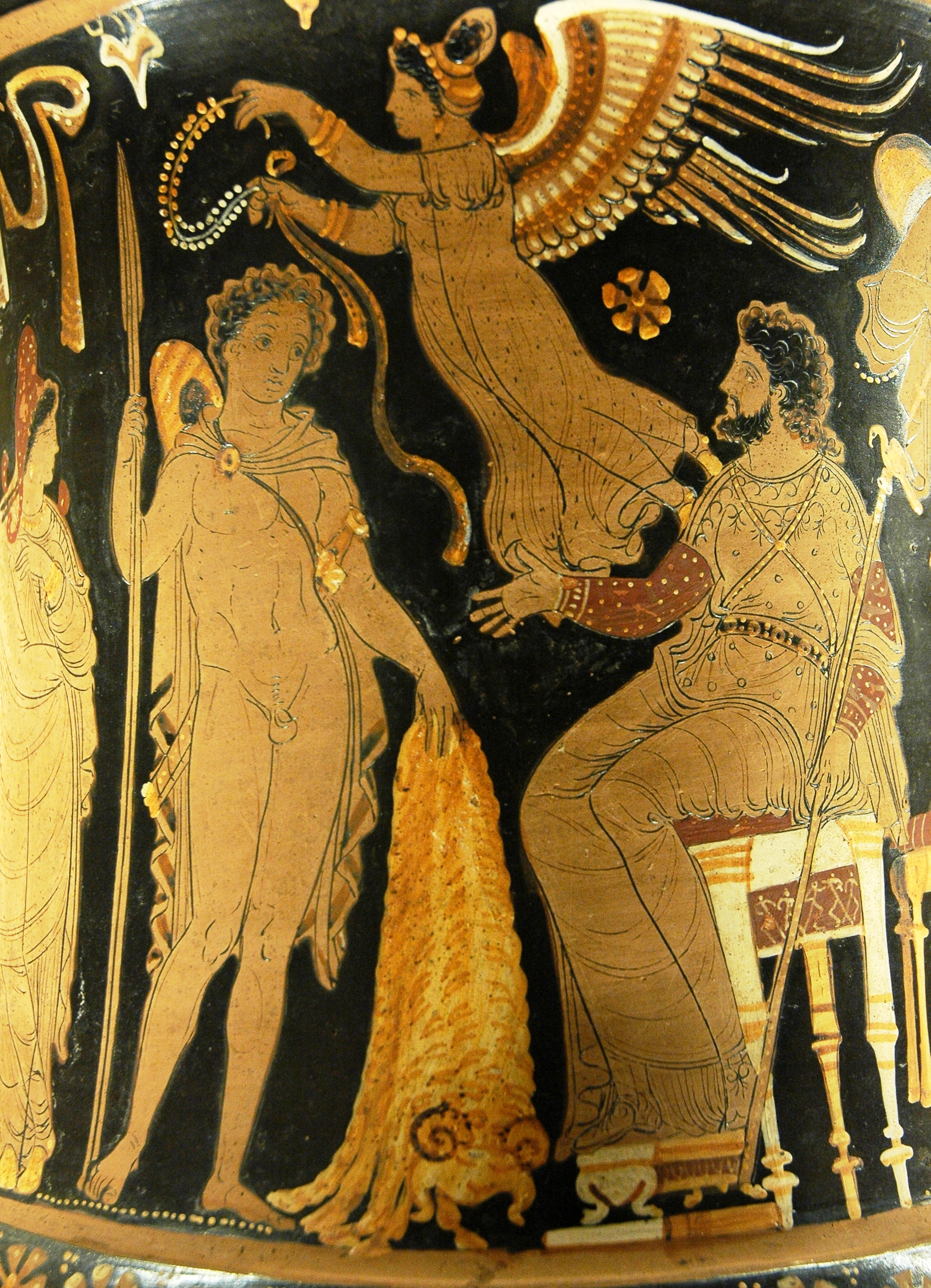
Her initial encounter with Jason came through his famous quest for the Golden Fleece. As the leader of the Argonauts, Jason needed Medea's magical abilities to succeed in his mission. However, Medea's assistance came at an enormous personal cost - she betrayed her own family to help Jason achieve his goal.
Following their successful collaboration, Medea married Jason and relocated to Corinth, where they established a family together, having children. However, the mythological tradition tells us that Jason eventually abandoned Medea in favour of a more advantageous marriage to Glauce, who was the daughter of King Creon. In the original myth, Medea's response to this betrayal was catastrophic - she murdered her own children as the ultimate act of revenge against her unfaithful husband.
Euripides takes this traditional story and uses it as a foundation to explore profound themes of betrayal, overwhelming passion, and the destructive nature of revenge.
Important
One of Medea's most powerful statements captures the essence of her plight: "Of all creatures that can feel and think, we women are the worst treated things alive."
Women's position in Athenian society
To appreciate the radical nature of Medea's character, students must understand the severely restricted role of women in classical Athens. Athenian women possessed virtually no political rights and were largely confined to the domestic sphere, known as the oikos (household). Society expected them to embody the ideals of loyal, submissive wives and devoted mothers.
Important
Medea's situation is even more precarious because she faces double marginalisation. Not only is she a woman in a male-dominated society, but she is also a foreigner - an outsider whose foreign status compounds her vulnerability. This combination of gender and outsider status would have made her particularly powerless in Greek society.
Note
The strength of Medea's voice and her bold defiance of social expectations would have been genuinely shocking to the original Athenian audience. Her refusal to accept her fate quietly and her articulation of women's suffering challenged the fundamental assumptions about women's proper behaviour and place in society.
The chorus and traditional Greek values
The Chorus of Corinthian women serves a crucial function in the play by representing conventional societal attitudes. Their responses throughout the tragedy provide insight into how ordinary people might react to Medea's situation and actions.
Initially, the Chorus demonstrates sympathy for Medea's suffering, recognising the injustice of her abandonment. However, their attitude undergoes a dramatic transformation when Medea murders her children - at this point, they recoil in horror and condemnation.
Note
This shift illustrates the tension between understanding women's difficult circumstances and the fear of what might happen when women reject traditional constraints.
The play challenges several fundamental Greek values through Medea's story:
- Oikos (household stability) is completely undermined by both Jason's betrayal and Medea's devastating revenge
- Xenia (guest-friendship and hospitality) is violated - Medea, who was once welcomed as a guest in Greece, finds herself betrayed and cast out by her hosts
Performance and political context
Medea was originally performed at the City Dionysia, which was part of a major religious festival honouring the god Dionysus. This religious setting is important because it shows how drama served not merely as entertainment but as a form of public discourse where playwrights could address serious social and moral questions.
Note
Ancient Greek theatre functioned as a forum for public debate, allowing dramatists to raise challenging questions about justice, divine will, and human passion. Medea's actions in the play force audiences to confront difficult questions about these fundamental concepts.
The political dimension is equally significant. The themes explored in Medea - particularly betrayal, exile, and the fragility of political and personal alliances - would have spoken directly to Athens' political anxieties during the early stages of the Peloponnesian War.
Literary significance and lasting influence
Euripides' portrayal of Medea has had an enduring impact on literature and art throughout history. The character is widely regarded as one of the most radical and complex female figures in all of Greek tragedy.
Important
What makes Medea both admired and feared is her absolute refusal to submit to circumstances that would crush other characters. Her determination to maintain control over her destiny, even at the most terrible cost, creates a figure that is simultaneously inspiring and terrifying.
Modern audiences often interpret Medea as an early feminist figure, seeing in her a woman who refuses to accept society's limitations and fights back against oppression. However, it's important to remember that in ancient Athens, she would have been viewed as embodying chaos and representing a dangerous threat to social order.
Summary
Key Points to Remember:
-
Euripides was innovative: He focused on marginalised characters and challenged traditional values, making him unique among the great tragedians.
-
Historical timing matters: Written in 431 BC at the start of the Peloponnesian War, themes of betrayal and conflict would have felt particularly relevant to audiences.
-
Medea faces double marginalisation: As both a woman and a foreigner, she experiences compound disadvantages in Greek society.
-
The Chorus tracks audience response: Their shift from sympathy to horror reflects the complex emotions Medea's story would have evoked.
-
Context is crucial for exams: Always connect Medea's situation to Greek values like oikos and xenia, and remember her foreign status is central to understanding her character and the play's meaning.