Literary Techniques (Leaving Cert Classical Studies): Revision Notes
📚Revision Notes
Literary Techniques
Sophocles masterfully employs a range of literary techniques in Philoctetes to create a compelling drama that explores themes of honour, betrayal, and moral conflict. Understanding these techniques will help you appreciate how the playwright crafts meaning and emotional impact throughout the play.
Tragic conventions
Sophocles follows several key conventions of Greek tragedy in Philoctetes, which help to focus the audience's attention on the psychological and moral conflicts rather than external action.
The unity of place is maintained throughout the drama, with all action occurring on the deserted island of Lemnos. This single setting serves to emphasise Philoctetes' complete isolation from civilised society and creates an intimate, claustrophobic atmosphere that heightens the emotional intensity of the encounters between characters.
Note
The messenger-style episodes technique allows Sophocles to provide essential background information whilst maintaining focus on the present moral dilemma. Characters, particularly Philoctetes himself, recount past events rather than showing them directly.
Deus ex machina appears when Heracles manifests at the play's conclusion to resolve the conflict. This divine intervention represents the restoration of cosmic order and ensures that fate prevails over human stubbornness.
Offstage action is employed when Philoctetes' physical suffering and wound crises are described rather than enacted, which allows the audience to use their imagination and intensifies the emotional impact through vivid verbal description.
Setting and isolation
The barren, rocky landscape of Lemnos serves as both a literal location and a powerful metaphor for Philoctetes' emotional and social abandonment. This desolate setting mirrors the protagonist's inner suffering and loneliness, creating a sympathetic atmosphere that draws the audience into his plight.
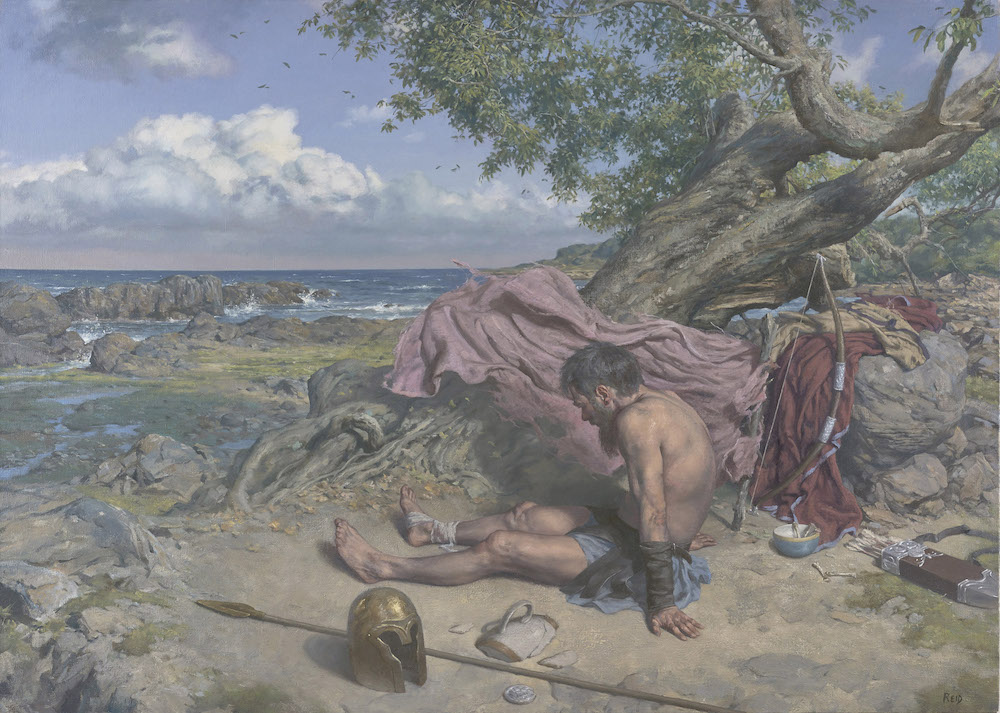
The single setting technique allows Sophocles to concentrate entirely on the psychological and moral conflicts between the characters rather than external adventures or battles. This focus on internal struggle rather than physical action makes the play particularly intense and emotionally powerful.
As Philoctetes laments: "They left me, abandoned, alone, with this incurable wound."
Symbolism
Sophocles uses several key symbols to represent deeper themes and conflicts within the play.
Note
The Bow of Heracles functions as a complex symbol representing both power and dependence. It was essential for the Greek victory at Troy, yet Philoctetes' possession of this mighty weapon makes his abandonment particularly cruel and ironic. The bow represents Philoctetes' dignity and autonomy - losing it would mean complete betrayal, whilst regaining it represents empowerment and recognition.
The Wound symbolises human suffering, betrayal, and exclusion from society. It serves as a constant reminder of how Philoctetes has been wronged and represents the lasting damage that betrayal can inflict on an individual.
Lemnos itself symbolises abandonment and isolation, but also becomes a testing ground where honour and morality are examined. The island setting forces characters to confront their true values away from the corrupting influences of society.
Irony
Sophocles employs multiple forms of irony to create tension and reveal the complexity of the moral situation.
Example
Types of Irony in Philoctetes:
Dramatic irony - The audience knows that Neoptolemus is deceiving Philoctetes, which heightens the emotional tension as we watch the vulnerable hero place his trust in someone who is betraying him.
Situational irony - The Greeks abandoned Philoctetes as useless, yet both he and his bow are essential for victory at Troy. This reveals the shortsightedness and cruelty of their original decision.
Verbal irony - Odysseus presents deception as a noble strategy, though it actually undermines heroic values and honour.
As Odysseus states: "Deceit is a weapon we must use, if it brings us victory."
Rhetoric and persuasion
The play is built primarily on speeches and persuasion rather than physical action, reflecting Athenian interest in rhetoric and ethical debate. Each character employs a distinctive rhetorical style that reveals their personality and moral position.
Odysseus uses cold, pragmatic, and manipulative language that prioritises results over honour. His arguments are logical but morally questionable.
Neoptolemus begins torn and conflicted, moving from deceit towards honesty as his character develops. His changing rhetoric reflects his internal moral struggle.
Philoctetes employs raw, emotional appeals based on loyalty and justice. His rhetoric is passionate and heartfelt, drawing on personal suffering and traditional heroic values.
Important
This contrast in rhetorical styles allows Sophocles to explore different approaches to moral decision-making and their consequences. The playwright uses these contrasting voices to examine the tension between pragmatic necessity and moral integrity.
As Neoptolemus declares: "Better to fail with honour than win by deceit."
The chorus
The Chorus of sailors serves as sympathetic observers who express pity for Philoctetes whilst fearing the anger of the powerful Atreidae. They function as a moral barometer, reflecting and guiding audience reactions to the unfolding events.
The Chorus provides commentary that helps the audience understand the moral complexity of the situation, often expressing conflicted feelings that mirror those of the audience itself. Their presence creates a sense of community witness to the moral crisis.
As the Chorus observes: "We pity your suffering, Philoctetes, yet fear the power of the Atreidae."
Stichomythia (rapid dialogue)
Sophocles uses stichomythia - rapid, alternating single-line exchanges - to highlight conflict and moral tension between characters. This technique creates heightened dramatic intensity during crucial confrontations.
Note
The technique is particularly effective in confrontations between Odysseus and Philoctetes (representing deception versus defiance) and between Neoptolemus and Odysseus (representing honour versus pragmatism). These rapid exchanges build dramatic momentum and reveal the fundamental incompatibility of the characters' moral positions.
Pathos (emotional power)
Philoctetes' suffering is described in vivid, painful language that evokes deep audience sympathy. Sophocles uses pathos to create emotional connection between the audience and the abandoned hero.
The protagonist's cries during wound flare-ups demonstrate his physical agony, whilst his years of isolation make his trust in Neoptolemus especially moving when it is betrayed. This emotional manipulation ensures that the audience becomes invested in Philoctetes' fate and moral vindication.
As Philoctetes expresses his anguish: "My heart dissolves in pain, and I am undone."
Resolution by the gods
Heracles' divine appearance at the play's end represents the restoration of cosmic order and divine authority overruling human conflict. This deus ex machina provides the only acceptable resolution to the moral deadlock between the characters.
Important
The divine intervention represents the triumph of fate and prophecy over human stubbornness and conflict. It suggests that some moral dilemmas require divine wisdom to resolve, as mortals become too entangled in their own perspectives to find just solutions.
Heracles commands: "Follow now the will of Zeus, and go to Troy; there you will be healed, and win everlasting honour."
Summary
Key Points to Remember:
- Tragic conventions like unity of place and deus ex machina focus attention on psychological conflict rather than external action
- Symbolism of the bow, wound, and Lemnos adds deeper meaning to the surface narrative about power, suffering, and isolation
- Three types of irony (dramatic, situational, verbal) create tension and reveal the complexity of moral choices
- Contrasting rhetorical styles of Odysseus, Neoptolemus, and Philoctetes represent different approaches to ethics and decision-making
- Stichomythia and pathos build dramatic intensity and emotional connection, making the moral conflicts more compelling for the audience