Context (Leaving Cert Classical Studies): Revision Notes
📚Revision Notes
Context
The playwright: Aeschylus
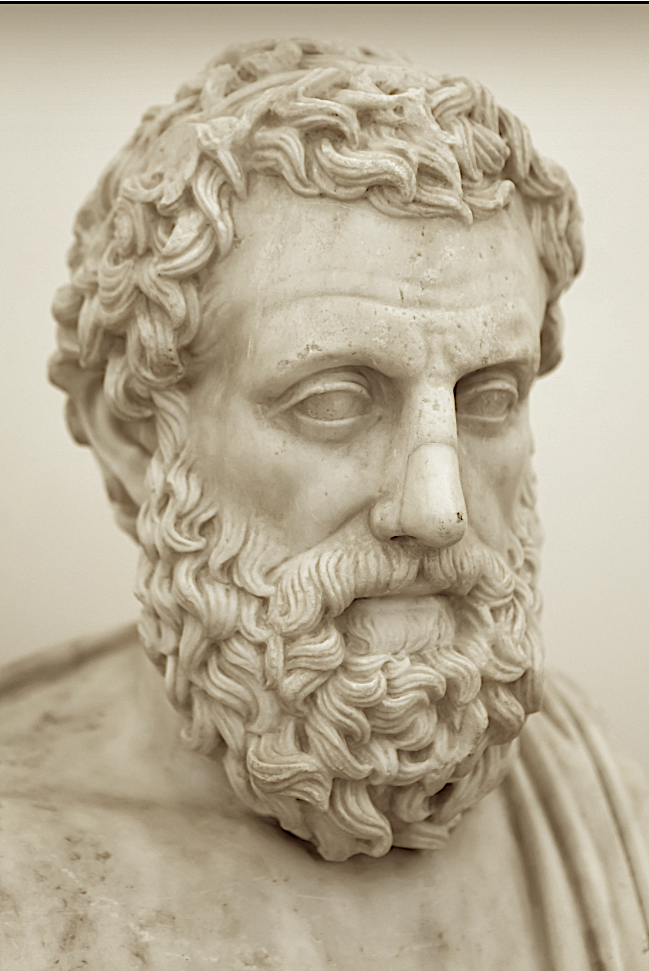
Aeschylus lived from around 525 to 456 BC and holds a special place in Greek literature as the eldest among the three great Athenian tragedians. He earned the title "father of tragedy" because he revolutionised the theatrical form by introducing a second actor to the stage and giving greater importance to dialogue alongside the traditional chorus.
The playwright became renowned for creating works of grandeur that explored serious moral questions and religious themes. While scholars continue to debate whether Aeschylus actually wrote Prometheus Bound (some suggest it might be a later work), the play has traditionally been attributed to him and reflects many of his characteristic concerns.
Note
The question of authorship surrounding Prometheus Bound remains one of the most debated topics in classical scholarship. Some scholars point to differences in style and theological perspective compared to Aeschylus's other confirmed works, suggesting it may have been written by a later playwright in his tradition.
Aeschylus was particularly famous for his innovative approach to drama, elevating it from simple choral performances to complex theatrical experiences that engaged audiences with profound philosophical questions.
Understanding the Prometheus myth
The central figure of this tragedy is Prometheus, whose name literally means "forethought" in Greek. As one of the Titans - the older generation of divine beings - Prometheus initially supported Zeus during the great war known as the Titanomachy, when the younger Olympian gods overthrew the Titans.
However, Prometheus later defied Zeus by stealing fire and giving it to humanity, an act of rebellion that fundamentally changed the relationship between gods and mortals. This theft of fire represents much more than just providing warmth and light - it symbolises the gift of knowledge, technology, and civilisation itself.
Example
The Mythological Sequence of Events:
Step 1: The Titanomachy - Zeus and the Olympians defeat the Titans Step 2: Prometheus sides with Zeus during this war Step 3: Prometheus defies Zeus by stealing fire for humanity Step 4: Zeus punishes Prometheus with eternal torment - chained to a rock where an eagle devours his regenerating liver daily
Zeus punished this defiance severely by chaining Prometheus to a remote rock, where an eagle would arrive daily to devour his liver, which would then regenerate overnight, creating an endless cycle of torment. This punishment demonstrates the brutal consequences of challenging divine authority.
The character of Prometheus embodies two important symbolic roles: he serves as a benefactor of mankind who sacrificed himself for human advancement, and simultaneously represents defiant resistance against tyrannical power. The famous quote attributed to him - "All human arts are from Prometheus" - emphasises his role as the bringer of civilisation and progress.
Connection to Athenian society
Prometheus Bound was written during the 5th century BC, a pivotal period when Athens was experiencing significant growth as a democratic city-state. This timing is crucial for understanding the play's deeper meanings and how contemporary audiences would have interpreted its themes.
The central tension between authority and resistance in the play would have resonated strongly with Athenian citizens who were navigating their own complex relationship with power and freedom. The conflict between Zeus's harsh rule and Prometheus's defiant resistance mirrors contemporary debates about the balance between governmental authority and individual liberty.
Note
Athens in the 5th century BC was at the height of its power and cultural influence. The city had recently established democratic institutions after overthrowing tyrannical rulers, making themes of resistance against oppression particularly relevant to contemporary audiences.
Audiences in democratic Athens would have been particularly sensitive to questions surrounding justice, law, and the proper use of power. Prometheus can be interpreted as a symbol representing rebellion against tyrannical rule, with Zeus portrayed as an oppressive ruler who uses his authority unjustly.
Alternatively, the character might represent Athens itself as the champion of humanity, bringing knowledge and civilisation to the world while facing opposition from more traditional, authoritarian forces. This reading would have appealed to Athenian pride in their cultural achievements and democratic innovations.
Religious and theological dimensions
Greek tragedy frequently explored challenging questions about the nature of divine justice and the gods' relationship with mortals. Prometheus Bound takes this tradition further by presenting Zeus in an unusually harsh and despotic light, which would have been quite striking for ancient audiences.
The play embodies the concept of moral courage in the face of divine authority, with Prometheus standing firm in his principles despite facing eternal punishment. This raises profound theological questions that would have challenged conventional religious thinking: Is divine law always just? Should mortals accept divine authority without question?
Important
Challenging Religious Questions:
The play poses fundamental theological dilemmas that would have been controversial for ancient Greek audiences:
- Can divine authority be unjust?
- Is it moral to resist the gods when they act tyrannically?
- What is the relationship between divine law and moral law?
- Should suffering be accepted when it comes from divine punishment?
The tragedy presents these religious themes not as simple moral lessons, but as complex philosophical problems that invite audience reflexion and debate. Prometheus's steadfast defiance suggests that there are principles worth suffering for, even when opposing the highest divine authority.
Performance context and staging
The play was originally performed at the City Dionysia, Athens's most important religious festival, where it likely formed part of a trilogy alongside Prometheus Unbound and Prometheus the Fire-Bearer. This festival context meant that audiences experienced the drama as both religious ritual and political commentary.
The staging of Prometheus Bound presented unique challenges and opportunities for ancient theatre. The protagonist remains chained to a rock for virtually the entire performance, creating a static visual that focuses attention entirely on the power of spoken dialogue rather than physical action.
Note
The City Dionysia was not merely an entertainment event but a civic and religious ceremony that brought together the entire Athenian community. Plays performed here carried both spiritual significance and political weight, as they addressed fundamental questions about society, morality, and the gods.
The Chorus of Oceanids provides crucial commentary and emotional support, while spectacular stage machinery would have been employed to show the entrances of divine characters like Hermes, creating dramatic visual effects that emphasised the supernatural elements of the story.
This combination of religious festival setting and innovative staging techniques would have created a powerful theatrical experience that functioned simultaneously as spiritual ceremony and political discourse.
Political and cultural significance
The play reflects important debates taking place in 5th-century Athens concerning justice, tyranny, and freedom of speech. These themes would have had immediate relevance for audiences living in a democracy that was still defining its values and institutions.
The work can be interpreted as a critique of Zeus's rule, symbolising fear of autocracy and the dangers of unchecked power. This reading would have resonated with Athenians who had relatively recently overthrown tyrannical rulers and established democratic governance.
Alternatively, the play might function as an allegory for Athens itself, portraying the city-state as struggling with questions of power and democracy on a larger stage. This interpretation emphasises Athens's role as a bringer of civilisation and democratic ideals to the broader Greek world.
Note
Multiple Political Interpretations:
Scholars have identified several ways the play can be read politically:
- As a warning against tyranny and abuse of power
- As an allegory for Athens bringing civilisation to the world
- As commentary on the tension between traditional authority and progressive ideas
- As a reflexion on the costs of challenging established power structures
Later thinkers, particularly during the Enlightenment period, admired Prometheus as a powerful symbol of rebellion against oppression and human progress through knowledge and reason. This enduring appeal demonstrates the play's ability to speak to universal human concerns about freedom, justice, and the price of progress.
Literary and cultural legacy
Prometheus Bound stands out from many other Greek tragedies because it focuses intensely on a single character's moral defiance rather than on dramatic action or plot development. This unique approach creates dramatic tension through the power of speeches and philosophical dialogue rather than through physical events.
Despite Prometheus being physically static throughout the play - chained and unable to move - the drama generates compelling tension through his unwavering speeches of resistance and the various characters who visit him. This technique demonstrates how psychological and moral conflict can create powerful theatre even without traditional dramatic action.
The tragedy explores enduring themes including the nature of suffering, the value of resistance against injustice, and the relationship between human progress and divine will. These universal concerns help explain why the play has remained influential across centuries and cultures.
The work's impact on Western literature has been profound, inspiring later works such as Shelley's Prometheus Unbound and influencing Romantic literature and modern thought about individual freedom and social progress.
Summary
Key Points to Remember:
-
Aeschylus was known as the "father of tragedy" and revolutionised Greek drama by adding a second actor and emphasising dialogue alongside choral performance.
-
Prometheus represents both benefactor and rebel - he gave fire (knowledge/civilisation) to humanity but defied Zeus's authority, leading to eternal punishment.
-
The play reflects 5th-century Athenian democratic values - themes of authority versus resistance would have resonated with audiences navigating questions about power and freedom in their own society.
-
Religious and political dimensions intertwine - the work challenges conventional views of divine justice while commenting on contemporary political debates about tyranny and democracy.
-
The static staging creates unique dramatic effects - Prometheus remains chained throughout, focusing attention on powerful speeches rather than physical action, demonstrating how moral courage can create compelling theatre.