Themes (Leaving Cert Classical Studies): Revision Notes
📚Revision Notes
Themes
Aeschylus's Prometheus Bound explores several powerful themes that would have resonated deeply with ancient Athenian audiences. These themes reflect the political and philosophical concerns of 5th-century Athens, particularly around questions of power, justice, and human progress.
Note
The play was written during the height of Athenian democracy (5th century BCE), when audiences would have been particularly sensitive to themes of tyranny, freedom, and resistance to unjust authority.
Tyranny versus freedom
The central conflict of the play revolves around the tension between tyrannical power and individual liberty. Zeus is presented as a newly established ruler who exercises his authority with harsh brutality and demands complete submission from all beings. This portrayal would have struck a chord with Athenian audiences who prided themselves on their democratic values and resistance to tyranny.
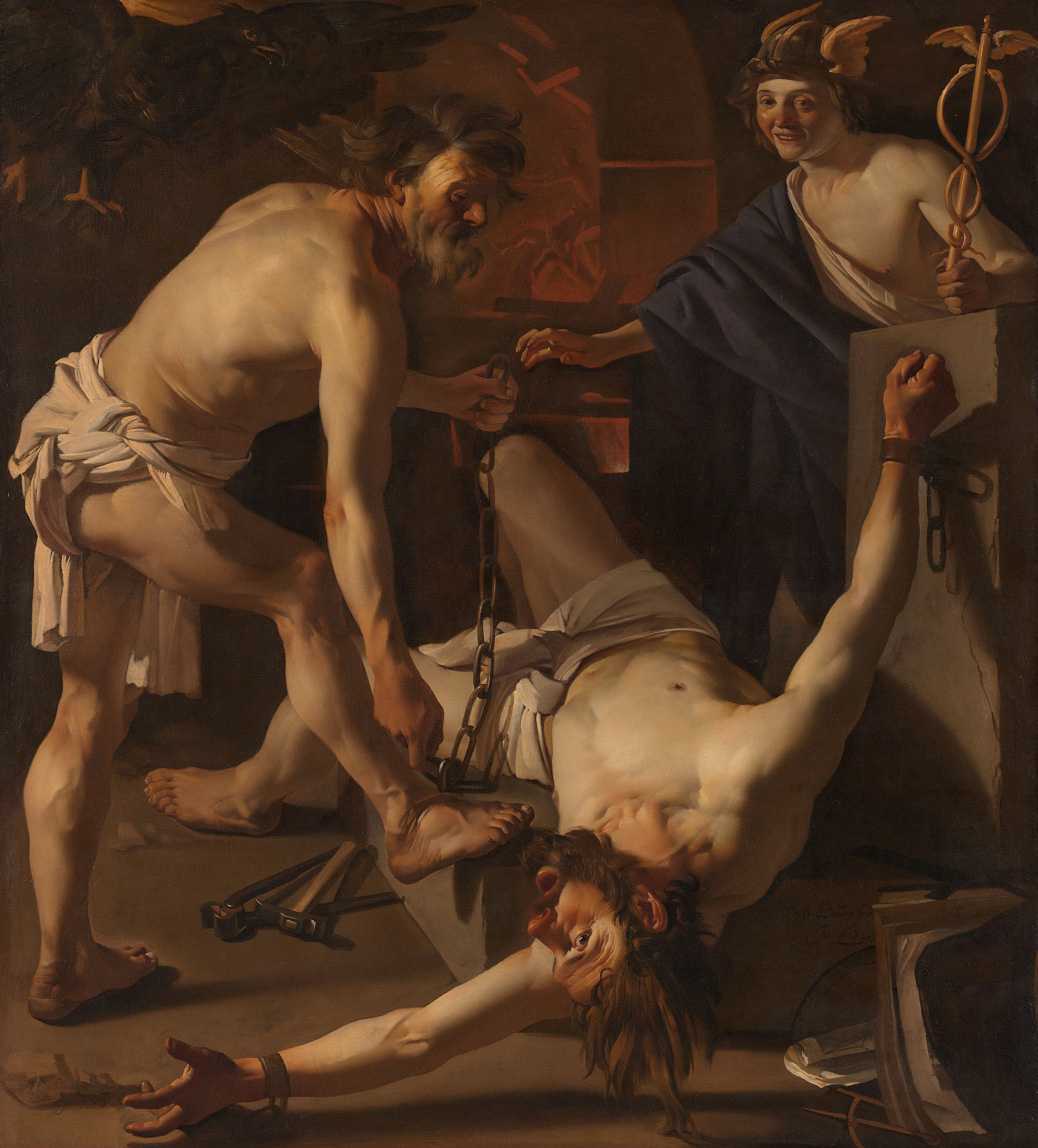
Prometheus becomes a symbol of resistance against unjust authority. Despite facing severe torture, he refuses to bow to Zeus's demands, embodying the principle that some things are more important than personal safety. This defiance raises important political questions about when it is right to resist those in power and the moral duty to oppose injustice.
Note
Key examples of the tyranny theme:
- Kratos (representing brute force) demands absolute obedience to Zeus
- Prometheus boldly calls Zeus a "tyrant" and criticises his cruel methods
Quote: "Zeus is new to power and harsh to those he rules."
Suffering and endurance
The theme of suffering permeates the entire play, with Prometheus enduring both physical torment (being chained to a rock and having an eagle tear at his liver daily) and emotional anguish (isolation and pity for humanity's plight). However, his suffering is not passive - it becomes a form of heroic resistance.
Aeschylus presents suffering as something that can be transformative and noble when endured for a greater cause. Prometheus's pain is paralleled by Io's suffering, highlighting how innocent victims often bear the consequences of conflicts between the powerful. The connection between suffering and heroic resistance suggests that enduring hardship for moral principles can be a form of greatness.
Important
The concept of noble suffering was central to Greek heroic ideals - heroes were defined not by avoiding hardship, but by how they endured it for worthy causes.
Quote (Prometheus): "Suffering is my fate, but I will not bow to Zeus."
Knowledge and progress
Prometheus is portrayed as a culture-bringer who transformed human civilisation by giving humanity essential knowledge and skills. He taught them fire, medicine, agriculture, writing, and science - essentially lifting them from a primitive state to civilisation. This theme celebrates human intellectual achievement and progress.
However, the play also explores the dangerous aspects of knowledge. Prometheus's gifts to humanity anger Zeus, who prefers to keep humans weak and dependent. This reflects Greek values that prized rational thought, learning, and innovation, while also acknowledging that knowledge can challenge existing power structures.
The theme connects to broader questions about whether progress is always beneficial and who has the right to control knowledge and its distribution.
Quote (Prometheus): "All human arts are from Prometheus."
Fate and prophecy
One of the most intriguing aspects of the play is Prometheus's knowledge of a prophecy foretelling Zeus's eventual overthrow. This secret knowledge gives him a form of power even whilst chained and helpless, creating dramatic tension throughout the play.
The theme raises profound questions about the limits of divine authority and whether even the most powerful beings are subject to forces beyond their control. Fate appears as something stronger than individual will or divine power, suggesting that there are cosmic laws that even Zeus cannot escape.
This prophetic knowledge drives much of the play's tension, as Zeus desperately needs to learn the secret whilst Prometheus refuses to reveal it.
Important
The concept that fate is stronger than the gods was a fundamental belief in Greek thought - even Zeus must ultimately bow to destiny.
Quote: "Fate is stronger than Zeus."
Justice and injustice
The play fundamentally questions what constitutes true justice. Prometheus argues that his punishment is unjust because his actions were motivated by compassion for humanity rather than selfish gain. He maintains that helping humans was morally right, regardless of Zeus's prohibition.
The theme is developed through various characters' responses to Prometheus's situation. The Chorus expresses sympathy for his plight, suggesting that public opinion favours him over Zeus. This reflects Athenian democratic ideals where justice should be determined by moral principles rather than mere power.
The contrast between different characters' attitudes highlights the complexity of justice - whilst Hephaestus pities Prometheus but still obeys Zeus, Oceanus advocates submission, and Prometheus insists on moral justice regardless of consequences.
Note
Examples of different attitudes towards justice:
- Hephaestus shows pity for Prometheus but follows Zeus's orders
- Oceanus counsels obedience whilst Prometheus demands moral justice
Quote (Chorus): "We see your suffering, Prometheus, and our hearts are troubled."
Isolation and defiance
Prometheus's physical chains become a powerful symbol of his isolation from both gods and mortals. Unlike other characters who seek compromise or submission, he maintains his defiant stance regardless of the personal cost. This isolation makes him both heroic and tragic.
His refusal to compromise sets him apart from characters like Oceanus and Hephaestus, who show sympathy but ultimately submit to Zeus's authority. Prometheus's unwavering defiance demonstrates the price of maintaining one's principles in the face of overwhelming power.
The theme explores whether isolation is an inevitable consequence of standing up for one's beliefs and whether such steadfastness is admirable or destructive.
Quote (Prometheus): "I know that Zeus is harsh, but I will not speak the secret."
The human condition
Throughout the play, humans are portrayed as fundamentally weak and vulnerable without divine assistance. Prometheus describes how humans lived "like ants in sunless caves" before he gave them the tools of civilisation. His sacrifice represents the ongoing struggle for human survival and progress.
The theme emphasises human dependence on knowledge, culture, and resilience to overcome natural limitations. Prometheus's gifts symbolise humanity's potential for growth and achievement, whilst also highlighting their need for external help to reach that potential.
This portrayal would have resonated with Greek audiences who saw themselves as having achieved greatness through reason, culture, and determination whilst remaining aware of their mortality and limitations.
Quote: "They lived like ants in sunless caves until I taught them the rising of the stars."
Summary
Key Points to Remember:
- The seven main themes explore fundamental questions about power, justice, and human nature
- Zeus represents tyrannical authority whilst Prometheus embodies resistance and sacrifice for others
- Knowledge and progress are portrayed as both beneficial and dangerous
- The play suggests that even divine power has limits and that fate governs all
- Prometheus's suffering becomes heroic because it serves a greater moral purpose
- These themes would have resonated strongly with democratic Athenian audiences who valued freedom and justice
Summary
Exam Tips - When writing about these themes:
- Connect themes to Greek values: democracy versus tyranny, progress versus obedience, fate versus free will
- Link Prometheus's defiance to Athenian ideals of freedom - the audience would have admired his courage
- Use contrasting characters to illustrate themes: Prometheus (resistance), Oceanus (submission), Kratos (tyranny), Io (innocent suffering)
- Include short, powerful quotes to strengthen your arguments:
- "All human arts are from Prometheus"
- "Zeus is new to power and harsh to those he rules"
- "Fate is stronger than Zeus"
- Be prepared to discuss whether Prometheus is a hero, victim, or rebel and how this reflects Athenian political and moral debates