Context (Leaving Cert Classical Studies): Revision Notes
📚Revision Notes
Context
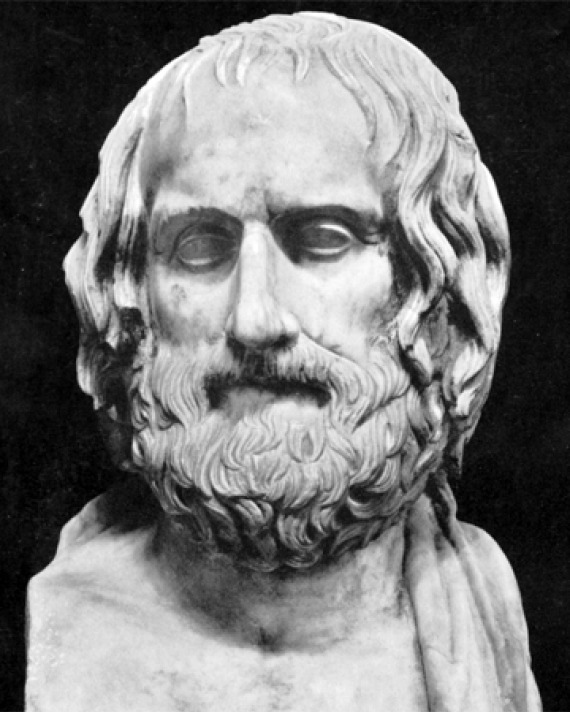
The author: Euripides (c. 480-406 BC)
Euripides stands as one of ancient Athens' three greatest tragic playwrights, distinguished by his revolutionary focus on marginalised figures rather than traditional heroes. Unlike his contemporaries, he consistently gave voice to women, outsiders, and victims of war, challenging conventional Greek values and social expectations.
Note
Euripides' innovative approach to tragedy set him apart from Aeschylus and Sophocles by deliberately focusing on society's marginalised voices rather than celebrating traditional heroic figures.
The playwright wrote Trojan Women for its premiere at the City Dionysia in 415 BC, where it formed part of a tetralogy alongside Alexandros and Palamedes. Although the production earned second prize at this prestigious dramatic festival, the play's lasting impact far exceeded its initial competitive placement.
Mythological setting
The tragedy unfolds in the devastating aftermath of the Trojan War, when the mighty city of Troy has finally fallen to Greek forces. The dramatic focus shifts away from battlefield heroics to examine the human cost of victory - the Trojan men lie dead, while the surviving women face an uncertain future as slaves to their Greek conquerors.
Central to the narrative are four remarkable female characters: Hecuba (Troy's former queen), Andromache (Hector's widow), Cassandra (Priam's prophetic daughter), and Helen (whose beauty sparked the war). Rather than celebrating military triumph, Euripides deliberately centres his drama on the suffering of civilians, particularly women and children who had no role in causing the conflict.
Example
Key Quote - Hecuba's Lament:
As Hecuba laments: "Sing me a song of sorrow; my city is gone."
This powerful line encapsulates the play's focus on loss and mourning rather than victory and glory.
Historical and political context
The play's 415 BC performance date carries profound political significance, coinciding exactly with Athens' brutal massacre at Melos during the ongoing Peloponnesian War. Athenian forces had just slaughtered all Melian men and enslaved the women and children - actions that would have created uncomfortable parallels for audiences watching Troy's women face similar fates.
Important
The timing of Trojan Women was no coincidence. Euripides deliberately premiered this anti-war tragedy at the exact moment when Athens was committing similar atrocities against the Melians, creating a bold political statement that would have been impossible to ignore.
Contemporary viewers would have recognised the disturbing connections between mythical Greek brutality and their own city's contemporary actions. This political relevance intensified shortly after the play's performance when Athens launched the catastrophic Sicilian Expedition, which ultimately led to devastating military losses.
Modern scholars interpret the play as Euripides' bold critique of war, imperialism, and Athens' own behaviour - a dangerous artistic stance in a city actively engaged in aggressive military campaigns.
Athenian society and values
Traditional Greek tragedy typically celebrated heroic virtues and military glory, but Euripides subverted these expectations by highlighting war's destructive impact on fundamental social structures. The playwright systematically dismantles core Greek values:
- Collapse of the oikos (household): The basic unit of Greek society crumbles as women lose husbands, children, and homes
- Questioning heroic kleos (glory): Troy's supposed "glory" brings only destruction and suffering
- Futility of war: The pain inflicted on innocent civilians far outweighs any military victory
Note
Key Greek Concepts:
- oikos = household (the fundamental unit of Greek society)
- kleos = glory/renown (the heroic ideal that warriors sought)
These concepts were central to Athenian identity, making Euripides' critique particularly provocative.
This approach forced Athenian audiences to confront uncomfortable questions about whether their own city truly embodied the ideals of justice and civilisation they claimed to represent.
Religion and the gods
The play opens with a dialogue between Poseidon and Athena discussing Troy's fate, immediately establishing divine involvement in human suffering. However, Euripides presents the gods as vengeful, capricious, and politically motivated rather than as sources of divine justice.
The character of Cassandra, blessed with prophetic truth but cursed to be disbelieved, embodies the tension between divine knowledge and human suffering. Her presence highlights the gap between what the gods know and their willingness to prevent human pain.
Throughout the drama, Euripides questions whether divine actions represent justice or cruelty, challenging traditional religious explanations for human suffering.
Example
Divine Callousness:
As Poseidon declares: "I am leaving this famous city of Troy; the Greek army has destroyed it."
This matter-of-fact statement reveals the gods' detached attitude towards human devastation.
Theatrical and festival context
Performed at the City Dionysia as part of a dramatic trilogy, Trojan Women represented a significant departure from conventional theatrical expectations. Rather than emphasising action and spectacle, the production focused intensely on lamentation and pathos - emotional suffering that moved audiences through words rather than deeds.
The Chorus, composed of Trojan women, serves as the collective voice of grief, reflecting the broader human cost of warfare. Ancient staging would have emphasised mourning, speeches, and processions rather than the spectacular battle scenes audiences might expect from a war-themed drama.
Note
This theatrical innovation was revolutionary for its time. Instead of the heroic action typical of Greek tragedy, Euripides created a drama of pure emotion and suffering, forcing audiences to confront war's psychological devastation.
This theatrical approach aligned with Euripides' broader artistic goal of forcing audiences to confront war's emotional and psychological devastation.
Themes in context
The play's thematic concerns gain particular power when understood within their historical and cultural context:
- Suffering of the innocent: Highlights how women and children bear war's greatest costs despite having no agency in its creation
- Imperialism and brutality: Questions Greek and specifically Athenian claims to moral authority
- Loss of identity and freedom: Shows how conquest destroys not just lives but entire ways of being
- Futility of glory: Demonstrates how victory brings shame and grief rather than honour
These themes resonated powerfully with 415 BC audiences witnessing their own city's imperial ambitions and military aggression.
Literary and historical importance
Trojan Women stands as one of antiquity's most powerful anti-war dramas, establishing a template for literature that questions military glory rather than celebrating it. The play's influence extends far beyond its original historical moment - later interpreters have read it as a critique not merely of Athenian imperialism but of warfare itself.
Important
The play's enduring relevance lies in its universal themes. While rooted in specific 5th-century Athenian politics, Trojan Women speaks to any society engaged in imperial expansion or military aggression.
The drama continues to find new audiences in modern times, particularly during periods of conflict and displacement when its themes of civilian suffering and imperial overreach remain tragically relevant.
Summary
Key Points to Remember:
- 415 BC timing: Link the play directly to the Melos massacre and Sicilian Expedition for historical context
- Focus on victims: Euripides consistently centres women and children rather than traditional heroes
- Key quotes: Use concise quotations like Hecuba's "My city is gone" and Poseidon's "The Greek army has destroyed it"
- Universal vs specific: Be prepared to argue whether this functions as a universal anti-war tragedy or a targeted political critique of Athens
- Theatrical innovation: Remember that the play emphasises emotional suffering over spectacular action, making it revolutionary for its time
Memory Aid: 415 BC = Melos + Sicily + Trojan Women - Remember this crucial date connects all three historical events!