Electronic Components (Leaving Cert Engineering): Revision Notes
📚Revision Notes
Electronic Components
Introduction
Electronic components are the fundamental building blocks that make electronic circuits function. These components control and process electrical current in various devices and appliances. Understanding how these components work is essential for designing and implementing electronic circuits successfully.
Note
Mastering these six fundamental components will give you the foundation needed to understand more complex electronic systems and circuit designs.
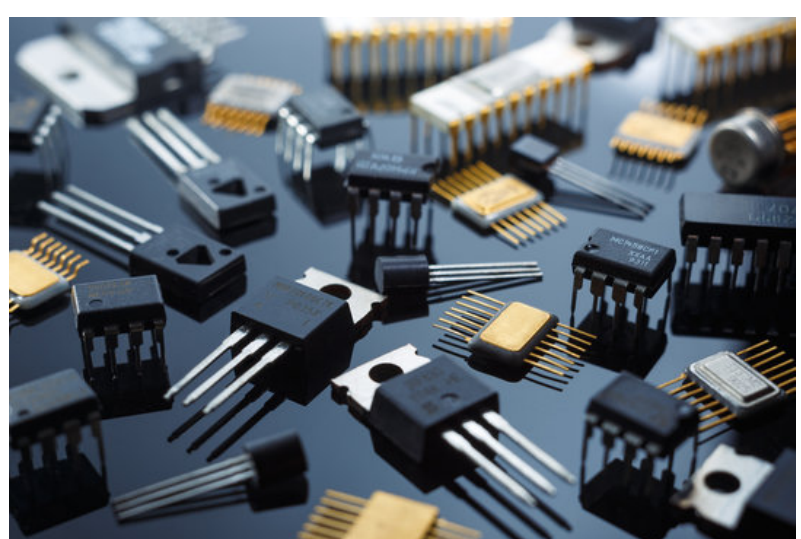
The six most important electronic components you need to know are capacitors, resistors, diodes, transistors, inductors, and relays. Each component has specific functions and working principles that contribute to the overall operation of electronic systems.
Capacitors
Definition
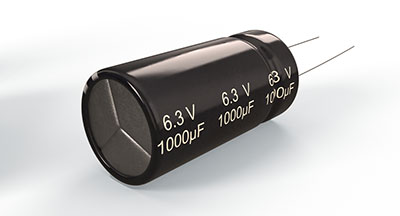
A capacitor is an electronic component made up of two conductive plates separated by an insulating material called a dielectric. When voltage is applied across the plates, an electric field forms in the dielectric material, which stores electrical charge.
Note
Working principle
Capacitors store electrical energy by creating an electric field between two conducting plates. The dielectric material prevents current from flowing directly between the plates while allowing the electric field to exist.
Key functions
Energy storage: Capacitors can store electrical charge and release it when needed. They provide high current bursts over short periods, making them useful for applications requiring quick energy delivery.
Filtering: Capacitors remove noise and interference signals from circuits, resulting in cleaner and more stable electrical signals.
Voltage smoothing: When power supply voltage fluctuates, capacitors smooth out these variations by storing and releasing charge, ensuring stable circuit operation.
Blocking DC current: Capacitors prevent direct current from flowing while allowing alternating current to pass through. This protects audio equipment and other sensitive components from DC damage.
Coupling and decoupling: Capacitors transfer signals between circuits efficiently whilst providing temporary power during peak demand periods.
Resistors
Definition
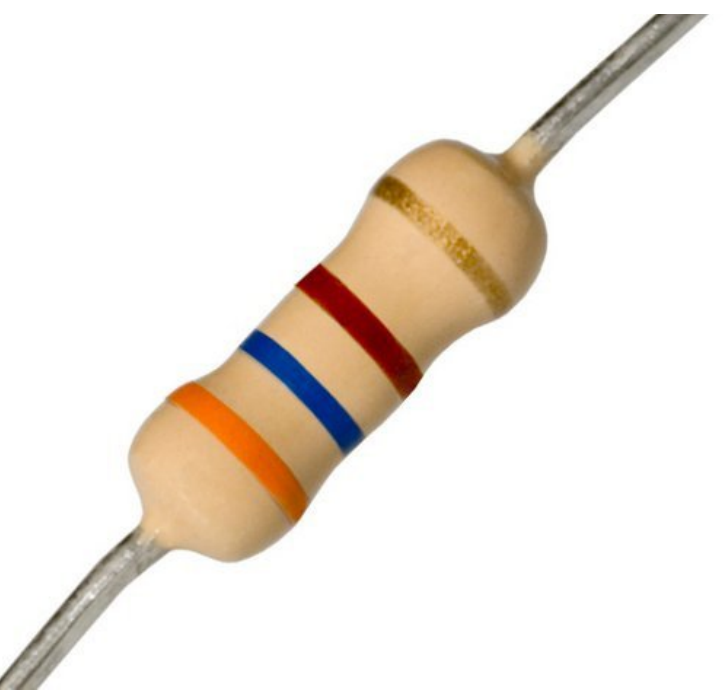
A resistor is an electronic component that restricts the flow of electric current in a circuit. It operates according to Ohm's Law, which states that current flowing through a conductor is directly proportional to the applied voltage and inversely proportional to its resistance.
Important
Ohm's Law is fundamental to understanding resistor behaviour: the current flowing through a conductor is directly proportional to the voltage applied across it and inversely proportional to its resistance.
Note
Working principle
Resistors work by opposing the flow of electrons through a material. The resistance value determines how much current flows for a given voltage.
Key functions
Current limitation: Resistors control and regulate the amount of current flowing through various circuit components by offering resistance to electron flow.
Voltage division: Resistors distribute input voltage across multiple components in specific proportions. By adjusting resistance values, you can divide voltage to desired levels for proper device operation.
Signal conditioning: Resistors adjust signal amplitude and voltage levels to match electronic component requirements. They are commonly used in amplifiers, philtres, and signal processors.
Current sensing: By placing a resistor in series with a load, you can measure current flow through the circuit using the voltage drop across the resistor.
Heat dissipation: Power resistors are designed to dissipate heat generated by current flow. They have higher power ratings and are used where managing heat is crucial.
Diodes
Definition
A diode is a semiconductor device that allows current to flow in one direction whilst blocking it in the opposite direction. It operates using a PN junction, where one side contains excess electrons (N-type) and the other has a deficiency of electrons (P-type).

Note
Working principle
The PN junction creates a barrier that allows current to flow only when the positive side is connected to the P-type material and the negative side to the N-type material.
Key functions
Rectification: Diodes convert alternating current to direct current by allowing current to flow in only one direction, enabling steady DC output production.
Protection: Diodes protect sensitive components from reverse currents and voltage spikes that could cause damage to electronic devices.
Signal modulation: Diodes modify signal amplitude, frequency, or phase, enabling information transmission in various communication systems.
Light emission: Light-Emitting Diodes (LEDs) produce light when current flows through them. They are widely used for indicators, displays, and lighting applications.
Switching: Diodes act as switches in circuits, controlling current flow based on control signal presence or absence.
Transistors
Definition
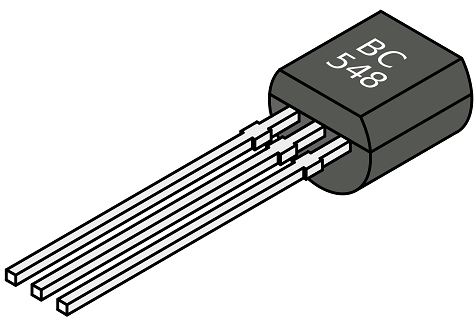
A transistor is a semiconductor device that can amplify or switch electronic signals. It consists of three layers: an emitter, a base, and a collector (in bipolar junction transistors). It operates by controlling current flow through a base-emitter junction.
Important
Key principle: Transistors control large currents using small input signals. A small current applied to the base controls a much larger current flowing between the collector and emitter.
Key functions
Signal amplification: Transistors amplify small input signals to larger output signals by controlling current flow through the base-emitter junction. They are crucial for audio amplifiers, radio frequency amplifiers, and electronic devices requiring signal boost.
Digital logic operations: Transistors form the foundation of digital electronics by acting as switches that allow or block current flow based on control signals. This enables logic gate creation and digital circuit development.
Current flow control: Transistors regulate and control current flow in electronic circuits. By adjusting base current, collector current can be controlled, making them useful for current regulation and motor control.
Voltage amplification: Multiple transistors can be connected to provide voltage gain, amplifying voltage levels to meet specific application requirements.
Switching applications: Transistors enable efficient switching in electronic circuits by turning current flow on or off, controlling other component operation precisely.
Inductors
Definition
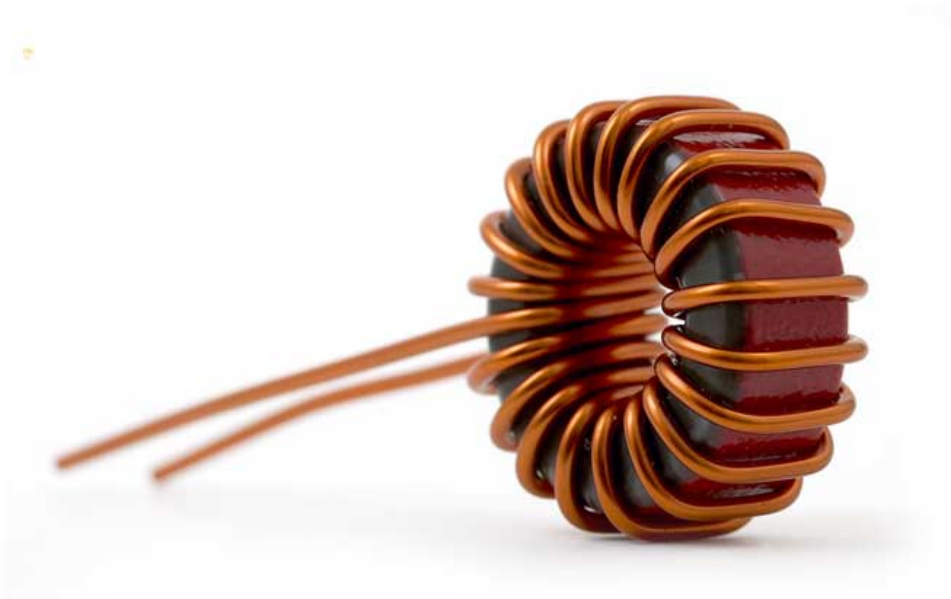
An inductor is an electronic component that stores energy in a magnetic field when current flows through it. It operates using electromagnetic induction, where changing current creates a magnetic field around the inductor.
Note
Working principle
When current flows through an inductor's coiled wire, it generates a magnetic field. Changes in current cause the magnetic field to change, which opposes the current change.
Key functions
Energy storage: Inductors store energy as magnetic fields when current flows through them. This stored energy is released when current changes or stops, making them useful for energy storage in power supplies and transformers.
Magnetic field generation: Inductors create magnetic fields for various purposes in electromagnets, motors, and generators, where magnetic field interaction with other components enables mechanical motion or electrical power generation.
Filtering: Inductors block or reduce certain frequencies whilst allowing others to pass. They are particularly effective at blocking high-frequency noise in power supplies and audio circuits.
Impedance matching: Inductors help match impedance between different circuit components. By adjusting inductance values, power transfer between components can be optimised whilst minimising signal reflections.
Inductive loads: Motors and solenoids require high initial current to overcome inherent resistance to current changes. Inductors control and limit current flow to these loads, ensuring proper operation and circuit protection.
Relays
Definition
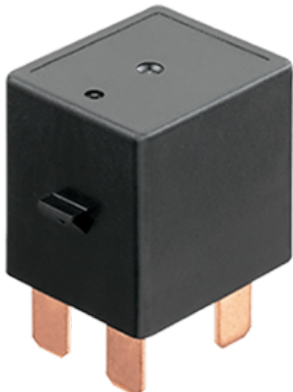
A relay is an electromagnetic switch controlled by an electromagnet. It consists of an electromagnet, a movable contact, and a stationary contact. When electrical current energises the electromagnet, it generates a magnetic field that attracts or releases the contacts.
Note
Working principle
When current flows through the relay coil, it creates a magnetic field that moves the switch contacts, either opening or closing the circuit.
Key functions
Amplification: Relays allow small control signals to switch higher power circuits. The control signal energises the electromagnet, which controls the switching of larger currents or voltages.
Circuit isolation: Relays provide electrical isolation between control circuits (low voltage) and power circuits (high voltage). This isolation ensures control circuit safety and protects sensitive components from potentially damaging high voltages.
Switching high power devices: Relays switch high-power devices such as motors, heaters, and lights. They can handle large currents and voltages, making them suitable for controlling devices requiring significant electrical power.
Complex circuit control: Relays can be interconnected to perform logical operations, time delays, and sequence control, making them valuable for industrial automation and control systems.
Fault protection: Relays provide fault protection by monitoring electrical parameters such as current or voltage levels. When fault conditions are detected, relays can quickly open circuits, isolating faulty sections and preventing further system damage.
Summary
Key Points to Remember:
-
Capacitors store electrical energy in electric fields and are essential for energy storage, filtering, and voltage smoothing in circuits
-
Resistors follow Ohm's Law and control current flow by providing resistance - they're fundamental for current limitation and voltage division
-
Diodes allow current to flow in only one direction using PN junction principles, making them crucial for rectification and circuit protection
-
Transistors can amplify small signals into larger ones and act as switches, forming the foundation of both analogue amplifiers and digital logic circuits
-
Inductors store energy in magnetic fields and are particularly important for filtering applications and managing inductive loads like motors
-
Relays use electromagnetic switching to control high-power circuits with low-power signals, providing essential isolation and amplification functions