Stress Relieving (Leaving Cert Engineering): Revision Notes
📚Revision Notes
Stress Relieving
Introduction to heat treatments
Materials scientists can control the properties of steel by manipulating heating and cooling rates. This allows them to soften, toughen, or harden the material to suit different applications. The main heat treatments include:
- Annealing
- Normalising
- Stress relieving
- Hardening
- Tempering
Note
Each heat treatment involves carefully controlled heating and cooling cycles to achieve specific material properties. The key variables are temperature, time, and cooling rate.
Stress relieving
Stress relieving (sometimes called half annealing) is specifically used to remove internal stresses from materials that have been cold worked. This treatment is essential for preventing crack formation in components that have been shaped, bent, or formed at room temperature.
The stress relieving process
The process differs significantly from annealing and normalising in both temperature and cooling requirements:
Example
Process Steps for Stress Relieving:
- Heat the material to a relatively low temperature (approximately 300-400°C)
- Allow the material to soak at this temperature
- Cool naturally - no recrystallisation occurs
Why stress relieving works
During cold working processes like bending or hammering, internal stresses build up within the material's grain structure. These stresses create weak points where cracks can potentially form.
Important
Cold working always introduces internal stresses that can lead to unexpected failure. Stress relieving is not optional for critical components - it's essential for reliability.
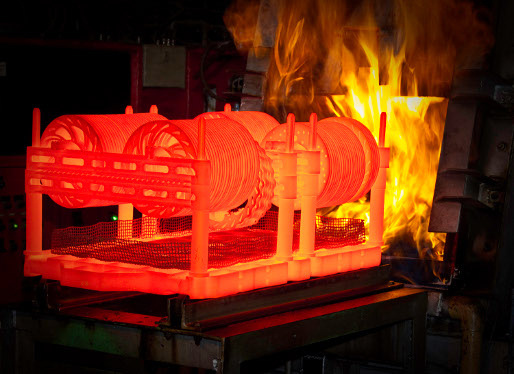
The stress relieving process works by heating the material just enough to allow the stressed grains to relax and reshape. The temperature range of 300-400°C is kept deliberately low to avoid recrystallisation - we don't want to change the grain structure, just reduce the potential for crack formation.
Key differences from other treatments
Unlike annealing or normalising, stress relieving offers a unique approach to material treatment:
- Uses lower temperatures (300-400°C melting point)
- Does not cause recrystallisation
- Maintains the existing grain structure
- Only relieves internal stress rather than changing material properties
Note
Think of stress relieving as a "gentle massage" for the metal's internal structure - it relaxes the stresses without fundamentally changing the material's properties.
Remember!
Summary
Key Points to Remember:
- Stress relieving removes internal stresses from cold-worked materials without changing grain structure
- Uses relatively low temperatures () compared to other heat treatments
- Also known as half annealing because it doesn't involve full recrystallisation
- Essential for preventing crack formation in components that have been bent, hammered, or shaped
- Unlike annealing or normalising, it maintains existing grain structure while reducing stress concentrations