Additives To Polymers (Leaving Cert Engineering): Revision Notes
📚Revision Notes
Additives to Polymers
Types of additives
The development of modern polymers relies heavily on the ability to modify their properties through the addition of various substances. These additives are mixed into the polymer during manufacturing to enhance performance, appearance, durability, or processing characteristics.
Important
Additives are essential for creating polymers with specific properties tailored to their intended applications. Without these modifications, many modern polymer applications would not be possible.
Colour pigments
Colour pigments are dyes incorporated during the manufacturing process to control the final colour of the polymer product. This is a straightforward but essential additive that allows manufacturers to produce polymers in virtually any colour required.
The process is particularly common in the production of acrylic materials like Perspex, where precise colour matching is often critical for architectural and design applications.
Fillers
Fillers are non-plastic materials added to polymers to modify their properties or reduce costs. These additives serve multiple purposes:
- Sawdust can be added to increase bulk and volume while reducing the overall cost of expensive polymers
- Glass fibre is incorporated to dramatically improve the strength properties of the base material
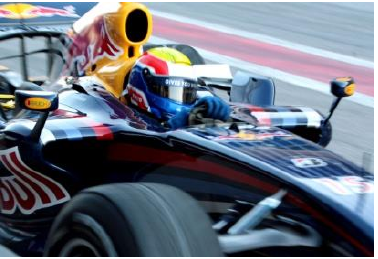
- Carbon fibre creates exceptionally strong, lightweight composite materials used in high-performance applications like Formula 1 racing cars
The addition of fibrous fillers has led to the rapid growth of composite materials - engineered materials that combine the best properties of different substances to create superior performance characteristics.
Example
Practical Example: Glass Fibre Reinforcement
When glass fibres are added to polyester resin:
- The base polymer provides flexibility and chemical resistance
- The glass fibres add tremendous tensile strength
- The result is a composite material stronger than steel by weight, used in boat hulls and car body panels
Plasticisers
Plasticisers are additives that increase the flexibility and workability of polymer products. The name comes from the word "plastic," which originally meant "capable of being moulded" or flexible.
A common example is the flexible lid of a lunch box, which needs to bend repeatedly during opening and closing without cracking. Without plasticisers, many polymer products would be too rigid and brittle for practical use.
Note
The term "plastic" originally referred to the ability to be shaped or moulded, not to the modern materials we call plastics. Plasticisers restore this original meaning by making rigid polymers more workable.
Stabilisers and antioxidants
While polymers offer advantages over traditional materials like wood and metal (they don't rot or rust), they face their own degradation challenges. UV radiation and oxygen can cause polymer chains to break down over time, leading to:
- Colour changes (yellowing of white kitchen appliances)
- Cracking and brittleness
- Loss of mechanical properties
Stabilisers and antioxidants are chemical additives designed to slow down this degradation process, significantly extending the useful life of polymer products.
Important
Without stabilisers and antioxidants, many polymer products would degrade rapidly when exposed to sunlight and air, making them impractical for outdoor applications or long-term use.
Flame retardants
Since polymers are primarily composed of carbon-based molecules, they are inherently flammable - just like other carbon-containing materials such as wood, coal, and petroleum products.
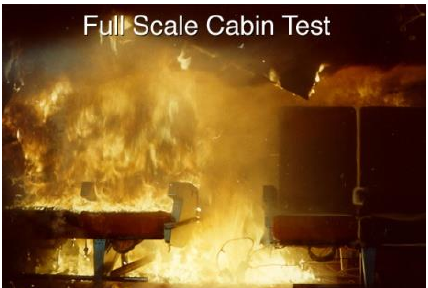
Flame retardants are chemicals added to polymers to reduce their flammability and slow the spread of fire. This is particularly crucial for:
- Aircraft interior components like foam seating
- Building materials and insulation
- Electrical components and housings
- Home furnishings and carpets
The addition of flame retardants has become increasingly important as polymers are used in more safety-critical applications.
Important
Fire safety regulations often require specific flame retardant additives in polymers used for construction, transportation, and electronics to protect lives and property.
Lubricants
During polymer processing, the material must be heated and shaped, typically by pressing into moulds. Molten polymers tend to be much more viscous (thick and sticky) than water, making them difficult to work with.
Lubricants are additives that improve the mouldability of polymers, making them flow more easily during the manufacturing process and ensuring better surface finish in the final product.
Vulcanised rubber
The development of vulcanised rubber represents one of the most important advances in polymer technology. In 1844, Charles Goodyear discovered that adding sulphur to natural rubber and heating the mixture created a dramatically improved material.
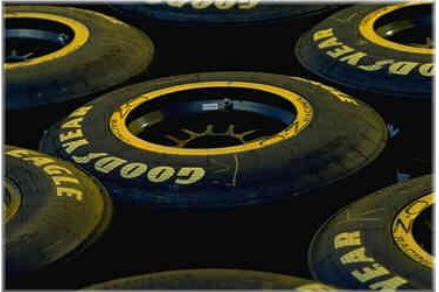
The sulphur creates crosslinks between the rubber polymer chains, converting the material from a soft, sticky elastomer into a tough, durable thermoset while maintaining its flexibility. This process, called vulcanisation, enabled the development of practical applications like wellington boots, waterproof coats, and most importantly, pneumatic tyres.
Example
Historical Example: The Vulcanisation Process
Goodyear's discovery transformed rubber manufacturing:
- Raw natural rubber: Soft, sticky, becomes brittle in cold weather
- Add sulphur: Mix sulphur powder with natural rubber
- Apply heat: Heat the mixture to create chemical crosslinks
- Result: Durable, flexible material that maintains properties across temperature ranges
John Dunlop later used this vulcanised rubber technology to develop air-filled tyres, revolutionising transportation. Modern racing tyres still rely on this fundamental chemistry, though with many additional additives to optimise performance for specific conditions.
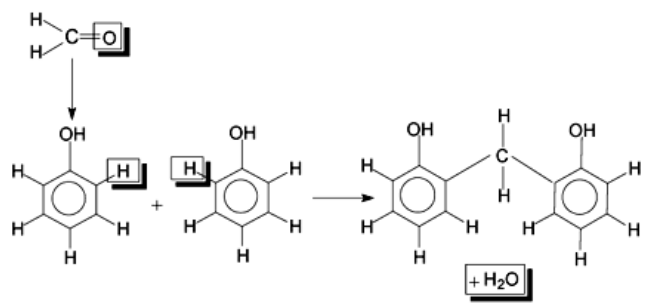
The chemical reaction shows how formaldehyde molecules react with phenol molecules to form crosslinked structures, similar to the crosslinking process in vulcanised rubber but creating the rigid thermoset known as Bakelite.
Note
The crosslinking principle discovered in vulcanisation became fundamental to understanding how to control polymer properties through chemical modification.
Disposal challenges
The widespread use of polymers in disposable products has created significant environmental challenges. Unlike wood (which decomposes naturally) or metals (which can be easily re-melted and recycled), polymers are difficult to break down and process.
This has led to the need for innovative disposal and recycling methods, making polymer waste management an increasingly important area of research and development.
Important
The environmental impact of polymer waste has become a critical issue, driving research into biodegradable polymers and improved recycling technologies.
Remember!
Summary
Key Points to Remember:
- Additives are chemicals mixed into polymers during manufacturing to modify their properties for specific applications
- Fillers like glass fibre and carbon fibre create strong composite materials by reinforcing the polymer matrix
- Plasticisers increase flexibility, while stabilisers prevent degradation from UV light and oxygen
- Vulcanisation transforms natural rubber from a sticky elastomer into a durable, flexible thermoset through sulphur crosslinking