Manufacturing with Plastics (Leaving Cert Engineering): Revision Notes
📚Revision Notes
Rotational Moulding
What is rotational moulding?
Rotational moulding (also called rotomoulding) is a specialised plastic manufacturing process designed to create hollow products. Unlike other plastic forming methods, this is a casting technique that works without applying pressure to the material.
Important
The key distinguishing feature of rotational moulding is that it operates as a pressure-free process, making it fundamentally different from injection moulding, blow moulding, or other common plastic manufacturing techniques.
The process is particularly effective for making large, hollow items that would be difficult or expensive to produce using other manufacturing methods. The technique involves heating plastic powder inside a rotating mould until it melts and forms the desired shape.
The rotational moulding process
The manufacturing process involves four distinct stages that must be completed in sequence:
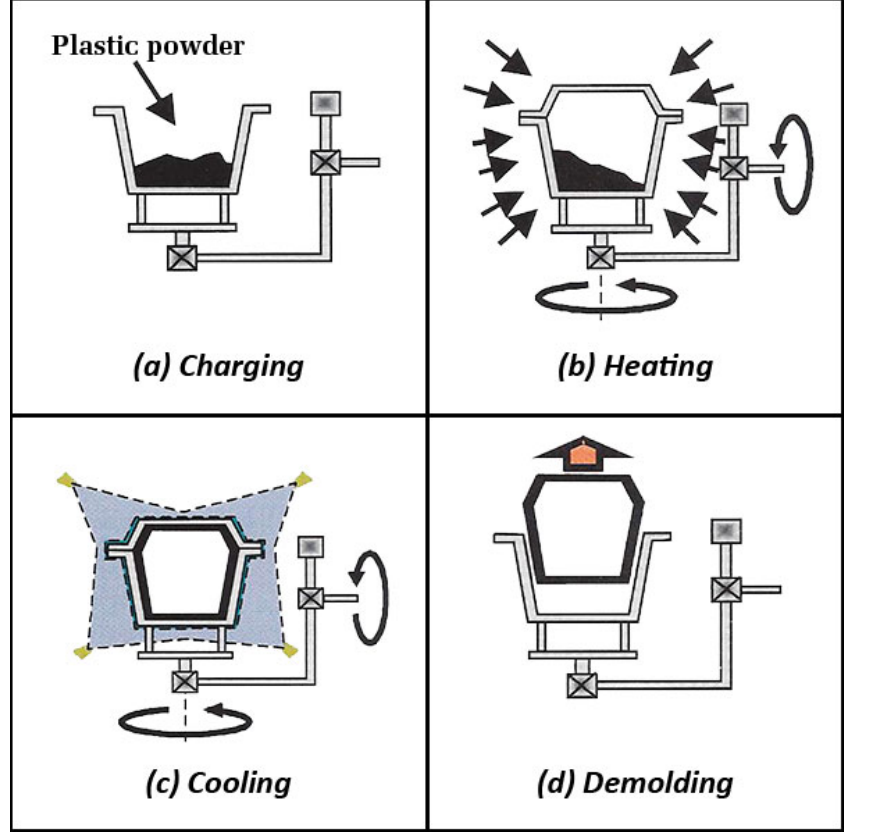
Stage 1: Charging
Plastic powder (usually polyethylene) is loaded into a hollow metal mould. The amount of powder determines the wall thickness of the final product. The mould is then sealed closed.
Note
The charging stage is critical for achieving consistent wall thickness. Too little powder results in thin walls that may be weak, while too much powder creates unnecessarily thick walls that waste material and increase costs.
Stage 2: Heating
The sealed mould is placed in an oven and heated while being rotated slowly on two axes. As the temperature rises, the plastic powder melts and gradually coats the inside surface of the mould, forming a uniform layer.
Stage 3: Cooling
The mould continues rotating while being cooled, typically using water spray or air cooling. This cooling process solidifies the plastic material whilst maintaining the uniform wall thickness achieved during heating.
Stage 4: Demolding
Once fully cooled, the mould is opened and the finished hollow product is removed. The product retains the exact shape of the mould's interior.
Example
Process Example: Manufacturing a Water Tank
- Charging: 5kg of polyethylene powder is loaded into a tank-shaped mould
- Heating: Mould rotates in 200°C oven for 45 minutes until powder melts and coats interior
- Cooling: 15-minute cooling cycle with water spray while maintaining rotation
- Demolding: Finished 500-litre water tank is removed from opened mould
Materials used in rotational moulding
Polyethylene (PE) dominates the rotational moulding industry, accounting for approximately 97% of all rotomoulded products. This material is chosen because it:
- Melts and flows easily at relatively low temperatures
- Is readily available in powder form
- Provides excellent strength and durability
- Can be ground easily if recycling is needed
Other materials occasionally used include:
- PVC (in liquid plastisol form)
- Polypropylene
- Polyamide (PA6, PA11, PA12)
Important
The development of other polymers has been limited because the process requires materials that can withstand the relatively long heating cycle without degrading. This extended heat exposure makes material selection critical for process success.
Key advantages of rotational moulding
Rotational moulding offers several unique benefits compared to other plastic manufacturing processes:
Low tooling costs
Since the process uses no pressure, moulds can be made from less expensive materials. This makes it economical for small production runs and prototype development.
Uniform wall thickness
The rotating action ensures consistent material distribution, creating products with even wall thickness throughout. This eliminates weak spots that can occur in other processes.
Note
The dual-axis rotation is essential for achieving uniform wall thickness. Single-axis rotation would result in uneven material distribution due to gravity effects during the melting process.
Design flexibility
The process easily accommodates complex shapes, including products with stiffening ribs, moulded inserts, and intricate surface textures.
Size versatility
There are virtually no limits to product size - from small containers to massive tanks holding thousands of litres can be manufactured using the same basic process.
Production flexibility
Multiple different products can be moulded simultaneously in the same oven, maximising efficiency.
Products and applications
Rotational moulding produces an enormous range of products across many industries:
Industrial applications
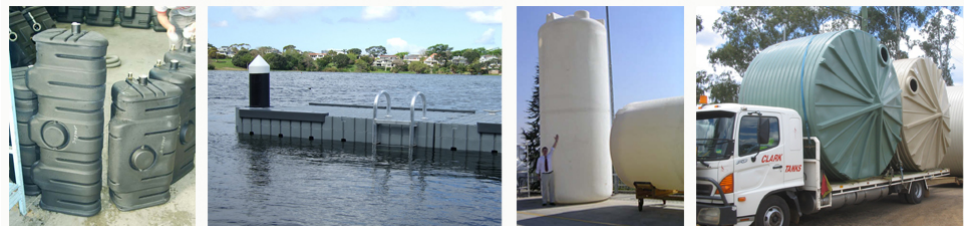
- Water storage tanks up to 50,000 litres capacity
- Chemical storage containers
- Material handling products like crates and pallets
- Insulated containers for food transport
Automotive sector
- Fuel tanks for cars and trucks
- Mudguards and toolboxes
- Tractor dashboards
Recreation and marine
- Kayaks, canoes, and small boats
- Buoys and pontoons
Furniture and design
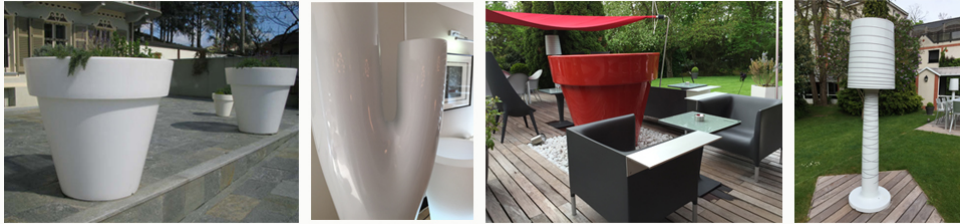
- Garden planters and water features
- Outdoor furniture with modern styling
- Playground equipment
Note
The process has evolved significantly in recent decades, moving from a basic manufacturing method to a sophisticated technique capable of producing high-quality products that compete with items made using other manufacturing processes.
Summary
Key Points to Remember:
- Rotational moulding is a low-pressure casting process ideal for creating hollow plastic products
- The process involves four key stages: charging powder, heating while rotating, cooling, and demolding
- Polyethylene accounts for 97% of all rotomoulded products due to its excellent processing characteristics
- Key advantages include low tooling costs, uniform wall thickness, and exceptional design flexibility
- Products range from small containers to massive storage tanks, demonstrating the process's versatility
- The pressure-free nature makes it fundamentally different from other plastic manufacturing processes