Calendering (Leaving Cert Engineering): Revision Notes
📚Revision Notes
Calendering
What is calendering?
Calendering is a manufacturing process used to produce large, flat sheets from thermoplastic materials and rubber. This process transforms heated polymer materials into thin, uniform sheets through a series of mechanical rollers.
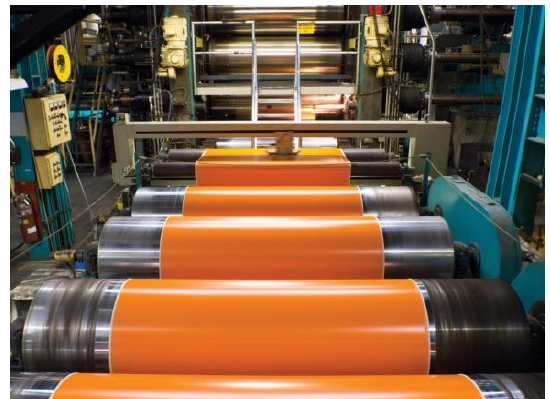
The process works by feeding a billet (a lump or block) of heated, softened polymer through multiple heated rollers arranged in sequence. As the material passes through each roller, it becomes progressively flatter and thinner until the desired thickness is achieved.
Note
The key principle of calendering is progressive thinning - the material doesn't reach its final thickness in one step, but gradually becomes thinner as it passes through each successive roller in the sequence.
The calendering process
The calendering process is a systematic approach that ensures consistent sheet production. Understanding each stage helps in optimising the final product quality.
Note
The Calendering Process Steps:
- Material preparation - A billet of heated, softened polymer is prepared. Sometimes granulated polymer is used instead of a solid billet
- Feeding - The heated material is fed into the first set of rollers
- Progressive flattening - The material passes through a series of heated rollers, becoming gradually thinner with each pass
- Final processing - The flattened sheet is either wound onto a roll for storage or fed onto a conveyor belt where it can be cut to specific lengths
Materials and applications
Calendering offers versatility in material processing, making it suitable for various industrial applications. The process excels at creating products that require uniform thickness across large surface areas.
Note
Calendering is particularly suitable for:
- Thermoplastic sheets - Materials that can be repeatedly heated, softened, and reshaped
- Rubber mats - Flexible rubber products requiring uniform thickness
- Flexible sheeting - Materials that need to be rolled or folded after production
The process is ideal for creating products that require consistent thickness across large areas, such as floor coverings, protective sheeting, and industrial rubber mats.
Equipment and machinery
The success of calendering depends heavily on precision engineering and specialised equipment. Each component plays a crucial role in maintaining product quality and consistency.
Important
Calendering requires specialised industrial equipment that must be precisely calibrated and maintained to ensure consistent sheet thickness and quality across the entire production run.
The essential equipment includes:
- Series of heated rollers - Multiple cylindrical rollers arranged in sequence, each heated to maintain polymer flexibility
- Feeding mechanism - System to introduce the polymer billet or granules into the roller system
- Conveyor system - Belt system to transport the finished sheet for cutting or further processing
- Winding equipment - Machinery to roll the finished sheets for storage and transport
Summary
Key Points to Remember:
- Calendering creates flat sheets by passing heated polymer through a series of rollers
- The material becomes progressively thinner as it moves through each roller
- It works with both solid billets and granulated polymer
- The process is ideal for thermoplastics and rubber materials
- Finished sheets can be rolled for storage or cut to length immediately