Vacuum Forming (Leaving Cert Engineering): Revision Notes
📚Revision Notes
Vacuum Forming
What is vacuum forming?
Vacuum forming is a manufacturing process used when large flat sheets of thermoplastic need to be shaped into complex three-dimensional forms. This technique is particularly effective for creating products like bathtubs, Jacuzzi tubs, model components, and moulded shop signs.
The process works by using the difference in air pressure to force heated plastic material against a specially designed mould. This creates an accurate reproduction of the mould's shape in the plastic material.
Note
The key to vacuum forming is understanding that atmospheric pressure does the work of shaping the plastic, not suction. The vacuum simply removes the air to create space for the atmospheric pressure to act.
Materials and preparation
The process begins with a flat sheet of thermoplastic material. This type of plastic becomes soft and pliable when heated, allowing it to be shaped without breaking or cracking.
Before forming can begin, the thermoplastic sheet must be pre-heated to make it flexible enough to conform to the mould's shape. The temperature must be carefully controlled to ensure the material is workable but not damaged.
Note
Temperature Control is Critical
If the plastic is not heated enough, it won't form properly. If it's overheated, it can become too thin, tear, or even burn. Finding the right temperature for each type of thermoplastic is essential for successful vacuum forming.
The vacuum forming process
The vacuum forming process involves several critical steps that work together to create the final shaped product. Understanding each step helps explain why this manufacturing method is so effective for creating complex shapes.
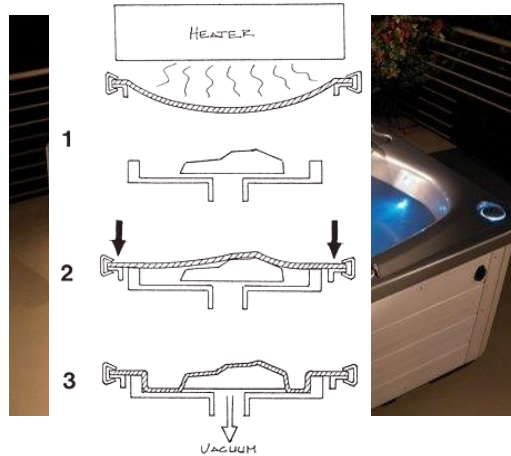
Example
Worked Example: Complete Vacuum Forming Process
Step 1: Heating The flat thermoplastic sheet is heated until it becomes pliable and ready for shaping.
Step 2: Positioning The heated sheet is carefully placed over the mould and secured at the edges using a clamp system.
Step 3: Creating the vacuum The mould contains a series of small holes drilled through it. A vacuum pump is activated to remove air from between the plastic sheet and the mould surface.
Step 4: Forming As air is removed, a vacuum (essentially nothingness) is created in the space between the sheet and mould. Atmospheric pressure - the weight of air around us - then forces the plastic sheet firmly against the mould surface.
Step 5: Cooling and removal Once the plastic has taken the mould's shape, the clamp is released and the formed plastic is carefully removed from the mould.
Key principles
Understanding the physics behind vacuum forming is essential for appreciating why this process works so effectively.
Important
Critical Concept: Atmospheric Pressure vs Vacuum
The success of vacuum forming relies on atmospheric pressure. When air is removed from beneath the plastic sheet, the atmospheric pressure above pushes down with considerable force, pressing the plastic against every detail of the mould.
Common Misconception: Many people think the vacuum "sucks" the plastic down. In reality, atmospheric pressure pushes the plastic against the mould when the vacuum removes the air resistance underneath.
Vacuum creation
The vacuum created is not a complete absence of matter, but rather a space with significantly reduced air pressure. This pressure difference is what drives the forming process.
Mould release
Sometimes talc or other powders are applied to the mould surface to prevent the plastic from sticking during the forming process. This ensures clean removal and prevents damage to both the mould and the finished product.
Applications
Vacuum forming is widely used in manufacturing because it can create complex shapes efficiently. Research has found that this process is particularly cost-effective for medium to large-scale production runs.
Common applications include:
- Bathroom fixtures (bathtubs, shower trays)
- Recreational equipment (Jacuzzi tubs, spa components)
- Model making and prototyping
- Commercial signage and displays
- Packaging components
- Automotive interior parts
Summary
Key Points to Remember:
- Vacuum forming shapes heated thermoplastic sheets using atmospheric pressure and vacuum
- The process requires pre-heating the plastic to make it pliable
- Atmospheric pressure forces the plastic against the mould, not suction
- A vacuum (reduced air pressure) is created between the sheet and mould
- Applications include bathtubs, signs, and model making components
- Temperature control is essential for successful forming
- The process works by pressure difference, not suction