The Periodic Table of Elements (Leaving Cert Engineering): Revision Notes
📚Revision Notes
The Periodic Table of Elements
What are elements?
Everything around us is made up of different elements. These basic building blocks can exist on their own or be mixed together to create more complex materials. You'll find elements in simple forms like the air we breathe, or in more complex combinations like the alloy metals used in engineering.
The periodic table is essentially a complete map of all the elements scientists have discovered. It organises these elements in a way that helps us understand their properties and how they behave.
Note
The periodic table contains 118 known elements, ranging from the lightest (hydrogen) to the heaviest synthetic elements created in laboratories. This systematic arrangement helps scientists predict how different elements will interact with each other.
Why elements matter in engineering
Many elements are metals, and these are crucial for modern engineering. Key engineering metals include:
- Iron - used in shipbuilding and construction
- Aluminium - lightweight and corrosion-resistant
- Chromium - adds strength and corrosion resistance
- Nickel - used in high-temperature applications
- Cobalt - essential for high-performance alloys
Each metal brings different properties to engineering projects. For example, iron provides strength for large structures, while tungsten can withstand extreme heat in light bulb filaments.
Example
Practical Application: Aircraft Construction
Modern aircraft use a combination of engineering metals:
- Aluminium alloys for the main fuselage (lightweight yet strong)
- Titanium for engine components (heat resistant)
- Steel for landing gear (high strength requirements)
This combination allows aircraft to be both lightweight for fuel efficiency and strong enough to handle the stresses of flight.
Understanding the periodic table layout
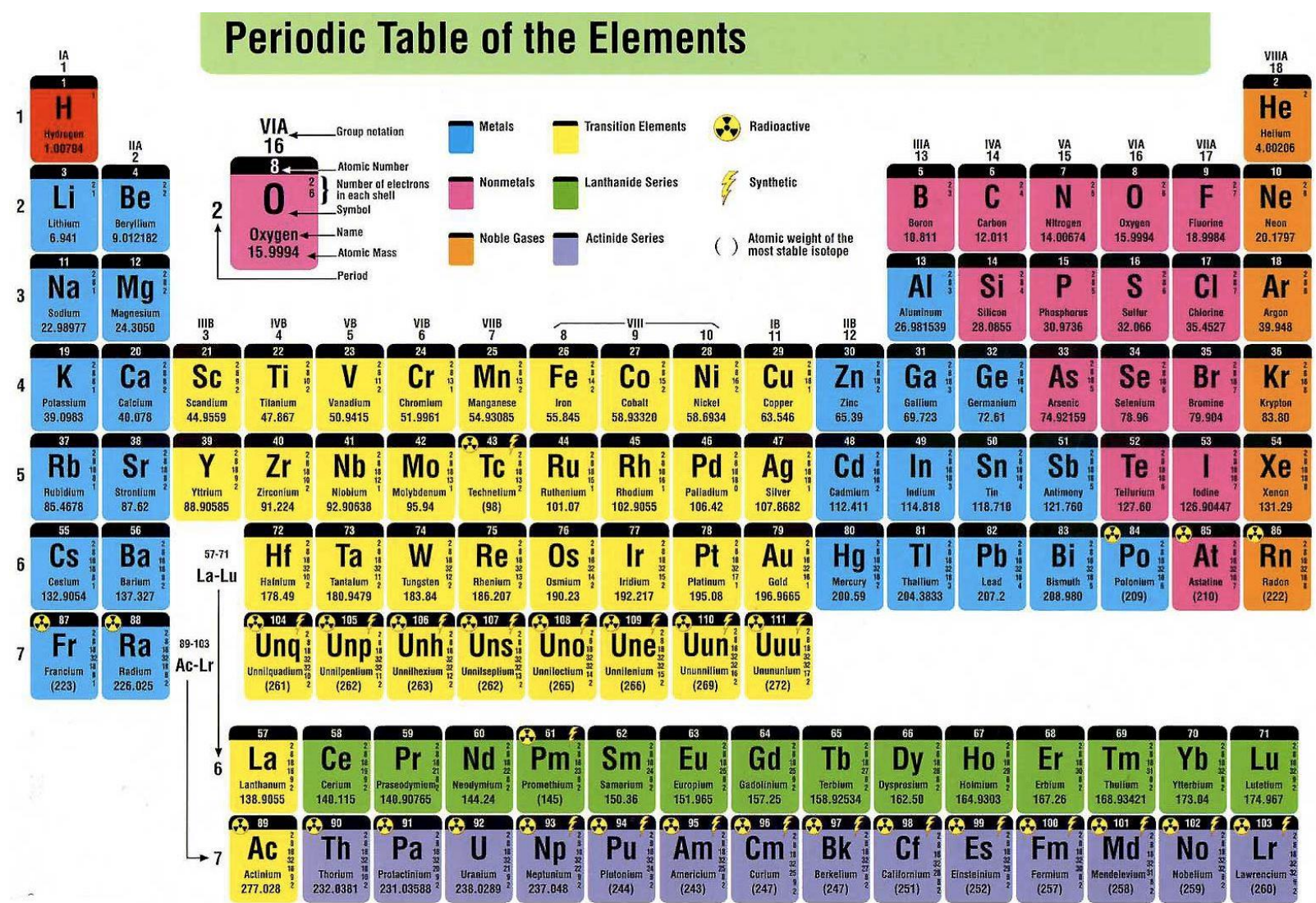
The periodic table uses a clever colour-coding system to group similar elements:
- Blue - metals
- Pink - non-metals
- Yellow - transition elements
- Orange - noble gases
- Green - lanthanides
- Purple - actinides
Special symbols show us additional information:
- ☢️ Radioactive symbol - indicates radioactive elements
- ⚡ Lightning bolt - marks synthetic (human-made) elements
The table is arranged in periods (horizontal rows) and groups (vertical columns), with elements having similar properties grouped together.
Note
Elements in the same group (vertical column) have similar chemical properties because they have the same number of electrons in their outer shell. This is why lithium, sodium, and potassium all react violently with water - they're all in Group 1!
Atomic structure basics
To truly understand metals and elements, we need to examine their smallest components. An atom is the tiniest piece that any element can be broken down into.
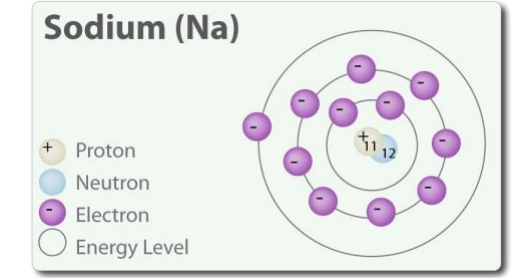
Every atom consists of two main parts:
Important
Understanding atomic structure is fundamental to comprehending how elements behave and interact. The arrangement of protons, neutrons, and electrons determines an element's properties and its position on the periodic table.
The nucleus
The nucleus sits at the centre of every atom and contains:
- Protons - particles with a positive charge (+)
- Neutrons - particles with no electrical charge (neutral)
Electron shells
Surrounding the nucleus are electrons - negatively charged particles (-) that orbit in specific energy levels or shells around the nucleus.
Summary
Key Points to Remember:
- Elements are the basic building blocks of everything around us
- The periodic table organises all known elements by their properties and behaviour
- Engineering relies heavily on metals like iron, aluminium, and chromium for different applications
- Atoms consist of a nucleus (protons + neutrons) surrounded by electrons in energy levels