How Glaciation Causes Isostatic Movement (Leaving Cert Geography): Revision Notes
📚Revision Notes
How Glaciation Causes Isostatic Movement
Key Terms:
| Term | Definition |
|---|---|
| Eustatic Movement | A change in sea level |
| Isostatic Uplift/Adjustment | The crust of the Earth lifting up |
| Incised | To cut deeper |
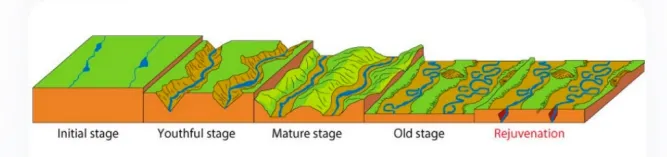
| Rejuvenation | To make young again |
| River's Base Level | Lowest level that a river/stream can erode it's channel to |
| Peneplains | Areas of flat land |
What is Isostasy?
- Isostasy refers to the balance between the Earth's crust rising and sinking due to the adding or removing of weight
- The lithosphere (solid part of crust) sits on top of the asthenosphere (semi-molten upper mantle) with the thicker parts of the asthenosphere deeper than the thinner parts. This creates a balance known as isostatic equilibrium
- During the last ice age, the Earth's crust had the extra weight of ice sitting on top of it which forced it down deeper into the asthenosphere in certain parts. When this happens it is called isostatic readjustment
- When this ice age ended, the weight was lifted as the ice melted, and the crust floated back to its original position. This is known as isostatic adjustment or isostatic uplift
- Isostatic processes can lead to a change in sea level (eustatic movement) when the weight of glacial ice causes the earth's crust to sink
- The effect of isostasy can be seen on both fluvial and coastal features