Atmospheric Circulation (Leaving Cert Geography): Revision Notes
📚Revision Notes
Atmospheric circulation
What is atmospheric circulation?
Atmospheric circulation refers to the large-scale movement of air around our planet. This system is essential for understanding how Earth's climate works because it explains how air moves and how heat gets distributed across the globe. The circulation patterns that result from this process have a major influence on both weather patterns and climate zones worldwide.
Note
Understanding atmospheric circulation is fundamental to meteorology and climatology, as it forms the basis for predicting weather patterns and understanding long-term climate trends.
How atmospheric circulation works
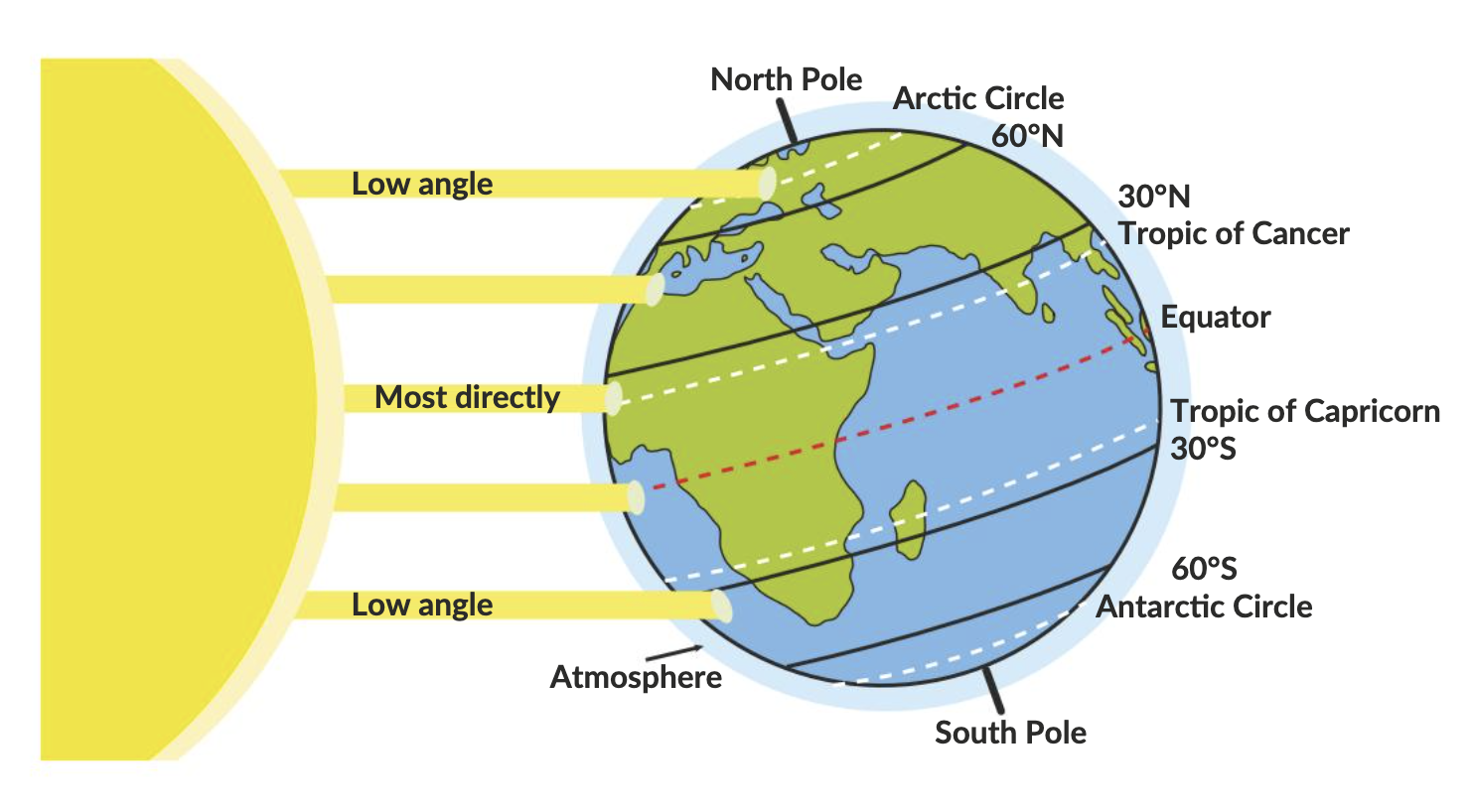
The driving force behind atmospheric circulation is the uneven way the Sun heats our planet. This happens because Earth has a spherical shape, which means different parts of the surface receive different amounts of solar energy.
The basic process
The equatorial regions receive the most direct sunlight and therefore become much warmer than the polar regions, which receive less solar energy. This temperature difference creates a natural system where heat needs to be redistributed from the hot equator towards the cooler poles.
Example
Process Example: Heat Redistribution Cycle
At the equator:
- Warm air rises upward because hot air is less dense than cold air
- This creates an area of low atmospheric pressure at the surface
- The rising air cools as it reaches higher altitudes in the atmosphere
Moving towards the poles:
- The cooled air spreads outward from the equator towards both poles
- As this air continues to cool, it eventually becomes dense enough to sink back down
- When air descends, it creates areas of high atmospheric pressure at the surface
Major wind patterns
The movement of air between these high and low pressure areas creates the planet's major wind systems. These consistent wind patterns are crucial for global weather and climate:
- Trade winds - These blow consistently in tropical regions
- Westerlies - These are the prevailing winds in mid-latitude regions
- Easterlies - These occur in polar regions
Note
Each of these wind systems plays a vital role in moving heat, moisture, and weather systems around the globe. The consistent nature of these patterns makes them reliable for both weather prediction and historical navigation.
Connection to climate and weather
Understanding atmospheric circulation helps explain many weather phenomena we observe. The movement of air masses, the formation of storms, and the distribution of rainfall patterns are all directly connected to these circulation systems.
Climate change impacts
Research shows that atmospheric circulation patterns are changing due to global warming. The Intergovernmental Panel on Climate Change (IPCC) reported in 2021 that these changes are contributing to more extreme weather events, including stronger hurricanes and more severe droughts in certain regions.
Important
Changes in atmospheric circulation patterns due to climate change are not just theoretical concerns—they are already contributing to more frequent and severe extreme weather events that impact communities worldwide.
Summary
Key Points to Remember:
- Atmospheric circulation moves heat from the hot equator to the cold poles
- Uneven heating creates pressure differences that drive wind patterns
- Rising air creates low pressure; descending air creates high pressure
- Major wind systems include trade winds, westerlies, and easterlies
- Changes in circulation patterns are linked to more extreme weather events due to climate change