Food Packaging and Labelling (Leaving Cert Home Economics): Revision Notes
📚Revision Notes
Food Packaging and Labelling
Food packaging and labelling are essential aspects of the food industry that ensure products reach consumers safely while providing important information about their contents and nutritional value.
Functions of food packaging
Food packaging serves several critical purposes in the food supply chain. Understanding these functions helps explain why packaging is so important for food safety and consumer satisfaction.
Protection forms the primary function of food packaging. Packaging materials create a barrier that shields food products from physical damage, chemical contamination, and biological hazards. For example, sealed containers prevent exposure to harmful bacteria and protect against moisture that could spoil the contents.
Preservation extends the useable life of food products by controlling environmental factors that cause spoilage. Packaging systems can limit oxygen exposure, control moisture levels, and create barriers against light and temperature fluctuations. Vacuum packaging demonstrates this function effectively by removing air to slow down the growth of microorganisms that cause food to deteriorate.
Example
Worked Example: Vacuum Packaging
Step 1: Remove air from packaging to eliminate oxygen
Step 2: Seal package to maintain vacuum environment
Step 3: Result - significantly slower bacterial growth and extended shelf life
Information provision ensures consumers receive essential details about food products. Packaging displays ingredient lists, nutritional content, expiration dates, and preparation instructions. This function enables consumers to make informed choices about their food purchases and helps them use products safely.
Convenience makes food products easier to transport, store, and consume. Well-designed packaging features like resealable closures, portion control sizes, and easy-open mechanisms improve the user experience. Ready-meal containers exemplify this function by providing heating instructions and suitable containers for microwave preparation.
Marketing helps products stand out in competitive retail environments. Attractive packaging designs, clear branding, and appealing colours influence consumer purchasing decisions. Children's cereal packaging often uses bright colours and cartoon characters to appeal to younger consumers and their parents.
Environmental protection addresses growing concerns about sustainability. Modern packaging increasingly uses recyclable materials, biodegradable components, and minimal material usage to reduce environmental impact whilst maintaining protective functions.
Characteristics of good food packaging
Important
Good food packaging must balance multiple requirements including protection, practicality, cost-effectiveness, and environmental responsibility.
Effective food packaging displays six key characteristics that ensure products reach consumers in optimal condition while meeting practical and commercial requirements.
Protection and durability ensure packaging can withstand the stresses of transportation, handling, and storage. Packaging materials must be strong enough to prevent breakage and contamination during distribution. Glass jars used for preserves demonstrate excellent protection against external contaminants and physical damage.
Barrier properties provide effective protection against environmental factors that degrade food quality. Quality packaging blocks air, moisture, light, and contaminants from reaching food products. Aluminium foil excels in this area by creating an impermeable barrier against oxygen, light, and moisture.
Lightweight and cost-effective characteristics make packaging economically viable for manufacturers and consumers. Packaging should minimise transportation costs whilst remaining affordable to produce. Plastic bottles demonstrate this balance by being significantly lighter and less expensive than glass alternatives whilst still providing adequate protection.
User-friendly design ensures consumers can easily open, use, and dispose of packaging. Features like tear strips, screw caps, and clear opening instructions enhance the consumer experience. Modern milk cartons with screw-top caps exemplify user-friendly design through easy opening and resealing capabilities.
Attractive and informative packaging appeals to consumers whilst providing necessary product information. Effective packaging combines visual appeal with clear, readable information about ingredients, nutritional content, and usage instructions. Premium yoghurt containers often feature attractive designs alongside comprehensive nutritional information.
Environmentally friendly packaging addresses sustainability concerns through recyclable, biodegradable, or reusable materials. Sustainable packaging options reduce environmental impact whilst maintaining protective functions. Paper-based packaging for organic products demonstrates this commitment to environmental responsibility.
Materials used for food packaging
Different packaging materials offer unique advantages and limitations that make them suitable for specific food products and applications.
Glass packaging
Important
Glass packaging is a non-porous and impermeable material that provides excellent protection against contamination and allows product visibility.
Glass packaging offers several distinctive advantages that make it ideal for certain food products. The material remains completely inert, meaning it doesn't react chemically with food contents, ensuring flavours and nutritional content remain unchanged. Consumers can see the product inside, which builds confidence in quality and freshness. Glass containers can be reused multiple times without quality loss and are 100% recyclable, supporting environmental sustainability goals.
However, glass packaging presents some significant challenges. The material breaks easily, creating safety concerns and potential product loss during transportation and handling. Glass containers weigh considerably more than alternatives, increasing transportation costs and making them less convenient for consumers to carry.
Note
From an environmental perspective, glass recycling reduces waste and supports circular economy principles. However, both glass production and recycling processes require substantial energy inputs, which must be considered when evaluating overall environmental impact.
Metal packaging
Metal packaging, primarily using aluminium and steel, serves various food packaging applications including beverage cans, food tins, foil wraps, and storage containers.
Metal packaging provides exceptional durability and strength, resisting physical damage during handling and transportation. These materials create excellent barriers against light, air, and moisture, making them ideal for long-term food preservation. Both aluminium and steel can be recycled repeatedly with minimal quality loss, supporting sustainable packaging practices.
The main disadvantages include susceptibility to corrosion, particularly when packaging acidic foods, which can affect taste and safety. Metal packaging generally costs more to produce than plastic alternatives, impacting overall product pricing.
Note
Metal recycling offers significant environmental benefits by reducing the need for virgin materials. However, the recycling process can be energy-intensive, though this is offset by the material's longevity and recyclability.
Paper packaging
Important
Paper packaging is a lightweight and versatile material commonly used for dry goods, cereals, and various food containers.
Paper packaging provides excellent environmental credentials through its biodegradable nature, breaking down naturally without long-term environmental impact. The material accepts printing easily, making it ideal for branding, product information, and attractive designs. Paper packaging typically costs less than alternatives and weighs significantly less, reducing transportation expenses.
Paper's main limitation lies in its poor moisture barrier properties unless specially coated or laminated. The material also offers less durability compared to metal or glass, making it unsuitable for products requiring robust protection.
Note
Environmental considerations include paper's renewable resource base and biodegradability. However, recycling processes require water and energy, and some paper treatments can complicate recycling efforts.
Plastic packaging
Important
Plastic packaging is a synthetic material valued for its versatility and ability to be moulded into various shapes and sizes.
Plastic packaging excels in several practical areas. Its lightweight nature significantly reduces transportation costs and makes products easier for consumers to handle. Plastic can be formed into virtually any shape or size, accommodating diverse product requirements. Many plastic types provide good barrier properties against moisture, gases, and contaminants.
The primary concerns with plastic packaging centre on environmental impact. Many plastics are non-biodegradable, contributing to long-term environmental pollution if not properly recycled. Some plastic types can leach chemicals into food products, raising health concerns. Not all plastics are recyclable, and recycling processes vary significantly in efficiency.
Note
Plastic recycling faces challenges including varying recyclability between different plastic types and the energy requirements of recycling processes. However, successful recycling programmes can significantly reduce environmental impact.
Environmental impact and sustainability
Growing environmental awareness has prompted both government action and consumer behaviour changes to reduce packaging-related environmental problems.
Government initiatives focus on legislation and support systems to encourage sustainable packaging practices. Waste Management Acts enforce reduction, reuse, and recycling requirements for packaging materials. Producer Responsibility Initiatives require manufacturers to manage their packaging's environmental impact throughout its lifecycle. Governments also provide subsidies for recycling programmes and research grants for developing sustainable packaging solutions. Public awareness campaigns educate consumers about recycling importance and promote reusable packaging alternatives.
Consumers can contribute to environmental impact reduction through several approaches. Reusing containers like glass jars and cloth bags for shopping and storage reduces packaging waste. Participating in local recycling programmes ensures proper disposal of packaging materials. Making conscious buying decisions by choosing products with minimal or eco-friendly packaging and purchasing bulk items to reduce packaging waste. Supporting sustainable brands and spreading awareness about packaging waste reduction in their communities.
Example
Worked Example: Consumer Impact Reduction
Daily actions that make a difference:
- Bring reusable bags when shopping
- Choose products with minimal packaging
- Recycle all eligible packaging materials
- Reuse glass jars for food storage
- Buy in bulk to reduce packaging waste per unit
Modified atmospheric packaging (MAP)
Important
Modified Atmospheric Packaging (MAP) is a technology where the air composition inside packaging is altered to extend shelf life and preserve food quality.
MAP works through a two-stage process. Gas flushing replaces the normal air inside packaging with a specific mixture of gases, typically including oxygen, carbon dioxide, and nitrogen in carefully controlled proportions. The package is then sealed to maintain this modified atmosphere throughout the product's shelf life.
MAP applications vary according to food type and preservation requirements. Fresh produce benefits from slowed ripening and decay processes. Meat and fish products maintain their colour whilst inhibiting bacterial growth. Baked goods stay fresher longer by preventing mould growth.
The main advantages include significantly extended shelf life, reduced food spoilage and waste, and maintained food quality including texture, flavour, and nutritional value. However, MAP systems cost more than traditional packaging methods and aren't suitable for all food types.
Food labelling requirements
Food labelling provides consumers with essential information needed to make informed purchasing and consumption decisions whilst ensuring food safety and legal compliance.
Labelling requirements for packaged food
Packaged food products must display specific mandatory information to meet regulatory requirements and consumer needs.
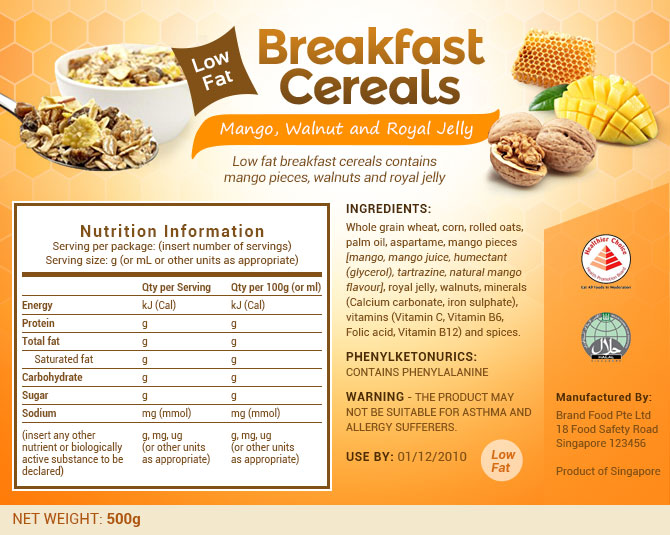
Essential mandatory information includes:
- The product name for clear identification
- Ingredients listed in descending order by weight
- Allergens highlighted within ingredient listings
- Net quantity showing weight or volume
- Use-by or best-before dates indicating shelf life
- Storage conditions for maintaining quality and safety
- Manufacturer details including name and address
- Country of origin for certain foods like meat and honey
- Instructions for use when necessary for proper preparation
Additional requirements may include nutrition information on most packaged foods and alcoholic strength for beverages containing more than 1.2% alcohol by volume.
Nutritional labelling
Nutritional labelling helps consumers understand the nutritional content of packaged foods and make healthier choices.
Mandatory nutritional information must show energy values in both kilojoules and kilocalories, plus amounts of fat, saturates, carbohydrates, sugars, protein, and salt per 100g or 100ml. This standardised format allows easy comparison between products.
Note
Voluntary information can include additional nutrients like fibre, vitamins, and minerals to provide more comprehensive nutritional details. Information is typically presented in tabular format, though linear format may be used when space is limited.
Front-of-pack labelling
Front-of-pack nutritional labelling systems help consumers quickly understand key nutritional information and make healthier choices.
The traffic light system uses colour coding to indicate high (red), medium (amber), and low (green) levels of fat, saturates, sugars, and salt. Reference intake systems show the amount of energy or nutrients in a food portion and how this relates to recommended daily intakes. These systems provide immediate, understandable nutritional information to support quick decision-making.
Example
Worked Example: Traffic Light System
A cereal box displays:
- Fat: GREEN (low)
- Saturates: AMBER (medium)
- Sugars: RED (high)
- Salt: GREEN (low)
This immediately shows consumers that while the cereal is low in fat and salt, it's high in sugar content.
Non-packaged food labelling
Foods sold without packaging must still provide essential consumer information, particularly regarding allergens and origin.
Allergen information must be accessible to consumers through verbal communication from staff, written notices indicating this availability, or labels and signs positioned near food items. Country of origin information is required for certain non-packaged foods, particularly meat products.
Food claims
Food manufacturers use various claims on packaging to highlight nutritional or health benefits, but these must comply with strict regulatory requirements.
Nutritional claims
Important
Nutritional claims are statements describing the level of specific nutrients in food products, such as "low fat" or "high fibre".
Nutritional claims must meet specific regulatory criteria established by EU legislation to prevent misleading consumers. Examples include "low fat" products containing no more than 3g fat per 100g for solids or 1.5g per 100ml for liquids, and "high in vitamins and minerals" requiring at least 30% of the recommended daily amount.
Health claims
Important
Health claims link food or food components to specific health benefits and must be based on scientific evidence.
Health claims require authorisation from the European Food Safety Authority (EFSA) based on scientific evidence. Examples include "Calcium is needed for the maintenance of normal bones" and "Fibre aids in maintaining normal bowel function". These claims help consumers understand potential health benefits whilst ensuring accuracy and preventing false advertising.
Love Irish Food initiative
Important
Love Irish Food is an initiative promoting Irish food and drink brands to consumers in Ireland.
The Love Irish Food programme aims to support Irish food and drink producers whilst helping consumers make informed choices about local, quality products. This initiative provides economic support by encouraging consumers to support the local economy and Irish jobs. It promotes quality assurance by highlighting the high standards and traceability of Irish food products. Environmental benefits include reduced carbon footprints due to shorter transportation distances.
Barcoding
Important
Barcoding involves using barcodes on food packaging for efficient data capture and product tracking throughout the supply chain.
Common barcode types include UPC (Universal Product Code), most prevalent in North America, and EAN (European Article Number), widely used internationally including Ireland.
Barcoding serves multiple functions in modern food systems. Inventory management uses barcodes to track products in stores and warehouses efficiently. Point of sale systems speed up checkout processes and ensure accurate pricing. Traceability systems help trace products back to manufacturers when needed for safety or quality issues.
The advantages include improved efficiency through reduced pricing and inventory errors, and enhanced consumer information through quick retrieval of product details. Modern barcode systems enable rapid access to comprehensive product information including price, stock levels, and other relevant data.
Summary
Key Points to Remember:
- Food packaging serves six key functions: protection, preservation, information, convenience, marketing, and environmental protection
- Good packaging balances protection, practicality, cost-effectiveness, and environmental responsibility
- Each packaging material (glass, metal, paper, plastic) has distinct advantages, disadvantages, and environmental impacts
- MAP technology extends shelf life by modifying the gas composition inside packaging
- Food labels must include mandatory information like ingredients, allergens, nutritional content, and expiry dates to ensure consumer safety and informed choice