Protein (Leaving Cert Home Economics): Revision Notes
📚Revision Notes
Protein
What is protein?
Proteins are essential biological molecules made up of smaller units called amino acids. These complex compounds play vital roles in nearly every function within the human body, from providing structure to tissues to enabling chemical reactions. Understanding protein composition, classification and function is crucial for making informed nutritional choices.
Note
Proteins are fundamental to life processes, serving as the workhorses of cellular function. Every enzyme, antibody, and structural component in your body depends on proteins to maintain proper biological activity.
Building blocks of protein
Amino acids structure
Important
Amino acids are organic compounds that serve as the fundamental building blocks of all proteins. Each amino acid contains a central carbon atom connected to four distinct components: an amino group (), a carboxyl group (), a hydrogen atom, and a variable side chain known as the R group.
The R group is what makes each amino acid unique. This side chain determines the specific characteristics and properties of each amino acid. In total, there are 20 different amino acids commonly found in proteins, each with its own distinct R group.
Essential amino acids
The human body cannot manufacture certain amino acids, making them essential nutrients that must be consumed through food. There are nine essential amino acids that we must obtain from our diet:
- Histidine
- Isoleucine
- Leucine
- Lysine
- Methionine
- Phenylalanine
- Threonine
- Tryptophan
- Valine
These amino acids are critical for maintaining health, supporting tissue repair, transporting nutrients, and producing enzymes that facilitate various bodily processes.
Note
While the body can synthesise the remaining 11 amino acids (called non-essential amino acids), the essential amino acids must come from dietary sources, making protein quality an important consideration in nutrition planning.
Peptides and peptide bonds
When amino acids join together, they form chains called peptides. This connection occurs through peptide bonds - strong covalent links that form when the carboxyl group of one amino acid combines with the amino group of another amino acid. During this process, a water molecule () is released.
Important
Peptide bonds are the covalent connections that link amino acids together to form protein chains.
The reverse process, called hydrolysis, breaks down these bonds. This typically occurs in the presence of water and specific enzymes, releasing individual amino acids or smaller peptide fragments.
Protein structure levels
Primary structure
The primary structure represents the basic sequence of amino acids in a protein chain. This linear arrangement is determined by genetic information and forms the foundation for the protein's ultimate shape and function. Think of it as the specific order of amino acids strung together like beads on a necklace.
Secondary structure
Secondary structure involves the folding and coiling of the amino acid chain into regular patterns. The two main types are:
- Alpha-helices: spiral-shaped structures
- Beta-pleated sheets: folded, sheet-like arrangements
These structures are stabilised by hydrogen bonds between different parts of the protein chain, contributing to the protein's stability and overall shape.
Note
Secondary structures are crucial for protein stability and function. The specific pattern of folding is determined by the amino acid sequence and creates the foundation for the protein's final three-dimensional shape.
Tertiary structure
The tertiary structure represents the complete three-dimensional shape of a protein. This complex arrangement is primarily determined by interactions between the R groups (side chains) of amino acids. These interactions include:
- Hydrogen bonding
- Ionic bonding
- Disulphide bridges
- Hydrophobic interactions
This final shape determines how the protein functions within the body.

Types of proteins
Simple proteins
Simple proteins contain only amino acids and can be divided into two main categories:
Animal proteins:
- Fibrous proteins: Primarily structural, such as collagen found in connective tissues and keratin present in hair and nails
- Globular proteins: Functional proteins like enzymes and antibodies, including albumin found in egg whites
Plant proteins:
- Glutelins and prolamins: Found in seeds and grains, such as gluten in wheat
Conjugated proteins
These proteins consist of amino acids combined with non-protein components. Examples include:
- Glycoproteins: Proteins attached to carbohydrate groups
- Lipoproteins: Proteins combined with lipid components
Both types play important roles in cellular functions and immune system responses.
Protein sources and quality
Complete vs incomplete proteins
Important
Complete proteins contain all essential amino acids in adequate proportions and are typically found in animal products such as meat, fish, poultry, eggs, and dairy.
Important
Incomplete proteins lack one or more essential amino acids and are commonly found in plant-based sources like grains, nuts, and legumes.
Protein complementation
Combining different plant proteins can create a complete amino acid profile. This practice, known as protein complementation, is particularly important for vegetarian and vegan diets to ensure adequate intake of all essential amino acids.
Example
Practical Example: Protein Complementation
A classic combination is rice and beans:
- Rice is low in lysine but high in methionine
- Beans are high in lysine but low in methionine
- Together, they provide all essential amino acids in adequate proportions
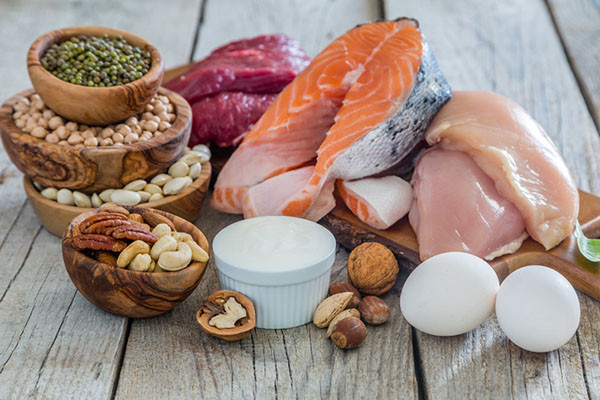
Food sources
Animal sources: Meat, poultry, fish, dairy products, and eggs provide high-quality complete proteins containing all essential amino acids.
Plant sources: Legumes, nuts, seeds, and grains offer significant protein content, though they may lack certain essential amino acids when consumed individually.
Specific proteins in foods
Several proteins have particular importance in food preparation and nutrition:
Note
Understanding specific food proteins helps explain why certain foods behave differently during cooking and why they contribute uniquely to our nutritional needs.
-
Albumin: Found in egg whites, essential for maintaining blood pressure
-
Casein: The main protein in milk and cheese, important for growth and development
-
Gelatine: Derived from collagen, used in food processing for its gelling properties
-
Gluten: Present in wheat and related grains, provides elasticity to dough and is crucial for bread making
-
Myosin and Actin: Muscle proteins found in meat, important for muscle contraction and meat texture
-
Collagen: Found in connective tissues; when cooked, it transforms into gelatine, contributing to the texture of meat dishes
Protein properties
Denaturation and coagulation
Important
Denaturation is the structural change in protein molecules caused by factors such as heat, mechanical action, or pH changes, without breaking the peptide bonds.
Following denaturation, coagulation occurs where proteins become firm or solidify. This is clearly visible when cooking eggs - the clear egg white becomes opaque and solid when heated.
Example
Cooking Example: Egg White Transformation
When you heat an egg:
- Heat causes albumin proteins to denature (unfold)
- Denatured proteins coagulate and form a solid structure
- The transparent liquid becomes opaque and firm
- This demonstrates both denaturation and coagulation in action
Functional properties
Foam formation: Proteins, particularly albumin in egg whites, can create stable foams when beaten. The protein structure unfolds, trapping air bubbles and creating essential textures in foods like meringues and soufflés.
Gel formation: Certain proteins, such as gelatine, form gels when heated and then cooled. Collagen converts to gelatine when heated, absorbs water, and upon cooling creates a gel structure due to the three-dimensional protein network that traps water.
Effects of heat:
- Dry heat: Causes proteins to form new bonds, changing texture and flavour
- Moist heat: Generally makes proteins more tender, as seen when cooking fish
- Mechanical action: Activities like kneading can alter protein structure, affecting properties like gluten elasticity in dough
pH and enzyme effects
Changes in pH can influence protein structure, affecting processes like coagulation and denaturation. Enzymes play crucial roles in breaking down proteins during digestion and food preparation.
Functions of proteins in the body
Structural proteins
These proteins provide support and strength to various body parts. Examples include collagen, which strengthens connective tissues, and keratin, found in hair and nails.
Physiologically active proteins
This category includes enzymes and hormones that regulate biological processes throughout the body.
Nutrient proteins
These serve as sources of energy and essential amino acids necessary for growth and tissue repair.
Energy and biological value
Energy contribution
Proteins provide approximately 10-15% of total energy in an average diet, supplying 4 kilocalories per gramme. While primarily used for growth, repair, and maintenance of body tissues, proteins can serve as an energy source, particularly when carbohydrate and fat intake is insufficient.
Protein utilisation
When there is excess protein intake, the body breaks down amino acids through a process called deamination. The amino group is removed and converted to urea for excretion by the kidneys, while the remaining carbon structure can be used for energy or converted to glucose or fat for storage.
Protein digestion and absorption
Hydrolysis process
Protein digestion involves breaking down large protein molecules into their component amino acids through hydrolysis. This process begins in the stomach where the enzyme pepsin starts breaking proteins into smaller polypeptides in the acidic environment.
The process continues in the small intestine, where pancreatic enzymes including trypsin and chymotrypsin further break down polypeptides into smaller peptides and individual amino acids. Brush border enzymes located on the small intestine's lining complete the digestion of peptides into amino acids.
Note
The digestive process is highly efficient, with most dietary proteins being completely broken down into amino acids for absorption. This systematic breakdown ensures maximum utilisation of protein nutrients.
Absorption and utilisation
Amino acids and small peptides are absorbed through the lining of the small intestine into the bloodstream. Once transported to the liver, amino acids can be used for protein synthesis to create new proteins such as enzymes, hormones, and antibodies.
Excess amino acids undergo deamination, where the amino group is removed for energy use or storage, while the nitrogen component is converted to urea for elimination.
Summary
Key Points to Remember:
- Proteins are made of amino acids connected by peptide bonds, with 9 essential amino acids that must be obtained from food
- Protein structure occurs at three levels: primary (sequence), secondary (folding patterns), and tertiary (3D shape)
- Complete proteins contain all essential amino acids and are found in animal products, while incomplete proteins from plants can be combined for completeness
- Proteins undergo denaturation and coagulation when heated, and can form foams and gels important in cooking
- Protein digestion involves hydrolysis by enzymes like pepsin and trypsin, with absorption occurring in the small intestine